 Get a Quote

Civil Defense Safety License in Saudi Arabia: Fire Safety Requirements for Facilities
Civil Defense Safety License in Saudi Arabia: Fire Safety Requirements for Facilities
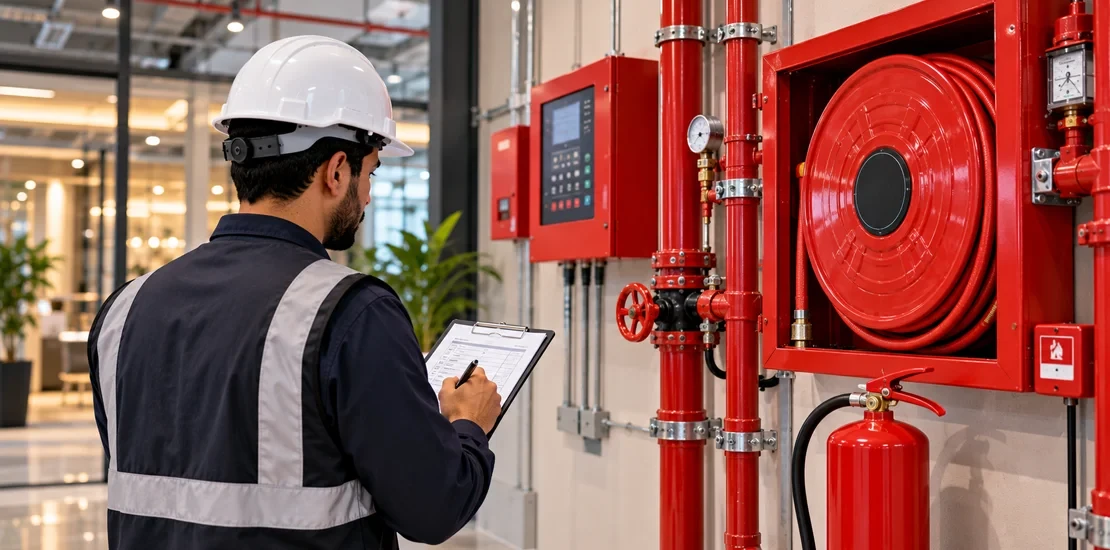
Every week, businesses across Saudi Arabia delay their opening, lose a lease renewal, or face penalties for one reason: their civil defense safety license is missing, expired, or stuck in review. In most cases, the problem is not the procedure itself. It is a fire alarm that does not work as designed, an expired maintenance certificate, a blocked exit, or drawings that do not match the site.
The good news is that a civil defense safety license is entirely achievable when you know what Civil Defense expects and prepare for it properly. This guide explains what the license is, who needs it, how the process works on the Salamah platform, the safety requirements inspectors check, the most common reasons applications are rejected, and how to keep your license valid year after year.
What Is a Civil Defense Safety License?
A civil defense safety license is the official approval issued by the General Directorate of Civil Defense confirming that a facility meets the required fire and life safety conditions for its activity. It shows that the building has suitable fire protection systems, safe escape routes, and the equipment and procedures needed to protect people if a fire or emergency occurs.
For business owners, a civil defense safety license is far more than a formality. It is typically required alongside other permits such as the municipal license, it is requested by landlords, malls, and insurers, and operating without a valid license can expose the business to fines or closure.
Who Needs a Civil Defense Safety License?
Most commercial, industrial, and service activities need a civil defense safety license, including:
- Shops, showrooms, and retail stores.
- Restaurants, cafés, and commercial kitchens.
- Offices, clinics, and training centers.
- Warehouses, workshops, and factories.
- Hotels, residential compounds, and furnished apartments.
- Malls, entertainment venues, and event spaces.
- Fuel stations, gas distribution, and other high-risk activities.
The exact requirements depend on the activity type, the area, the building classification, and the level of fire risk involved.
Documents to Prepare Before You Apply
Having the right documents ready before you start removes one of the most common sources of delay. Depending on your activity and risk level, prepare:
- A valid commercial registration and the activity details as registered.
- The municipal license or its application, where applicable.
- The lease contract or ownership deed for the premises.
- The facility area, floor plan, and building classification.
- Approved fire safety drawings for larger or higher-risk facilities.
- Invoices for safety equipment or a technical report from an accredited provider.
- A maintenance contract for installed fire protection systems, where required.
Keeping digital copies of these documents in one place also makes every future renewal of your civil defense safety license faster.
How the Civil Defense Safety License Process Works on Salamah
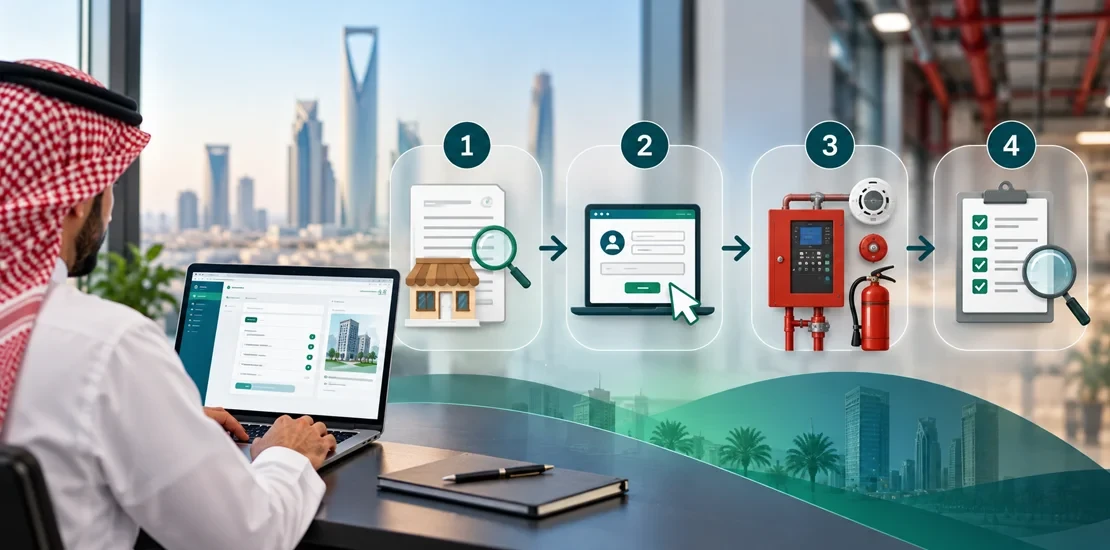
Civil Defense services for investors are provided electronically through the Salamah platform, which allows business owners to issue, renew, cancel, or transfer a civil defense safety license without visiting Civil Defense offices. While details can change and should always be confirmed on the platform itself, the journey generally follows these steps:
Step 1: Classify Your Activity and Risk Level
The platform classifies activities according to their risk level. Lower and medium risk activities usually follow a direct path, where the civil defense safety license can be issued after the required safety equipment is in place and documented. Higher risk activities follow an indirect path that involves contracting with an accredited safety company, setting up maintenance contracts, and a Civil Defense inspection before the civil defense safety license is issued.
Understanding your classification from the start saves time and money, because it defines which systems you need and who must install them. For complex facilities, a professional fire risk assessment helps identify the actual hazards and the protection required before you apply.
Step 2: Register and Submit Your Facility Details
The applicant creates an account on the platform and enters the facility information, such as the commercial registration, activity, location, and area. Supporting documents may include the municipal license, lease or ownership documents, and, for larger or higher-risk facilities, approved fire safety drawings.
Step 3: Install and Document the Required Safety Systems
Depending on the classification, the facility must provide the required safety equipment and systems, supported by an invoice for safety equipment or a technical report issued through the platform by an accredited provider. For higher-risk activities, the accredited safety company completes the installation after receiving the verification code sent to the applicant.
Step 4: Inspection and Approval
Where an inspection is required, Civil Defense inspectors visit the site to confirm that the systems are installed correctly, work as designed, and match the submitted documents. Once the facility meets the requirements, the civil defense safety license is issued electronically.
Core Requirements for a Civil Defense Safety License
While each activity has its own conditions, inspections commonly focus on the following areas:
| Requirement | What Inspectors Check | Typical Problems |
| Fire extinguishers | Correct types for the risk, quantities, locations, valid service tags | Wrong type, blocked access, expired servicing |
| Fire alarm and detection | Working panel, detectors in all areas, audible alarms | Faults on the panel, missing detectors after renovation |
| Emergency lighting and exit signs | Lit signs on all escape routes, battery backup | Dead batteries, signs hidden by decorations |
| Escape routes and exits | Clear corridors, enough exits, doors open in the escape direction | Storage in corridors, locked or blocked exits |
| Firefighting systems | Sprinklers, hose reels, or suppression systems where required | Closed valves, missing maintenance records |
| Electrical safety | Safe wiring, protected panels, no overloaded sockets | Exposed cables, overloaded extension leads |
| Maintenance and documentation | Valid maintenance contract, inspection records, drawings | Expired contracts, drawings that do not match the site |
Choosing the right fire extinguisher types for each area is one of the simplest requirements to get right, yet it is a frequent cause of failed inspections. Facilities with fire alarm systems must also meet the Saudi Civil Defense standards for alarm systems, and larger sites need firefighting systems such as sprinklers and hose reels designed and installed by qualified contractors. Many facilities are also expected to have a clear emergency evacuation plan with trained staff and marked assembly points.
Civil Defense Safety License Tips by Business Type
Each type of business tends to face its own recurring issues during inspection. Knowing them in advance helps you prepare the right way:
- Retail shops and showrooms. Focus on suitable extinguishers, illuminated exit signs, clear aisles, and safe electrical installations, especially for lighting and display equipment.
- Restaurants and cafés. Expect close attention to the kitchen: hood suppression, gas safety, the right extinguishers for cooking oils, and clean exhaust ducts.
- Clinics and medical centers. Patients may need help to evacuate, so alarms, emergency lighting, and clear evacuation procedures are critical.
- Storage heights, clearance below sprinklers, forklift charging areas, and blocked exits are frequent findings.
- Overloaded sockets, missing detectors after partition changes, and locked exit doors are the usual weak points.
Tailoring your preparation to your business type is one of the fastest ways to secure a civil defense safety license on the first attempt.
Plan Your Fit-Out with the License in Mind
Many delays start long before the application, during the design and fit-out of the premises. Partitions are added without moving detectors, ceilings hide sprinkler heads, decorations cover exit signs, and kitchens are installed without space for suppression systems. Involving a fire safety specialist at the design stage ensures that the layout, systems, and finishes support your civil defense safety license from day one, instead of forcing costly changes after the contractor has left.
Additional Requirements for Higher-Risk Facilities
Restaurants, warehouses, factories, and facilities that store flammable materials usually face stricter requirements. These may include kitchen fire suppression over cooking appliances, gas leak detection with automatic shut-off, sprinkler protection for storage areas, fire-rated separation between hazardous zones, and a contract with an accredited safety company for installation and maintenance. Planning these systems at the fit-out stage is far cheaper than retrofitting them after an inspection fails.
How to Prepare for the Inspection Visit
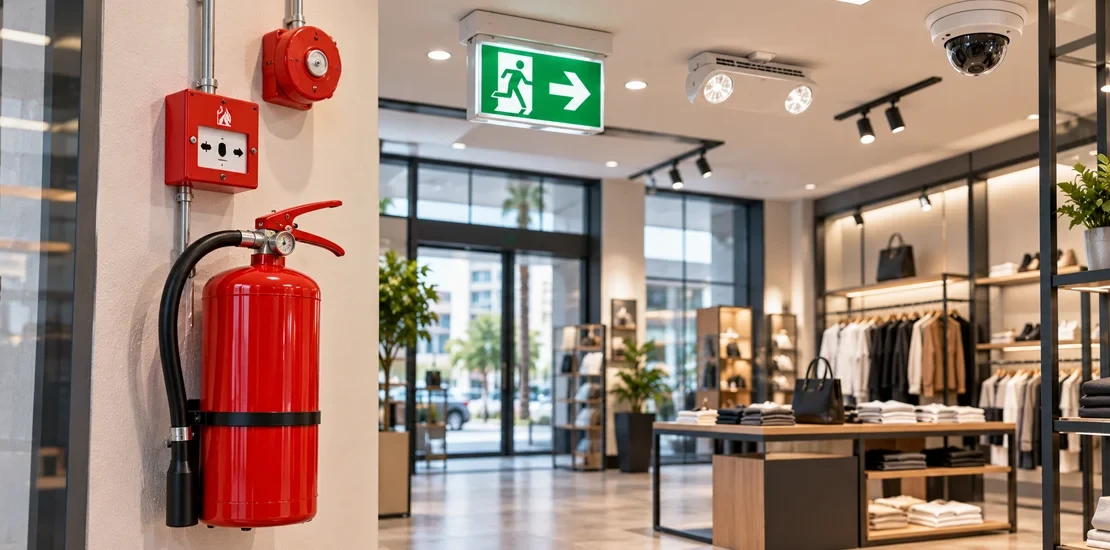
When an inspection is part of your civil defense safety license, the visit itself deserves preparation. Assign one person who knows the facility to accompany the inspector, keep the maintenance contract, test reports, and drawings ready, and make sure every room, plant area, and storage space can be opened. Test the fire alarm and emergency lighting a few days before the visit, not on the same morning, so there is time to fix any fault. A well-prepared visit is shorter, smoother, and far more likely to end with approval.
Why a Civil Defense Safety License Is Rejected or Delayed
- Non-functional fire alarm systems. Panels showing faults or detectors removed during renovation.
- Blocked or insufficient exits. Goods stored in corridors or exit doors locked during working hours.
- Expired maintenance certificates. Systems installed but not maintained under a valid contract.
- Drawings that do not match the site. Layout changes made without updating the approved plans.
- Wrong or missing extinguishers. Equipment that does not suit the fire risk in each area.
- Poor installation quality. Systems installed by non-accredited providers or without proper testing.
Each of these issues is avoidable, and none of them should stand between you and your civil defense safety license, with a structured review before you apply.
Pre-Inspection Checklist for Your Civil Defense Safety License
Before applying for or renewing your civil defense safety license, walk through your facility and confirm the following:
- Every extinguisher is in place, visible, accessible, and carries a valid service tag.
- The fire alarm panel shows normal status with no active faults.
- Exit signs and emergency lights work, including on battery power.
- All escape routes and exit doors are clear and open easily.
- Sprinkler valves, hose reels, and suppression systems are in service and recently maintained.
- Electrical panels are closed, labeled, and free of stored materials.
- Your maintenance contract is valid and inspection records are available.
- Drawings and documents reflect the current layout of the facility.
For a detailed, system-by-system review, use our fire system inspection checklist, which covers alarms, sprinklers, pumps, suppression systems, extinguishers, emergency lighting, and fire doors.
Keeping Your Civil Defense Safety License Valid
A civil defense safety license is generally valid for one year from the date of issue, and renewal can be started through the platform shortly before the expiry date, typically about a month in advance. Renewing a civil defense safety license is much easier when your systems have been maintained throughout the year and records are up to date.
An annual maintenance contract with a qualified provider keeps your fire alarm, extinguishers, emergency lighting, and firefighting systems in working order, provides the reports needed to renew your civil defense safety license, and ensures that faults are fixed before they become inspection findings. Setting a reminder well before the expiry date avoids last-minute pressure and the risk of operating without a valid license.
The Real Cost of Getting It Wrong
Delaying your civil defense safety license can cost far more than the safety systems themselves. A failed inspection means rework, repeated visits, and lost time. A delayed license can postpone your opening, affect your lease or mall agreement, and keep revenue on hold. Operating without a valid license can lead to penalties, and in the worst case, a fire in a facility without working safety systems can cause injuries, loss of life, and damage that no business can easily recover from.
Investing in correct design, quality installation, and regular maintenance is not only about passing an inspection. It is about protecting your people, your customers, and the business you have built.
How CCCO Helps You Get Licensed Faster
Navigating civil defense safety license requirements while running a business is demanding. Professional fire safety consultation can shorten the path significantly by:
- Assessing your facility against the requirements of your activity before you apply.
- Identifying gaps in alarms, extinguishers, exits, emergency lighting, and firefighting systems.
- Designing and installing the required systems to the right standards.
- Preparing documentation that matches the actual site.
- Providing ongoing maintenance and reports that support smooth renewals.
Conclusion
A civil defense safety license is a legal requirement and a clear statement that your facility is safe for staff, customers, and visitors. By understanding your risk classification, preparing the right systems and documents, checking your facility before inspection, and maintaining everything throughout the year, you can obtain and renew your civil defense safety license with confidence and avoid costly delays.
Ready to get your facility licensed without delays? The CCCO team can review your site, close any safety gaps, install and maintain the required systems, and prepare you for a smooth Civil Defense inspection. Contact us today to request a site assessment.
Note: Licensing procedures and requirements may be updated by the authorities. Always confirm the latest requirements for your activity on the official Salamah platform.
Frequently Asked Questions
What is a civil defense safety license?
It is the official approval from Civil Defense confirming that a facility meets the fire and life safety requirements for its activity.
How do I apply for a civil defense safety license?
Applications are submitted electronically through the Salamah platform, where you register, enter your facility details, and complete the requirements for your activity’s risk classification.
How long is a civil defense safety license valid?
It is generally valid for one year from the date of issue and should be renewed before it expires.
Do all facilities need a Civil Defense inspection?
Not always. Lower-risk activities may follow a direct path, while higher-risk activities usually require an accredited safety company and an inspection.
What are the most common reasons for rejection?
Faulty fire alarms, blocked exits, expired maintenance certificates, wrong extinguishers, and drawings that do not match the site.
Can I renew my civil defense safety license online?
Yes. Renewal is done through the Salamah platform, ideally starting about a month before the expiry date.
Can a safety company help me obtain the license?
Yes. An experienced fire safety company can assess your facility, install and maintain the required systems, and prepare you for inspection.