 Get a Quote

FM200 Fire Suppression System: Everything You Need to Know
FM200 Fire Suppression System: Everything You Need to Know

Among all the waterless suppression systems available on the market, the FM200 fire suppression system holds a special place as one of the most widely used solutions for protecting sensitive environments like server rooms and data centers. This widespread adoption isn’t a coincidence — it’s a direct result of this system’s ability to extinguish fire extremely quickly without leaving any residue that damages electronic equipment or sensitive contents. This guide explains how an FM200 fire suppression system actually works, where it’s best used, and the criteria to consider when choosing it for your facility.
What an FM200 Fire Suppression System Is and How It Works
An FM200 fire suppression system is a clean-agent suppression system based on a chemical agent (Heptafluoropropane) stored as a compressed liquid inside special cylinders. Upon fire detection, this liquid instantly converts into a gas the moment it’s released, spreading rapidly and effectively throughout the protected space. The gas breaks the chemical combustion reaction by absorbing heat directly from the flame area, without reducing the oxygen level in the air to a degree that threatens the safety of people present — which distinguishes it from some inert gas systems that work by fully displacing oxygen.
Components of an FM200 Fire Suppression System
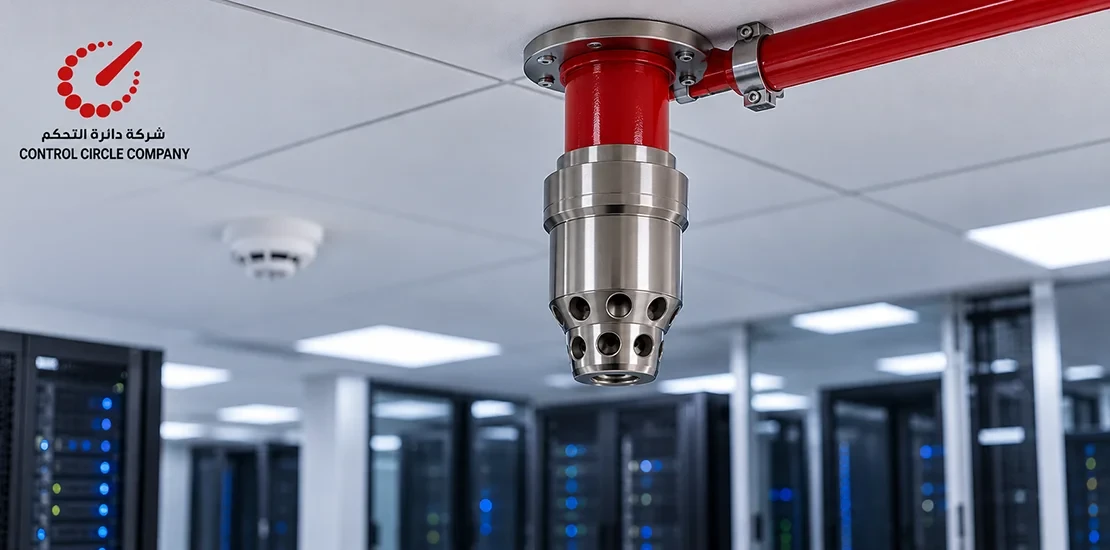
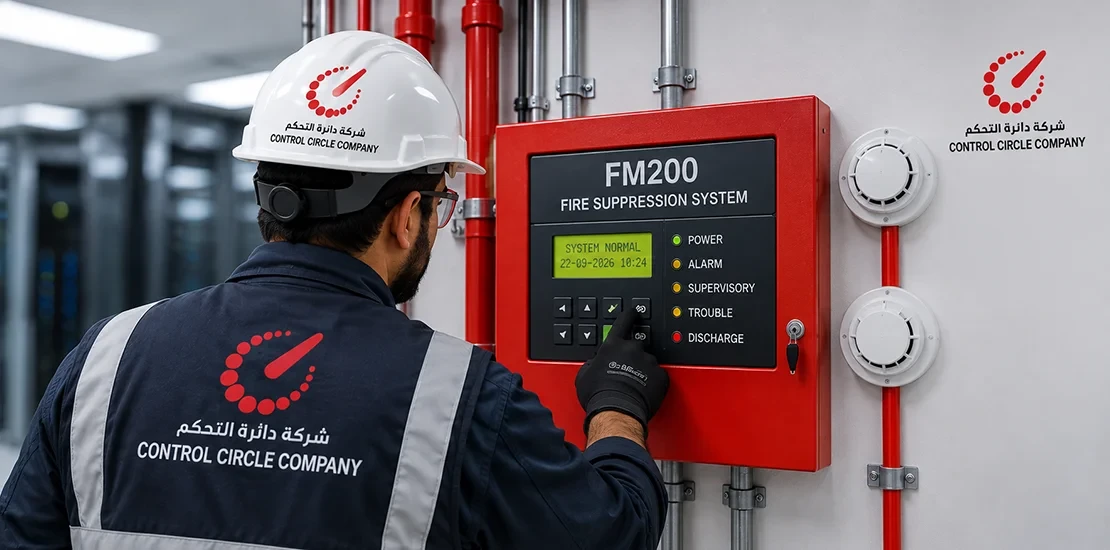
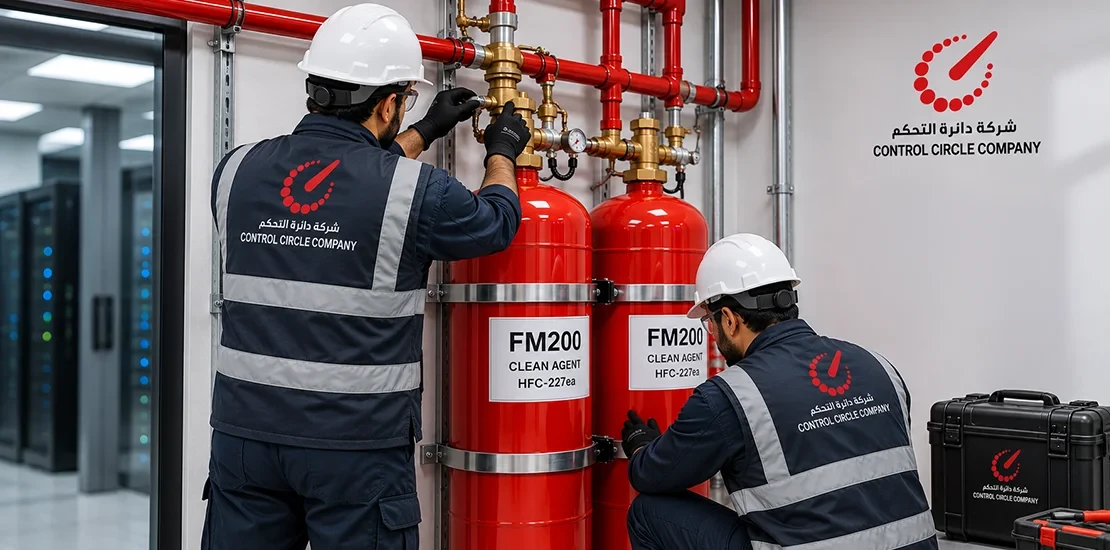
The system consists of several essential, interconnected components working together in complete harmony. First, compressed gas storage cylinders distributed carefully according to the size of the space requiring protection. Second, a gas distribution pipe network that carries it from the cylinders to discharge nozzles placed throughout the protected room. Third, a control panel linked to smoke and heat sensors that automatically activates the system upon detecting an actual fire. Fourth, a pre-alarm system that sounds an audible warning immediately before gas release, giving anyone present a chance to evacuate before full activation.
Why an FM200 Fire Suppression System Is a Safe Choice for Sensitive Environments
Traditional water-based systems are entirely effective at extinguishing general fires, but they’re entirely unsuitable for environments like server rooms and electrical control panels, where water itself poses a hazard equal to the fire. An FM200 fire suppression system leaves no moisture or powder residue after activation, meaning there’s no need to clean equipment after extinguishing the fire — unlike chemical powder systems, which require a costly, precise cleaning process after every use.
The Difference Between FM200 and Other Suppression Systems
An FM200 fire suppression system differs from condensed aerosol (DSPA) in its core operating mechanism; while aerosol relies on fine particles that break the chemical reaction directly in the surrounding air, FM200 relies on a pure gas that absorbs heat from the flame area. It also differs from inert gas systems like nitrogen and argon, which work by fully reducing the room’s oxygen level, typically requiring evacuation before activation. FM200, by contrast, is designed to be relatively safe even with people present for a short period, although immediate evacuation remains the safest procedure in all cases.
Best Uses for an FM200 Fire Suppression System
An FM200 fire suppression system is the optimal choice in any environment holding sensitive assets that are hard to replace. Server rooms and data centers top this list, where any contact between water and equipment can cause massive financial losses and a complete service outage. Main electrical rooms and distribution panels also benefit from this type of protection, since the gas doesn’t conduct electricity and leaves no residue that hinders operations after suppression. Similarly, museums, archives, and rare libraries represent another ideal environment for this system, since historical documents or artifacts can’t be replaced if damaged by any other suppression method.
Criteria for Determining the Required Gas Quantity
Calculating the amount of FM200 gas required for any project isn’t a random guess — it’s a precise engineering process based on the target room’s full size and the nature of potential risks within it. Any error in this calculation can render the system completely ineffective when genuinely needed, either due to insufficient gas quantity to fully extinguish the fire, or excess quantity that adds unnecessary cost. For this reason, this calculation must be handled by a specialized engineer with genuine experience designing this specific type of system, not a rough estimate from a general installation technician.
Safety Requirements When Using the System with People Present
Although FM200 gas is designed to be relatively less harmful compared to other inert gas systems, direct exposure for an extended period can cause health effects, which is why a pre-alarm system giving sufficient time for evacuation before full activation is always required. Similarly, clear evacuation routes from the protected room must be designed, with staff working in these areas trained on the correct response when hearing the alarm linked to this specific type of system.
Installation Steps for an FM200 Fire Suppression System
The process begins with a site visit to assess the target room’s size and the nature and sensitivity level of its contents, followed by a precise engineering calculation of the required gas quantity and design of the appropriate pipe network and distribution nozzles. Once the design is approved, installation and connection with the facility’s early warning system take place, after which the system undergoes precise operational testing before handover and official approval from relevant authorities.
Periodic Maintenance for an FM200 Fire Suppression System
The system needs regular periodic inspection to confirm the gas pressure integrity inside the cylinders, the integrity of its associated sensors, and the control panel’s efficiency in automatic activation when needed. Practically speaking, it’s advisable to inspect at least every three months to verify pressure level, in addition to a comprehensive annual review aligned with Civil Defense certificate renewal requirements. Neglecting this maintenance can lead to discovering a drop in gas pressure only at the exact moment activation is genuinely needed — the worst possible moment for this discovery.
Factors Affecting FM200 Cost Compared to Alternatives
The cost of an FM200 fire suppression system differs from other systems based on several interconnected factors, most importantly the size of the room requiring protection and the gas quantity needed to cover it effectively. Compared to condensed aerosol, FM200 tends to be relatively higher in cost given the complexity of the pipe network required to distribute the gas, but it offers more consistent coverage for larger spaces in return. Practically speaking, it’s always best to request a detailed cost study comparing available options based on the project’s actual nature, rather than judging the best choice based on the total price alone.
Common Mistakes When Choosing or Installing an FM200 System
One of the most common mistakes is installing the system in a space larger than its design capacity, which significantly reduces its effectiveness in an actual fire. Another recurring mistake is neglecting to link the system to the facility’s overall early warning network, which delays automatic activation and undermines the fast-response value that defines this type of system in the first place. Similarly, hiring a company without genuine experience calculating the specific gas quantity required can result in installing an ineffective system despite the high cost paid for it.
Criteria for Choosing a Specialist to Install an FM200 System
Given the engineering precision required in designing this type of system, it’s essential to verify the company has documented experience with similar projects, not just general experience with traditional suppression systems. It’s also important to confirm the equipment and cylinders used carry recognized international certifications, in addition to Saudi Civil Defense approval. Similarly, it’s best to confirm the company offers maintenance service specific to this type of system, since general maintenance teams may lack the expertise needed to properly handle compressed gas cylinders.
The Role of the Early Warning System in FM200’s Success
The effectiveness of an FM200 fire suppression system doesn’t rely solely on the quality of the cylinders and pipe network — it’s directly linked to the efficiency of its associated early warning system. Sensitive smoke and heat sensors are what determine how quickly a fire is detected, and consequently how quickly the system activates before the fire spreads and becomes difficult to control. Practically speaking, it’s preferable to use multiple sensors carefully and precisely distributed inside the protected room, rather than relying on a single device that might delay detecting a fire if it’s far from the actual ignition point.
Compatibility Between FM200 and Environmental Protection Standards
FM200 gas is considered an environmentally preferred option compared to some older gases used in suppression systems, since it contains no ozone-depleting compounds, making it an internationally approved alternative following the ban on traditional halons. Despite this, the gas still carries a certain global warming potential if released, a factor some designers consider when comparing an FM200 fire suppression system with newer alternatives like natural inert gases that carry negligible environmental impact.
Periodic Performance Testing to Ensure System Readiness
Building an FM200 fire suppression system at the installation stage doesn’t mean it will remain ready to work at the same efficiency forever without review. A good practice is conducting periodic tests simulating a full activation scenario, without actually releasing the gas of course, to confirm every system component from sensors to cylinder valves responds in the required harmony. These periodic tests reveal any gradual decline in system performance that may result from aging components or changes in control panel settings — problems that may not appear clearly in daily use but become entirely critical at the exact moment genuinely needed.
Storage Requirements for Gas Cylinders
Beyond pipe network design and gas quantity calculation, FM200 system cylinders need safe storage and mounting requirements that ensure their stability over long periods without leaks or damage. Cylinders must be mounted in a location protected from direct vibration or direct sunlight exposure, while ensuring easy access for periodic inspection purposes without needing to dismantle other parts of the facility. Similarly, a sufficient safe distance is required between cylinders and any nearby heat sources, to avoid affecting the internal pressure stability of the stored gas over time.
The Difference Between Refilling and Fully Replacing Cylinders
After any actual activation of an FM200 fire suppression system, the used cylinders need gas refilling before the system can be restarted. It’s important to distinguish between routine refilling, a standard procedure after any actual use, and full cylinder replacement, which becomes necessary if periodic inspection reveals any damage to the cylinder’s external structure or its associated valve. Working with a specialized maintenance company capable of accurately distinguishing between these two cases saves unnecessary cost from replacing cylinders that are still usable after refilling alone.
The Importance of Documenting the Periodic Inspection Log
Keeping a documented record of all previous inspections and maintenance represents practical value beyond just proving compliance to regulatory bodies. This log allows the facility owner, or any new technician handling maintenance later, to understand the system’s complete history and know which components have suffered performance decline that may warrant replacement rather than continued partial repair. Similarly, when dealing with insurance companies or renewing Civil Defense approval, this documented log becomes important practical evidence of compliance with required technical standards for the FM200 fire suppression system, instead of relying on undocumented verbal claims that may not be officially accepted when needed.
The Role of the Consulting Engineer in Ensuring Gas Calculation Accuracy
No installation technician, no matter how experienced in execution, can replace a specialized consulting engineer at the stage of calculating the required gas quantity for an FM200 fire suppression system. The consulting engineer is responsible for precisely studying the room’s size, calculating the potential leak rate through openings and vents, and determining the optimal quantity that ensures a sufficient gas concentration for a period long enough to fully extinguish the fire. Neglecting these precise calculations can result in a system that appears complete on the surface but is actually ineffective when a real fire occurs.
Conclusion
An FM200 fire suppression system represents an effective, reliable solution for protecting sensitive environments that can’t tolerate the secondary damage of traditional water-based systems. A correct understanding of how it works, the criteria for calculating required gas quantity, and its associated safety requirements, combined with working with a specialized company capable of designing the right solution for each room, is what guarantees real protection instead of a costly investment that fails to perform its function when actually needed.
Frequently Asked Questions
Is an FM200 fire suppression system safe to use with people present? It’s considered relatively less harmful compared to some other systems, but direct exposure for an extended period can cause health effects, which is why a pre-alarm system giving sufficient time for evacuation before full activation is always required.
How long does it take to install an FM200 system for a medium-sized server room? The timeline varies depending on room size and the complexity of the required pipe network, but it typically includes assessment, design, installation, and testing stages, and can range from one to two weeks depending on project scale.
Does the system need different maintenance than other suppression systems? Yes, it requires periodic inspection of gas pressure inside the cylinders specifically, which specialized companies provide as part of periodic maintenance contracts after installation.
Can the system be used in small spaces like network cabinets? Yes, the system is used effectively in both small and large spaces, provided the required gas quantity is calculated precisely based on the actual size of the space.
What’s the difference between FM200 and condensed aerosol in terms of use? Aerosol relies on fine particles suited to small, enclosed spaces like electrical cabinets, while FM200 offers more consistent coverage for larger spaces like full server rooms.
Does the system leave any residue on equipment after activation? No, the system leaves no moisture or powder residue after activation, meaning there’s no need to clean equipment immediately after extinguishing the fire.
Does installing the system require Civil Defense approval like traditional systems? Yes, any suppression system regardless of its technology is subject to Saudi Civil Defense approval requirements, which is why it’s essential to work with a company that ensures the design and installation comply with these requirements from the start.
Are there special storage requirements for gas cylinders inside the facility? Yes, cylinders must be mounted in a location protected from direct vibration and sunlight, with easy access ensured for periodic inspection and a safe distance maintained from any nearby heat sources.
Can system readiness be tested without actually releasing the gas? Yes, periodic tests can be conducted simulating a full activation scenario without releasing the gas, to confirm all system components respond in the required harmony without incurring the cost of refilling cylinders.