 Get a Quote

Best CCTV Camera Placement for Warehouses and Factories
Best CCTV Camera Placement for Warehouses and Factories
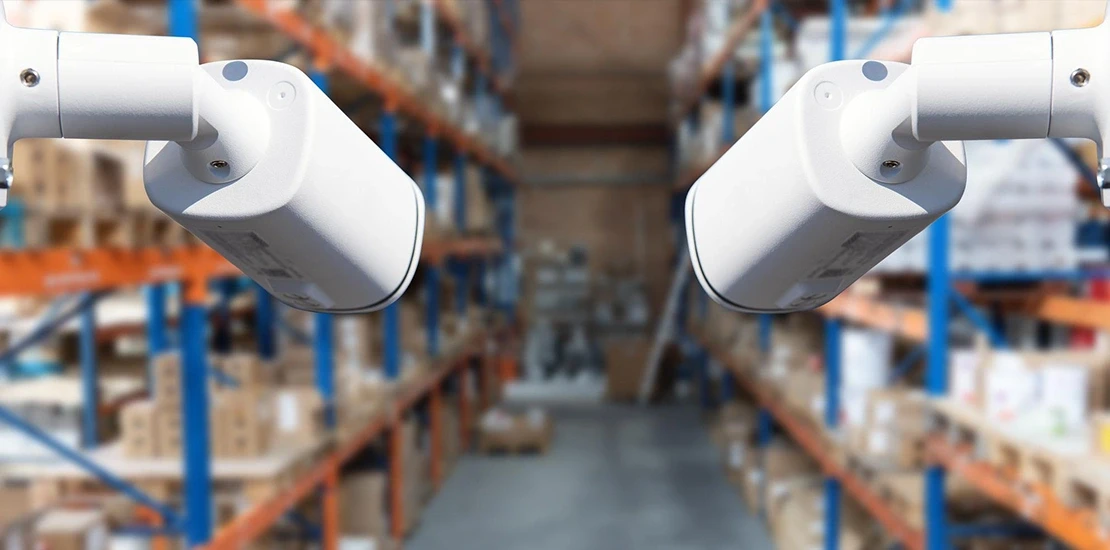
Installing warehouse CCTV cameras randomly without prior planning is one of the costliest mistakes industrial and logistics facility owners make. A warehouse is an entirely different space from any commercial or office building, with its long aisles, tall shelving, and multiple loading points, which makes determining optimal camera locations a process that requires a precise understanding of actual movement patterns and risks inside the space.
As the value of goods stored in Saudi Arabia’s logistics sector grows alongside expanding supply chains, investing in well-planned coverage has become more important than ever. This guide walks through the best locations for placing warehouse CCTV cameras, the right camera types for each area, and the criteria for choosing a specialized company to carry out the project.
Why Warehouse CCTV Camera Needs Differ from Other Facilities
A warehouse isn’t a uniform space — it’s a collection of areas entirely different in nature: elevated storage zones, internal movement aisles, loading and unloading points, and external entrances. Each area carries different risks requiring a different type of coverage; storage zones need precise monitoring to prevent internal theft, while loading points need wide-angle coverage to accurately track truck and goods movement. Ignoring this diversity and settling for a random distribution of standard cameras renders the surveillance system useless when actually needed to review footage of a specific incident.
Best Indoor Locations for Warehouse CCTV Cameras
Main entrances and exits always need dual coverage that ensures clear recording of faces and vehicle plates simultaneously, since they’re the mandatory crossing point for any person or goods entering or leaving the facility. High-value storage zones deserve denser coverage compared to general areas, with the need to carefully avoid blind spots created by tall shelving that can block visibility across entire sections of the warehouse. Similarly, long movement aisles between shelves need cameras distributed at regular, well-planned intervals to ensure there are no gaps in coverage, especially in large warehouses with multiple aisles.
Warehouse CCTV Cameras in Outdoor Yards
Outdoor areas are no less important than indoor ones when planning warehouse CCTV cameras. Truck parking yards and outdoor loading and unloading points need cameras with wide viewing range and high-quality night imaging capability, given the round-the-clock nature of work in many warehouses. Main gates and perimeter fences also need continuous, uninterrupted coverage, since they’re the first line of defense against any intrusion attempt or unauthorized entry before reaching the main building itself.
Optimal Camera Angles and Avoiding Blind Spots
Determining the correct camera angle is no less important than choosing the location itself. A camera mounted at a poorly considered angle may theoretically cover a wide area but leave actual blind spots at the nearest obstruction, like a storage rack or structural column. Practically speaking, it’s advisable to conduct a field simulation of people and equipment movement patterns inside the warehouse before finally mounting any camera, to confirm the chosen angle actually covers the most likely movement path, not just the empty space shown in a theoretical layout.
Camera Types Suited to Different Warehouse Zones
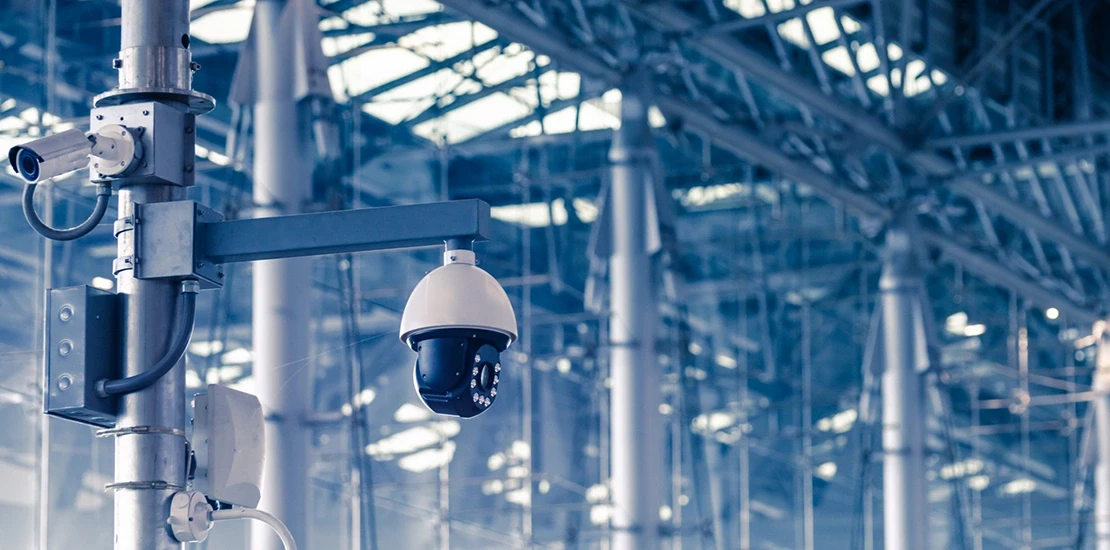
Fixed cameras are suitable for areas needing precise, unchanging angle monitoring, such as entrances and designated inspection points. PTZ cameras (pan-tilt-zoom) are used in large spaces like outdoor loading yards, where the security team can track suspicious movement and zoom in remotely without needing a large number of fixed cameras. Thermal cameras play an entirely different, vital role, used for early detection of abnormal temperature rises in storage areas or equipment, and are particularly useful in warehouses storing flammable materials.
Integration with Access Control and Alarm Systems
Warehouse CCTV cameras isolated from other security systems lose much of their practical value. Integration with the access control system allows linking every entry or exit event with a direct captured image, facilitating investigation of any security incident later. Similarly, integration with the fire alarm system allows the security team to immediately visually verify any alarm before deciding on evacuation, reducing false alarms and speeding up the actual response when genuinely needed.
Special Requirements for Hazardous Material Warehouses
Warehouses storing chemicals or flammable materials need additional considerations when designing their warehouse CCTV camera system. In these environments, explosion-proof cameras specifically designed to operate safely without causing any electrical spark that could pose an additional hazard are required. Similarly, these warehouses need denser coverage specifically around sensitive storage points, to be able to detect any leak or unsafe handling of stored materials as quickly as possible.
Common Mistakes in Warehouse CCTV Camera Placement
One of the most common mistakes is installing a large number of cameras without prior planning of actual movement patterns, leading to duplicated coverage of low-risk areas while neglecting more important ones. Another recurring mistake is ignoring adequate night coverage for outdoor yards, despite the fact that many theft incidents occur outside official working hours. Similarly, neglecting to plan for network and storage requirements from the start often leads to later technical problems, such as streaming interruptions or insufficient storage capacity to cover the review period required when needed.
Criteria for Choosing a Specialist for Warehouse CCTV Camera Installation
The difference between an ordinary company and one specialized in warehouse CCTV camera installation shows clearly at the planning stage before installation. A specialized company always begins with a comprehensive site visit to understand the nature of each area inside the warehouse, rather than relying on a generic uniform layout. Specialized firms such as Control Circle Company provide this kind of precise field assessment before any actual installation, in addition to Maintenance and Support services that ensure the system’s continued efficiency after handover — an important criterion when comparing any candidate company for your warehouse CCTV camera project.
Network and Storage Requirements for Warehouse CCTV Cameras
One of the technical aspects often overlooked when planning warehouse CCTV cameras is the network and storage infrastructure. A large number of high-resolution cameras requires a network capable of handling the transmitted data volume without delay or interruption, especially in large warehouses that may extend across wide areas requiring additional network access points distributed throughout the building. As for storage, choosing the type of recording device and storage capacity depends on the number of cameras, image resolution, and required retention period, which typically ranges between 30 to 90 days depending on the nature of activity and warehouse management requirements.
Practically speaking, it’s always best to plan for storage capacity larger than current needs to accommodate any future expansion in the number of cameras without needing to fully replace the infrastructure later, especially since warehouses often see periodic changes in storage zone layout depending on the volume of goods handled.
The Role of AI Video Analytics in Warehouse CCTV Cameras
Modern surveillance systems have moved beyond simple passive recording and can now proactively analyze video content through AI technologies. In a warehouse environment specifically, these technologies can detect failure to wear personal protective equipment such as helmets or reflective vests in designated areas, sending an immediate alert to the safety officer without needing continuous manual footage review. The system can also be programmed to detect unusual gatherings of people in high-risk areas, or the presence of a person in a restricted storage zone outside official working hours.
These technologies aren’t necessary for every warehouse, and determining the actual need for them depends on the facility’s size, the value of stored goods, and the nature of its operational risks. Large warehouses with high-value goods benefit more from this type of proactive analysis compared to small warehouses with limited risks.
On-Premise Storage vs. Cloud Solutions for Warehouse CCTV Cameras
One of the important technical decisions when designing a warehouse CCTV camera system is choosing the appropriate storage method. On-premise storage via a recording device inside the facility offers fast retrieval speed and full data control without relying on a stable internet connection, a preferred option for warehouses located in industrial areas that may suffer from weak internet coverage. Cloud solutions, on the other hand, offer greater flexibility in accessing footage from anywhere, in addition to extra protection against data loss if the local recording device is damaged or stolen — a plausible scenario in burglary incidents where the goal is often to hide the video evidence itself.
The Importance of Training the Warehouse Team on Using the System
Many warehouse management teams focus solely on the technical side of installation and overlook an equally important element: training the internal security team on using the system interface and efficiently reviewing footage. An advanced warehouse CCTV camera system without a team trained to use it loses much of its practical effectiveness, since the ability to quickly retrieve specific footage when actually needed is no less important than the recording quality itself. It’s therefore best to hire a company that includes a brief training session for the warehouse team as part of its service, explaining how the system works and how to search the archive and export clips when needed to present as evidence in any subsequent security investigation.
The Importance of Choosing the Control Room Location Carefully
Beyond the camera locations themselves, the location of the control room or central recording device is an important element often overlooked when planning warehouse CCTV cameras. It’s best for the control room to be in a protected area away from main entry points, to reduce the likelihood of any unauthorized person accessing it in the event of an actual intrusion attempt. Similarly, it’s advisable to install a backup recording device in a completely separate location, or rely on cloud backup, to ensure footage isn’t entirely lost if the main site is damaged or deliberately stolen with the aim of hiding evidence.
Documenting the Camera Installation Layout as a Future Reference
A useful practice often neglected is keeping a documented layout showing each installed camera’s location, angle, and type, rather than relying on memory or the original installation team’s knowledge alone. This layout becomes an important reference when maintaining any specific camera, or when planning any future expansion of the warehouse CCTV camera system, since it provides a comprehensive, quick picture of current coverage without needing to re-survey the entire site from scratch. Similarly, when changing the company responsible for maintenance later, this documentation eases the transition and ensures continuity of technical understanding of the existing system without knowledge gaps between the old and new teams.
Planning for Additional Coverage During Peak Operational Seasons
Some warehouses, especially those tied to retail and e-commerce, experience seasonal peak periods with significantly increased warehouse activity, such as major sale seasons or periods leading up to major events. During these periods, the number of temporary workers and loading/unloading activity increases noticeably, raising the likelihood of human error or security incidents compared to normal periods. Practically speaking, it’s advisable to review the adequacy of warehouse CCTV camera coverage before any expected peak season begins, and confirm that current storage capacity is sufficient to cover the additional expected volume of footage during this period, rather than discovering a coverage or capacity shortfall at the worst possible time.
Conclusion
Choosing the best locations for installing warehouse CCTV cameras requires a precise understanding of actual movement patterns and risks within each area, from the main entrances to the deepest storage aisles. Working with a specialized company that has genuine experience in industrial and logistics environments, along with early planning for network and storage requirements, is what ensures an effective surveillance system that serves its security and operational purposes long-term, instead of an investment that fails to withstand the actual challenges of a warehouse environment.
Frequently Asked Questions
How many warehouse CCTV cameras are appropriate for a medium-sized warehouse?
There’s no fixed number, since it depends on the warehouse’s area, number of aisles, and entry points; it’s best to rely on a site visit from a specialized company to determine the actual number required accurately.
Do elevated storage areas need special cameras?
Yes, tall shelving can create blind spots requiring well-considered camera angles or additional cameras distributed at different heights to ensure comprehensive coverage without gaps.
Can wireless cameras be used inside the warehouse?
This is possible in some areas, but electromagnetic interference generated by heavy equipment can affect signal quality, which is why wired cameras are generally considered the more reliable choice in these environments.
What’s the difference between indoor and outdoor warehouse coverage in terms of camera type?
Indoor areas usually need fixed cameras distributed densely according to aisle layout, while outdoor areas need PTZ cameras with wider viewing range and higher night imaging capability.
Should warehouse CCTV cameras be integrated with the fire alarm system?
Yes, and this is strongly recommended, since this integration allows immediate visual verification of any fire alarm before making evacuation decisions, reducing false alarms and speeding up the actual response.
How long does it take to install a complete system for a large warehouse?
The timeline varies depending on the warehouse’s size and the number of cameras required, but it typically includes site assessment, design, installation, and testing stages, and can range from two weeks to a month depending on project complexity.
Do hazardous material warehouses need special cameras?
Yes, these warehouses need explosion-proof cameras specifically designed to operate safely in environments containing flammable materials or gases without causing any additional hazard.
Can an existing warehouse camera system be upgraded instead of fully replaced?
Yes, in many cases new cameras can be added or the recording device updated within the existing infrastructure, provided the current network can accommodate the new additions without affecting overall system performance.
Do monitoring needs differ between a small warehouse and a large multi-building warehouse?
Yes, multi-building facilities need more complex network planning to link all locations to a unified monitoring center, in addition to typically needing a larger number of PTZ cameras to cover open spaces between different buildings.
Can the warehouse camera system be monitored remotely from outside the site?
Yes, most modern systems support remote access via dedicated apps or secure web platforms, provided there’s a stable internet connection and defined access permissions that protect the system from unauthorized access.