 Get a Quote

Security Cameras Law Saudi Arabia: Requirements Every Facility Must Know
Security Cameras Law Saudi Arabia: Requirements Every Facility Must Know
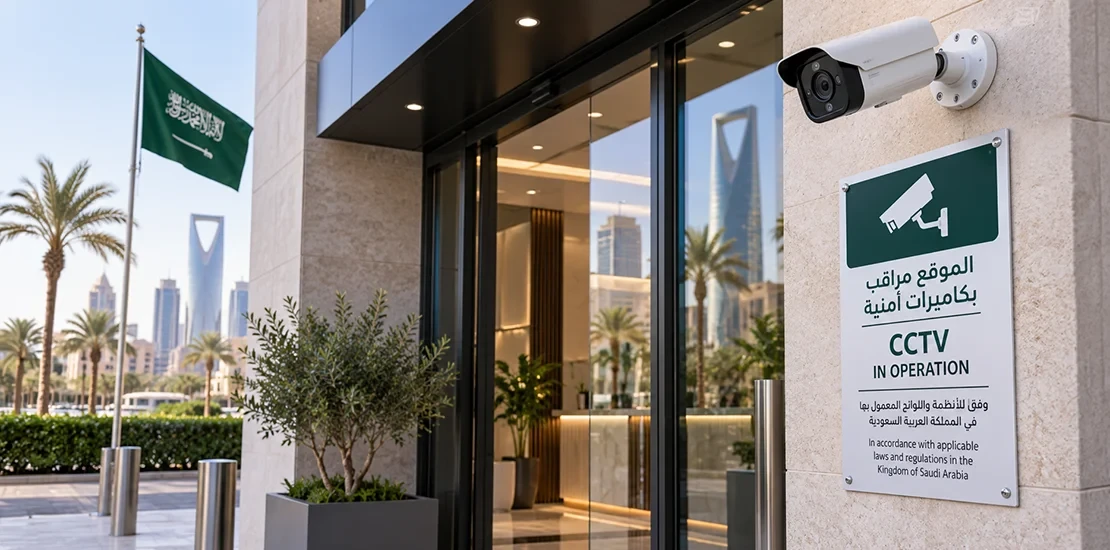
Security cameras are now part of almost every shop, tower, warehouse, and public space in the Kingdom, but installing them is no longer a free choice. The security cameras law Saudi Arabia introduced governs who must install cameras, where they may and may not point, how long recordings must be kept, and who is allowed to view or share them. For a facility owner, understanding this law is not optional: it is tied directly to your license, your commercial registration, and your exposure to fines.
This guide explains, in plain language, what the security cameras law Saudi Arabia requires: which facilities are covered, where cameras must and must not be installed, how long footage must be retained, the rules on sharing recordings, the penalties for breaking them, and the practical steps to stay compliant. Because this is a legal topic that is updated over time, treat it as a starting point and always confirm the current requirements with the official sources before you act.
Last updated: October 2026. This article is for general information only and is not legal advice. Always verify the current requirements against the official law and its executive regulation on the Bureau of Experts at the Council of Ministers (laws.boe.gov.sa) and with the Ministry of Interior.
What Is the Security Cameras Law in Saudi Arabia?
The security cameras law Saudi Arabia applies today, officially the Law of the Use of Security Surveillance Cameras, was approved by the Council of Ministers in September 2022 and issued by Royal Decree in October 2022, taking effect in 2023. It is accompanied by an executive regulation and a detailed security requirements document that set out the technical and placement rules. Together, these turn security cameras from a private decision into a regulated obligation designed to protect both public security and personal privacy.
Who Regulates Security Cameras in Saudi Arabia?
The main authority behind the security cameras law Saudi Arabia enforces is the Ministry of Interior, acting mainly through the General Directorate of Public Security, with a role for the State Security Presidency. Compliance, fault reporting, and approvals are handled through an official electronic platform. Crucially, the licensing authorities may not issue or renew an operating license or commercial registration unless the facility holds a certificate confirming that its cameras meet the requirements, which is what gives the security cameras law Saudi Arabia its day-to-day force.
Which Facilities Must Install Security Cameras
The security cameras law Saudi Arabia covers a wide range of establishments, and the Ministry of Interior can add more. Commonly covered facilities include:
| Sector | Examples Covered by the Law |
| Government and public | Ministries, public institutions, and museums |
| Commercial | Shopping complexes, retail centers, and warehouses |
| Financial | Banks, ATMs, and financial institutions |
| Hospitality and residential | Hotels, furnished apartments, residential towers, and complexes |
| Health and education | Hospitals, clinics, and schools |
| Infrastructure and energy | Fuel stations, power and desalination plants, and transport hubs |
| Food service and events | Restaurants, cafes, exhibitions, and entertainment venues |
Retail shops are squarely within scope, which is why store owners should read this alongside our guide on CCTV for retail stores. Note that shops inside enclosed shopping malls and buildings used only as offices are exempt from certain exterior-camera requirements, but the detail should always be checked against the current regulation.
Where Cameras Must Be Installed
Beyond naming the facilities, the executive regulation of the security cameras law Saudi Arabia specifies the exact points a covered building must monitor so that no critical area is left blind:
- Entrances and reception. Main entrances, building entrances, and reception desks within identification range.
- Circulation areas. Main lobbies, corridors on all floors, stairs, and escalators.
- High-value and cash points. ATMs, cash areas, warehouses, and storage areas.
- Safety-critical points. Emergency exits and fire equipment locations.
- Parking and vehicles. Parking entrances and exits within plate-reading range, drop-off zones, and loading and unloading areas.
- Service rooms. Electrical, water tank, central air-conditioning, and gas cylinder rooms, and fuel stations.
Perimeter and external coverage often overlaps with dedicated perimeter security systems, which is why many facilities plan the two together rather than separately.

Where Cameras Are Prohibited
The security cameras law Saudi Arabia is as strict about privacy as it is about coverage. Cameras are not allowed in places where they would violate personal privacy, including:
- Restrooms and changing rooms. Toilets, changing rooms, and similar private spaces.
- Medical privacy areas. Operating rooms, examination and inpatient rooms, and physical therapy rooms.
- Personal-care and private areas. Women’s salons and clubs’ private areas, and residential units inside tourist accommodation.
In addition, privacy masking is required for pan-tilt-zoom cameras, for rooftop cameras that can see beyond the property boundary, and for high-specification or zoom cameras that reach beyond about 150 meters. Recording sound and using thermal cameras require prior approval from the General Directorate.
Recording Retention: How Long You Must Keep Footage
Retention is one of the most important and most misunderstood parts of the security cameras law Saudi Arabia. The law itself does not fix a single number for every facility; instead, the retention period is set in the security requirements document according to the type of establishment, and recordings must be kept at least for the period stated there or until any investigation is complete, whichever is longer. For commercial establishments, retention of around 120 days has been reported, but because these periods are set per facility type and can change, the exact duration for your building must be confirmed against the current requirements document.
When an incident is reported, the relevant recordings must be preserved unaltered until the investigation ends, and a facility that fails to retain recordings is given a short remedy period to put matters right.
Rules on Transferring and Publishing Recordings
One of the strictest provisions of the security cameras law Saudi Arabia concerns what you may do with the footage. Recordings may not be copied, transferred, or published without approval from the Ministry of Interior or the State Security Presidency, a court order, or a request from the competent investigating authority. This is why posting security footage on social media, even of a genuine incident, can itself be a violation that carries one of the heaviest fines under the security cameras law Saudi Arabia. Treat every recording as confidential data, not content to be shared.
Owner Obligations at a Glance
- Keep cameras working. Cameras must be operational at all times; faults must be reported through the official platform and fixed promptly.
- Post warning signs. Visible signs at entrances and exits must inform people that cameras are in use, following the official diagrams.
- Secure the recordings. Use dedicated storage, restrict access to authorized persons, keep an access log, and store equipment in a secure location.
- Obtain the compliance certificate. A certificate confirming the cameras meet requirements is needed for issuing or renewing licenses and commercial registrations.
- Respect privacy limits. Apply privacy masking where required and avoid prohibited locations entirely.
Penalties for Violations
Breaches of the security cameras law Saudi Arabia are reviewed by a committee in each province appointed by the Minister of Interior, and the published schedule of fines is designed to escalate with the seriousness of the breach. The figures below reflect the penalty schedule as reported; confirm the current amounts against the official text.
| Violation | Fine (as reported) |
| Camera or device that does not meet the technical specifications | From SAR 500 per device |
| Installing a camera in a prohibited location | Up to SAR 10,000 |
| Failing to retain recordings as required | Up to SAR 5,000 |
| Transferring, copying, or publishing recordings without approval, or damaging recordings or equipment | Up to SAR 20,000 |
These fines are applied without prejudice to any heavier penalties under other laws, and a penalty decision can be appealed to the administrative court within sixty days of notification.

Does the Security Cameras Law Apply to Homes?
A common question is whether the security cameras law Saudi Arabia reaches private homes. The security cameras law Saudi Arabia and its executive regulation focus on establishments and facilities, and they also list residential buildings such as towers and housing complexes among covered locations, where the concern is common areas like entrances, lobbies, and parking rather than the inside of private units.
A homeowner installing a camera on their own property still has to respect privacy, which means not pointing it at a neighbor’s windows, entrances, or private areas. For any shared residential building, the safest approach is to treat the common areas under the security cameras law Saudi Arabia the same way a commercial facility would, and to confirm the specific obligations with the managing body or the authorities.
Keeping Up with Changes to the Law
Because the security cameras law Saudi Arabia is supported by an executive regulation and a requirements document, the fine detail, such as exact retention periods, technical specifications, and covered locations, can be updated over time. When the security cameras law Saudi Arabia first came into force, facilities were given a grace period to comply, and the authorities continue to refine the requirements. For a facility owner this means compliance is not a one-time task: the camera layout, retention settings, and documentation should be reviewed periodically, and before any major change you should always check the current text with the official sources rather than relying on an older summary.
How the Law Connects to Your Other Security Systems
Complying with the security cameras law Saudi Arabia is easier when cameras are not treated in isolation. In practice, CCTV works best as part of integrated security systems that bring cameras, access control, and alarms into one managed solution, which also makes it simpler to control who can view and export recordings, exactly as the law demands. Designing surveillance, perimeter protection, and access control together produces both better security and cleaner compliance.
Camera Specifications and Placement
The security requirements document behind the security cameras law Saudi Arabia sets coverage standards such as recognition distances and plate-reading ranges, along with rules on image quality and secure storage. Meeting them reliably, especially across large or complex sites, is where professional design matters, as explained in our guide to smart CCTV systems for industrial facilities. Getting specifications and placement right the first time avoids the per-device fines for non-compliant equipment and the cost of reworking an entire installation.
How to Stay Compliant
- Start with a survey. Map every required point and every prohibited area before buying any equipment.
- Use compliant equipment. Choose cameras and storage that meet the technical specifications in the requirements document.
- Cover the mandatory points. Entrances, corridors, parking, cash points, and service rooms, all within the required ranges.
- Respect privacy rules. Avoid prohibited locations and apply privacy masking where it is required.
- Set retention correctly. Configure storage to keep recordings for the period required for your facility type.
- Control access. Restrict viewing and exporting, keep an access log, and never publish footage without approval.
- Keep documentation. Maintain the compliance certificate and records for license renewals and inspections.
A qualified provider of CCTV systems can handle this end to end, from survey and design to installation, the compliance certificate, and ongoing maintenance, so your facility stays on the right side of the law.
Common Compliance Mistakes to Avoid
- Copying footage to a phone. Sharing or publishing recordings without approval is one of the most heavily fined violations.
- Pointing cameras at private areas. A camera covering a restroom, changing room, or medical area breaches the security cameras law Saudi Arabia outright.
- Short retention settings. Overwriting footage too soon can leave you unable to meet the required retention period.
- No warning signage. Missing camera-in-use signs is a simple but common breach.
- Ignoring faults. A camera left broken is treated as non-compliant and must be reported and repaired.
- Buying on price alone. Non-compliant cameras trigger per-device fines and usually have to be replaced anyway.

Conclusion
The security cameras law Saudi Arabia turned surveillance from an optional add-on into a regulated duty that touches licensing, privacy, and liability at once. By installing cameras at the required points, avoiding prohibited areas, retaining footage for the correct period, protecting recordings from unauthorized sharing, and keeping the compliance certificate current, a facility meets both the security and the privacy goals the law was written to serve. Because the detailed rules are set in the executive regulation and requirements document and can change, the safest approach is to design for compliance from the start and verify the current requirements before every major decision.
Need help meeting the security cameras law in Saudi Arabia? The CCCO team can survey your facility, design and install a compliant CCTV system, help with the required documentation, and maintain it so your coverage, retention, and privacy controls stay in line with the regulation. Contact us to request a site assessment. This article is informational and not a substitute for legal advice or the official text.
Frequently Asked Questions
What is the security cameras law in Saudi Arabia?
It is the Law of the Use of Security Surveillance Cameras, issued by Royal Decree in 2022 and enforced by the Ministry of Interior, which governs who must install cameras, where, for how long recordings are kept, and who may view or share them.
Which facilities must install security cameras?
A wide range, including commercial complexes, retail stores, banks, hotels, residential towers, hospitals, schools, fuel stations, warehouses, and restaurants, with the Ministry of Interior able to add others.
Where are security cameras prohibited?
In places that violate privacy, such as restrooms, changing rooms, operating and examination rooms, physical therapy rooms, and private areas of women’s salons, plus certain tourist-accommodation units.
How long must recordings be kept?
The retention period is set per facility type in the security requirements document; around 120 days has been reported for commercial establishments. Footage linked to a reported incident must be preserved until the investigation ends. Confirm the current period for your facility.
Can I post security camera footage on social media?
No. Recordings may not be transferred, copied, or published without approval from the authorities, a court order, or a request from the investigating authority. Unauthorized publishing carries a fine of up to SAR 20,000.
What are the penalties for breaking the law?
Reported fines range from SAR 500 per non-compliant device, up to SAR 5,000 for failing to retain recordings, up to SAR 10,000 for a camera in a prohibited location, and up to SAR 20,000 for unauthorized sharing or damaging recordings, without prejudice to other laws.
Does the law affect my commercial license?
Yes. Licensing authorities require a certificate confirming your cameras meet the requirements before issuing or renewing an operating license or commercial registration