 Get a Quote

Electrical Panel Fire Suppression: Protecting Switchgear and Control Cabinets
Electrical Panel Fire Suppression: Protecting Switchgear and Control Cabinets
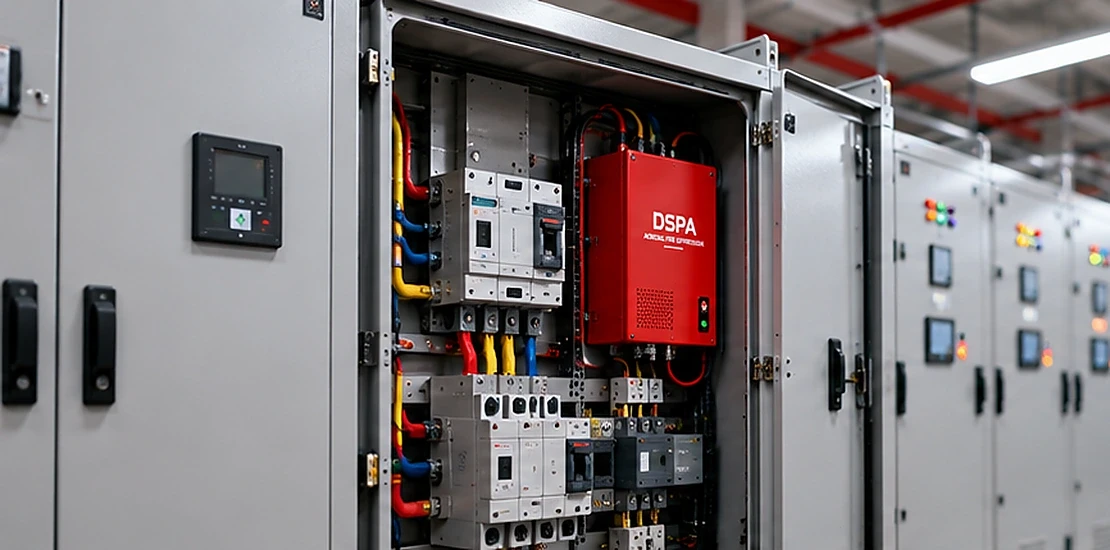
Most serious building fires that start inside electrical rooms do not begin as a dramatic blaze. They begin quietly, inside a closed cabinet, as a loose connection heats up or an overloaded busbar starts to arc. By the time smoke is seen outside the panel, the fire has often already damaged the equipment and can spread to the rest of the building. Electrical panel fire suppression is designed to stop that fire inside the cabinet, in its first seconds, before anyone is even aware of it.
This guide explains what electrical panel fire suppression is, why electrical panels are such a common ignition source, which technologies protect them, and how to choose, install, and maintain the right system. Because panels hold energized equipment that must keep running, the goal is not just to put the fire out but to do it without water, without damaging the equipment, and without requiring a person to be present.
What Is Electrical Panel Fire Suppression?
Electrical panel fire suppression is an automatic, self-contained system installed inside an electrical cabinet to detect and extinguish a fire at its source. Instead of protecting a whole room, the system protects the specific enclosure where the fire is most likely to start: a main distribution board, a motor control center, a switchgear cubicle, a UPS cabinet, or a control panel. When a fire is detected inside the cabinet, the system discharges a suppression agent directly into that enclosed space and puts the fire out in seconds.
Because electrical panel fire suppression works at the level of a single cabinet, it is often called local-application or in-cabinet protection. It is compact, needs no large pipework, and in most designs does not even require mains power to operate, so it keeps protecting the panel even during a power failure.
Why Electrical Panels Catch Fire
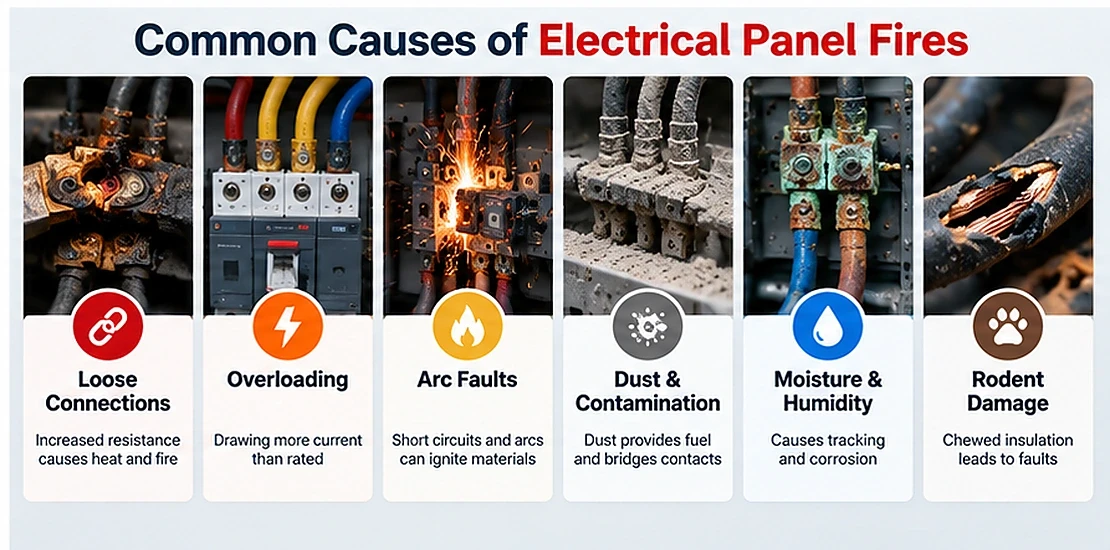
Understanding the causes helps explain why dedicated electrical panel fire suppression is worth the investment. A proper fire risk assessment of a facility almost always flags electrical panels as a high-priority ignition source, because the conditions inside a busy cabinet favor fire:
- Loose or corroded connections. A loose terminal increases resistance, heats up, and can ignite nearby insulation.
- Overloading and overheating. Circuits drawing more current than they are rated for overheat conductors and components.
- Arc faults and short circuits. A sudden arc can reach thousands of degrees and ignite surrounding materials instantly.
- Dust and contamination. Accumulated dust bridges contacts and provides fuel, especially in industrial environments.
- Moisture and humidity. Condensation and humidity cause tracking and corrosion that lead to faults.
- Ageing insulation and components. Old breakers, relays, and cables degrade and become more likely to fail.
- Rodent and pest damage. Chewed insulation is a frequent and overlooked cause of cabinet fires.
Why Water-Based Systems Do Not Suit Electrical Panels
Water and energized electrical equipment are a dangerous combination: water conducts electricity, creates a shock and short-circuit hazard, and destroys the very equipment it is meant to save. A sprinkler in the room may eventually react to a cabinet fire, but only after the fire has escaped the panel and the heat has risen to the ceiling, by which time the damage is done. This is the same reason clean, waterless agents are preferred for sensitive areas, as explained in our comparison of DSPA vs traditional fire suppression systems. Electrical panel fire suppression uses non-conductive agents that extinguish the fire without water, without residue, and without harming the energized equipment.
Local Application vs Total Flooding
There are two ways to protect electrical equipment, and they solve different problems. Total flooding fills an entire room with a suppression agent and is the right approach for a space full of equipment, such as a data hall or a large electrical room; that room-level approach, including clean-agent and aerosol flooding, is covered in our guide on server room fire suppression. Local application, by contrast, targets the individual cabinet. Electrical panel fire suppression is a local-application solution: it is far more economical than flooding a whole room, it reacts earlier because the detector sits right next to the fire, and it can be added to a single high-risk panel without rebuilding the room.
Types of Electrical Panel Fire Suppression Systems
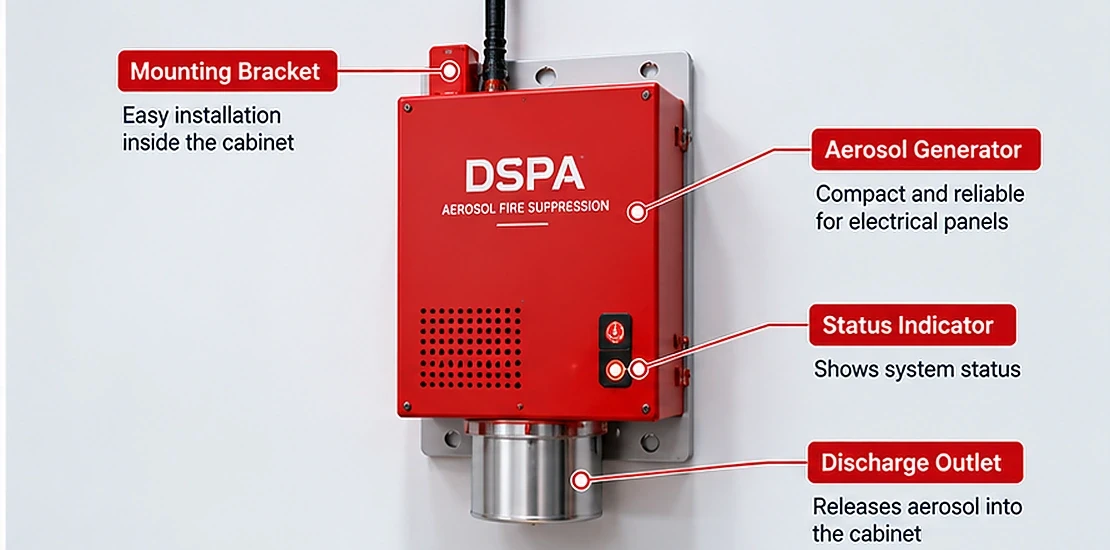
Several technologies are used for electrical panel fire suppression, and the best choice depends on the cabinet size, the equipment inside, and the environment. The three most common options are condensed aerosol generators, tube-based detection and suppression systems, and small clean-agent units. Our aerosol fire suppression systems are a strong fit for cabinet protection because they are compact and leave no residue.
| System Type | How It Protects the Panel | Best For |
| Condensed aerosol generator | A compact unit releases a fine potassium-based aerosol that chemically interrupts combustion; no piping or pressurized cylinder | Small to medium cabinets, retrofits, panels without mains power |
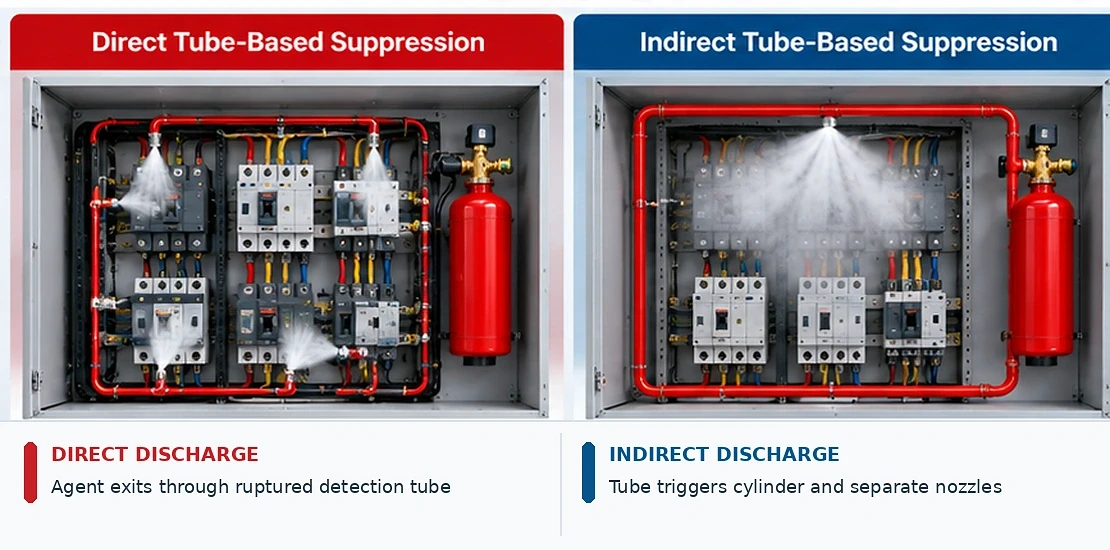
| Tube-based system (direct/indirect) | A pressurized detection tube ruptures at the hottest point and releases agent exactly there, or signals a separate nozzle | Enclosed cabinets where pinpoint, self-activating detection is needed |
| Clean-agent unit (Novec 1230 / FM200) | A small cylinder floods the cabinet with a non-conductive, residue-free gas | Cabinets with sensitive electronics requiring clean, fast knock-down |
How Condensed Aerosol Suppression Works
A condensed aerosol generator is a sealed canister, small enough to mount inside a cabinet, that contains a solid compound. When activated, the compound converts into a very fine aerosol of potassium salts suspended in gas. This aerosol fills the enclosure and chemically interrupts the chain reaction of combustion, putting the fire out quickly. Because the aerosol is not stored under pressure, there is no cylinder, no piping, and no need for mains power; many units are triggered thermally or by a simple detection line. Condensed aerosol is governed by standards such as NFPA 2010, is non-conductive, and is especially effective in the small, enclosed volumes typical of electrical panels.
How Tube-Based Systems Work: Direct and Indirect
Tube-based electrical panel fire suppression uses a flexible polymer tube, pressurized with agent or gas, routed through the cabinet along the highest-risk components. The tube is both the detector and, in one version, the delivery path. When a fire raises the temperature at any point, the tube bursts at that exact spot. In a direct system the agent is discharged straight out of the burst hole onto the fire. In an indirect system the drop in tube pressure opens a valve on a separate cylinder, which then discharges agent through dedicated nozzles. Both are fully automatic and need no electrical power, which makes them reliable for unmanned and remote panels.
| Tube System | Detection | Agent Delivery | Typical Use |
| Direct | Tube bursts at the hot spot | Agent discharges from the burst point itself | Small single cabinets |
| Indirect | Tube bursts and drops pressure | Separate cylinder discharges through nozzles | Larger or multiple cabinets |
Detection Methods for Panel Fires
Fast detection is what makes electrical panel fire suppression effective. Thermal detection tubes and bulbs react to the heat of an incipient fire inside the cabinet. Some systems add smoke or spark detection for even earlier warning, and higher-end installations use very early smoke detection to catch overheating before flames appear. Whatever the method, the detector must sit inside the enclosure, close to the components most likely to fail, so it senses the fire long before a room detector ever could.
Choosing the Right System for Your Panels
Selecting electrical panel fire suppression is a matter of matching the system to the cabinet and the risk. Key factors include:
- Cabinet volume. The agent quantity must match the enclosed volume so the right concentration is reached.
- Equipment sensitivity. Sensitive electronics favor residue-free clean agents; rugged switchgear is well served by aerosol.
- Power availability. Self-activating aerosol and tube systems keep working during a power outage.
- Access and maintenance. Choose a system that can be inspected and refilled without taking the whole panel out of service.
- Dust, heat, and humidity affect which detection method and agent perform best.
- Integration needs. Decide whether the system must signal the fire alarm and trip the panel’s power on discharge.
Where Electrical Panel Fire Suppression Is Needed
Electrical panel fire suppression is valuable anywhere a cabinet fire would cause disproportionate damage or downtime. Common applications include main distribution boards and motor control centers in commercial and industrial buildings, switchgear rooms in malls and hospitals, UPS and battery cabinets, control panels for HVAC and production lines, and panels in unmanned sites such as telecom shelters, pump stations, and solar inverters. In each case, protecting the individual panel stops a small fault from becoming a facility-wide emergency.
Standards and Compliance in Saudi Arabia
In the Kingdom, electrical panel fire suppression should follow the fire protection requirements of the Saudi Building Code (SBC 801) and the approvals of the General Directorate of Civil Defense, together with the international standards that govern each agent: NFPA 2010 for aerosol systems and NFPA 2001 for clean agents such as Novec 1230 (FK-5-1-12) and FM200 (HFC-227ea), along with product listings such as UL. Components should be listed and approved, sized by the manufacturer’s design method for the cabinet volume, and installed by a qualified contractor. Facility owners should confirm the exact requirements for their occupancy with an approved designer before installation.
Installation Requirements and Best Practices
- Size by cabinet volume. The agent quantity must be calculated for the enclosed volume, not guessed.
- Detector placement. Put detection directly above or beside the components most likely to overheat.
- Seal the enclosure. Gaps and cable entries let the agent escape and reduce concentration; seal them where practical.
- Listed, approved components. Use agents and generators listed for electrical use and rated for the environment.
- Safe mounting. Mount units so discharge is not blocked and so they can be serviced safely.
- Test detection and signaling, confirm the agent quantity, and document the installation.
Integration with the Facility
Electrical panel fire suppression works best when it is not an island. On discharge, the system should send a signal to the building fire alarm so staff know which panel is affected, and in many designs it should trip the power to the protected cabinet to remove the ignition source. These links are part of the facility’s low current systems, which tie detection, alarm, and control together. Proper integration means a cabinet fire is suppressed automatically and reported instantly, rather than discovered later by chance.
Inspection and Maintenance
Like any fire system, electrical panel fire suppression must be maintained to stay reliable. Routine checks confirm that the generator or cylinder is within its service life and correct weight or pressure, that detection tubes and bulbs are intact, that signaling to the alarm works, and that the enclosure is still sealed after any cabinet changes. Aerosol generators and clean-agent units have a defined service life and must be replaced or refilled on schedule. Keeping dated records supports Civil Defense renewals and insurance, and any panel modification should trigger a review so the protection still matches the equipment inside.
Climate Considerations in Saudi Arabia
The local climate raises the fire risk inside electrical panels, which makes electrical panel fire suppression even more valuable. High ambient temperatures push cabinets closer to their thermal limits, so overloaded or poorly ventilated panels overheat faster. Dust and sandstorms contaminate contacts and bridge connections, a frequent cause of arcing. Humidity in coastal areas accelerates corrosion and tracking. These conditions also affect the suppression system itself: detection settings and agent service life should account for the heat, and cabinets should be kept clean and sealed so the agent performs as designed.
Signs an Electrical Panel May Be Overheating
Electrical panel fire suppression is the last line of defense, but early warning signs let you act before a fire ever starts. Staff should report a warm or hot panel door, a smell of burning plastic or an acrid odor near the cabinet, discoloration or scorch marks around terminals, a buzzing or crackling sound from inside, flickering lights or breakers that trip repeatedly, and visible dust or moisture when the panel is opened for inspection. Any of these signs means the panel should be checked by a qualified electrician without delay, because the same faults that produce these symptoms are exactly what the suppression system is there to catch if they are left unaddressed.
Common Mistakes to Avoid
- Relying on room sprinklers. A ceiling sprinkler reacts far too late and with water, which is the wrong agent for a panel.
- Leaving the enclosure open. Unsealed gaps let the agent escape and can prevent the fire from being suppressed.
- Wrong agent quantity. An undersized unit cannot reach the concentration needed to put the fire out.
- No power trip. Suppressing the fire without cutting power can let the ignition source reignite.
- Skipping maintenance. An expired generator or leaked cylinder gives a false sense of protection.
- Ignoring the root cause. Suppression is a safety net, not a substitute for fixing loose connections and overloads.
Conclusion
Electrical panels are one of the most common places a building fire starts, and they are the hardest place for a conventional system to protect. Electrical panel fire suppression solves this by placing fast detection and a clean, non-conductive agent inside the cabinet itself, stopping the fire in its first seconds, protecting the equipment, and keeping the fault contained. Chosen to match the cabinet and the risk, installed to standard, and maintained on schedule, it turns the most dangerous enclosure in the building into one of the best protected.
Want to protect your switchgear and control cabinets? The CCCO team can assess your panels, recommend the right aerosol, tube-based, or clean-agent solution, install it to Saudi Civil Defense requirements, and maintain it with full documentation throughout the year. Contact us to request a site assessment.
Frequently Asked Questions
What is electrical panel fire suppression?
It is an automatic, self-contained system installed inside an electrical cabinet that detects and extinguishes a fire at its source using a non-conductive agent, without water.
Why can’t I just use a sprinkler for electrical panels?
Water conducts electricity and damages energized equipment, and a room sprinkler reacts only after the fire has left the cabinet. A dedicated in-cabinet system reacts in seconds with a clean agent.
What agents are used for electrical panel fire suppression?
The most common are condensed aerosol, and clean agents such as Novec 1230 (FK-5-1-12) and FM200 (HFC-227ea), all of which are non-conductive and leave little or no residue.
Does the system need electrical power to work?
Most aerosol and tube-based systems are self-activating and work without mains power, so they keep protecting the panel even during a power failure.
What is the difference between local application and total flooding?
Local application protects a single cabinet from the inside, while total flooding fills a whole room. Panels are best protected locally; rooms full of equipment may need flooding.
Is electrical panel fire suppression required in Saudi Arabia?
Requirements depend on the occupancy and risk under the Saudi Building Code and Civil Defense, and systems should follow standards such as NFPA 2010 and NFPA 2001. Confirm with an approved designer.
Should the system cut the panel’s power when it discharges?
In most designs, yes. Tripping the power removes the ignition source and helps prevent the fire from reigniting after the agent clears.