 Get a Quote

Fire Risk Assessment: How to Identify Fire Hazards Before They Become Emergencies
Fire Risk Assessment: How to Identify Fire Hazards Before They Become Emergencies
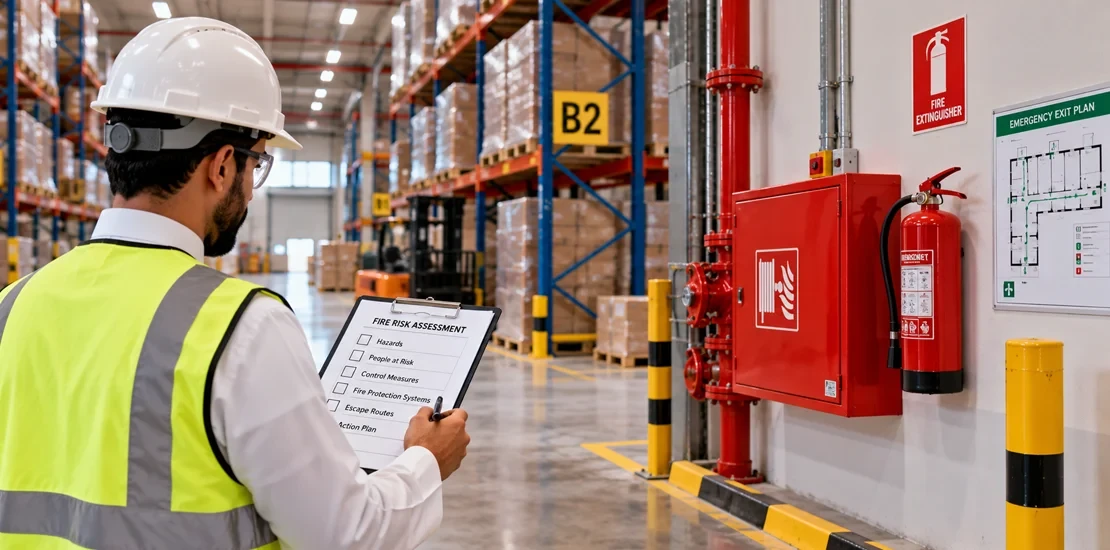
Most serious fires in commercial buildings do not come from rare or unpredictable events. They start from known hazards that were left unmanaged: an overloaded extension cable behind a reception desk, cardboard stacked next to an electrical panel, a blocked fire exit, or hot work carried out without supervision. A fire risk assessment is the structured process that finds these hazards before they turn into emergencies.
For facility owners and managers in Saudi Arabia, a fire risk assessment is also the foundation for choosing the right fire protection systems, writing emergency plans, and demonstrating compliance with Civil Defense requirements. This guide explains what a fire risk assessment is, the five practical steps to carry one out, the common hazards found in different facilities, and how to turn the findings into real improvements.
What Is a Fire Risk Assessment?
A fire risk assessment is a systematic review of a building and its activities to identify fire hazards, evaluate who could be harmed and how, and decide what measures are needed to remove or reduce the risk. It looks at three questions: what could start a fire, what could burn, and how well people are protected if a fire does start.
The assessment covers both prevention and protection. Prevention means controlling ignition sources and combustible materials so a fire is less likely to start. Protection means making sure that if a fire does occur, it is detected early, controlled quickly, and that everyone can escape safely.
Why Your Facility Needs a Fire Risk Assessment
- Protecting lives. Identifying hazards and escape route weaknesses reduces the risk of injury and loss of life.
- Protecting the business. A serious fire can stop operations for months, damage equipment and stock, and harm the company’s reputation.
- Supporting compliance. Civil Defense requirements expect facilities to manage fire hazards, maintain fire protection systems, and keep escape routes safe. A documented fire risk assessment helps demonstrate this.
- Guiding investment. The findings show where spending on detection, suppression, or training will make the biggest difference.
- Insurance support. Insurers increasingly expect evidence that fire risks are identified and controlled.
Understanding Fire Hazards: The Fire Triangle
Every fire needs three elements: a source of ignition, fuel, and oxygen. A fire risk assessment uses this simple model to organize hazards:
- Ignition sources. Faulty or overloaded electrical equipment, heaters, cooking appliances, hot work such as welding and cutting, smoking, friction in machinery, and arson.
- Paper and cardboard, packaging, furniture, textiles, plastics, flammable liquids and gases, waste, and dust from some processes.
- Normally the air around us, but also oxygen cylinders in hospitals and workshops, and ventilation systems that can feed and spread a fire.
Fire hazards are greatest where these three elements come close together, such as combustible storage next to electrical equipment, or flammable liquids near a hot work area. Separating them is one of the most effective controls.
Preparing for a Fire Risk Assessment
Good preparation makes the assessment faster and more accurate. Before the site visit, gather the documents that describe how the building is designed and managed:
- Floor plans and fire protection drawings, including alarm, sprinkler, and escape route layouts.
- Recent inspection, testing, and maintenance records for all fire protection systems.
- Records of fire drills, staff training, and any previous fires, false alarms, or near misses.
- Details of occupancy, working hours, night shifts, and any people who may need help to evacuate.
- Information on hazardous materials stored or used on site, with their safety data sheets.
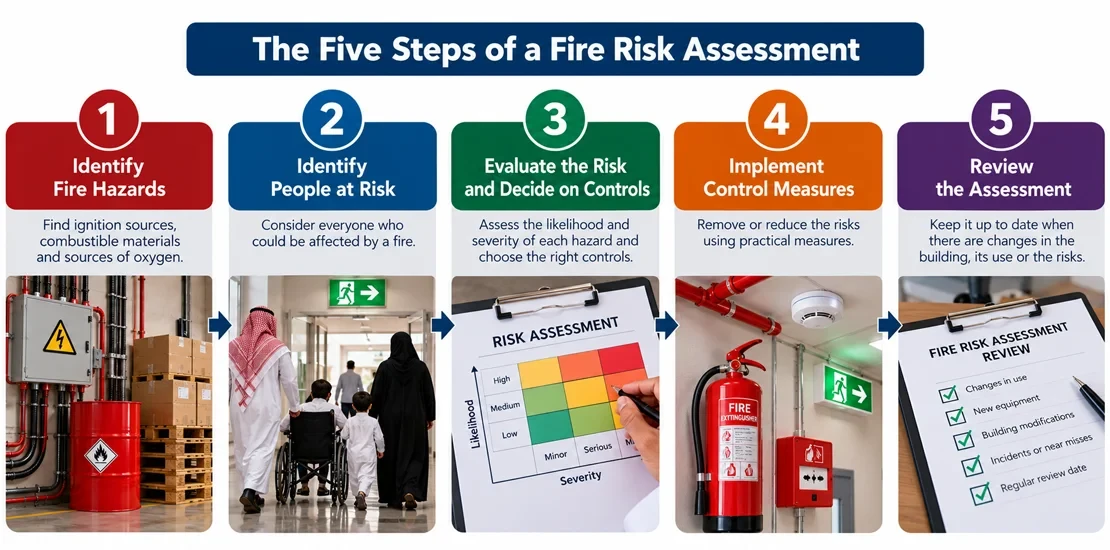
The Five Steps of a Fire Risk Assessment
A practical fire risk assessment follows five clear steps. Each step builds on the one before it:
Step 1: Identify Fire Hazards
Walk through every part of the building, including plant rooms, roofs, basements, kitchens, stores, and tenant areas. Record all ignition sources, combustible materials, and sources of oxygen. Talk to staff about how areas are actually used, because daily practice is often different from what is shown on drawings.
Step 2: Identify People at Risk
Consider everyone who could be affected by a fire: employees, visitors, contractors, customers, patients, and residents. Pay special attention to people who may need help to evacuate, such as people with disabilities, elderly people, children, lone workers, people working at night, and anyone unfamiliar with the building.
Step 3: Evaluate the Risk and Decide on Controls
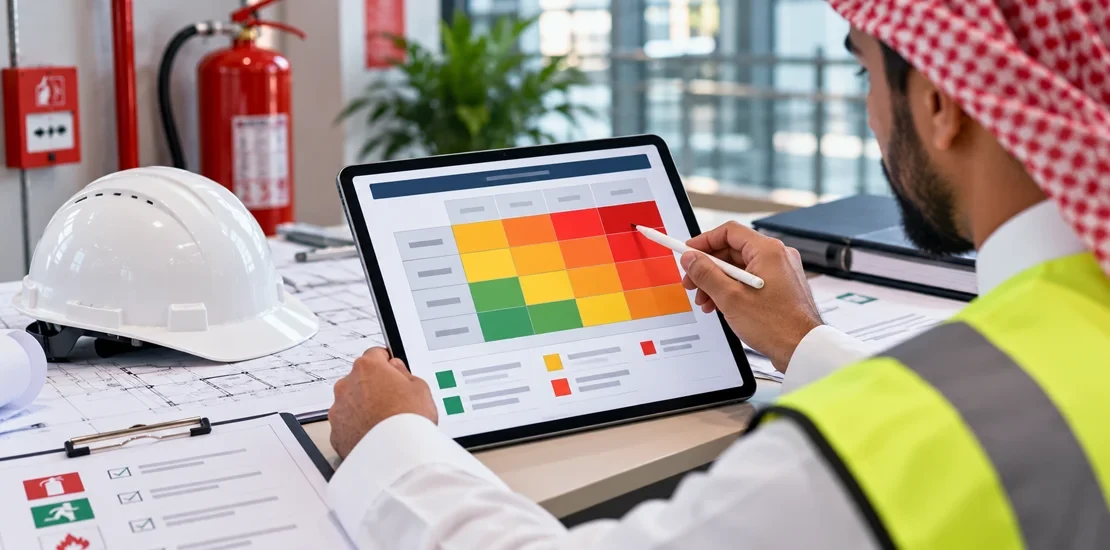
For each hazard, judge how likely a fire is and how serious the consequences would be. Then decide whether the risk can be removed, or reduced through better controls. A simple risk matrix helps rank priorities:
| Likelihood / Severity | Minor | Serious | Major |
| Unlikely | Low | Low | Medium |
| Possible | Low | Medium | High |
| Likely | Medium | High | Very High |
Controls should follow a clear order: first remove the hazard where possible, then reduce it, then separate fuel from ignition sources, and finally protect people with detection, suppression, and safe escape. Protection measures may include an addressable fire alarm system for faster detection, a fire sprinkler system to control fire growth, and other firefighting systems suited to specific risks such as electrical rooms or kitchens.
Step 4: Record, Plan, and Train
Document the significant findings, the actions required, the person responsible, and the target date for each action. Prepare or update the emergency plan, including evacuation procedures, assembly points, and roles for fire wardens. Make sure staff are trained on the fire risks in their area, how to raise the alarm, how to use extinguishers safely, and how to evacuate.
Step 5: Review and Update Regularly
A fire risk assessment is not a one-time document. It should be reviewed regularly and updated whenever something significant changes, such as a new layout, new tenants, new processes or equipment, a change in occupancy, after building works, or after a fire or near miss.
Controlling Hot Work and Contractors
Hot work such as welding, cutting, and grinding is one of the most common causes of fires during maintenance and fit-out works. A fire risk assessment should confirm that hot work is controlled through a permit system, that combustible materials are removed or protected, that a fire watch stays in place during and after the work, and that extinguishers are available at the work location. Contractors should be briefed on site fire rules, alarm procedures, and escape routes before they start work.
Housekeeping and Storage Practices
Many fire hazards are created by poor housekeeping rather than by building design. Waste that is allowed to build up, packaging stored in corridors, and goods stacked too close to light fittings or sprinkler heads all increase the risk. The assessment should check that waste is removed regularly, that external waste bins are kept away from walls and openings, that storage heights respect the required clearances, and that flammable liquids are kept in approved cabinets in limited quantities.
Common Fire Hazards by Facility Type
| Facility Type | Typical Fire Hazards | Key Focus in the Assessment |
| Offices | Overloaded sockets, chargers, paper storage, kitchenettes | Electrical safety, housekeeping, escape routes |
| Warehouses | High-piled storage, packaging, forklift charging, waste | Storage height and clearance, charging areas, sprinkler coverage |
| Malls and retail | Large crowds, stock rooms, food courts, decorations | Evacuation capacity, kitchen hoods, stock room control |
| Hospitals | Oxygen use, patients who cannot self-evacuate, labs | Compartmentation, progressive evacuation, oxygen storage |
| Factories | Flammable liquids, hot work, dust, machinery | Hot work permits, flammable storage, process risks |
| Hotels and residential | Sleeping occupants, kitchens, laundry | Early detection, alarm audibility, escape routes |
Reviewing Existing Fire Protection Measures
A thorough fire risk assessment checks whether the existing protection matches the actual risks. Key questions include:
- Detection and alarm. Is the fire alarm system suitable for the building’s size and use, and does it cover all areas, including new rooms and voids?
- Are sprinklers, hose reels, extinguishers, and special suppression systems present where needed, and are they in good condition?
- Water supply. Are the fire pumps and fire water tanks able to supply the systems they serve?
- Means of escape. Are there enough exits, are travel distances reasonable, and are escape routes clear, lit, and signed?
- Are fire doors, walls, and service penetrations maintained so fire and smoke cannot spread easily?
- Emergency lighting and signage. Do they work and cover all escape routes?
- Are maintenance, inspections, drills, and training carried out and recorded?
Fire Risk Assessment and Saudi Arabia’s Climate
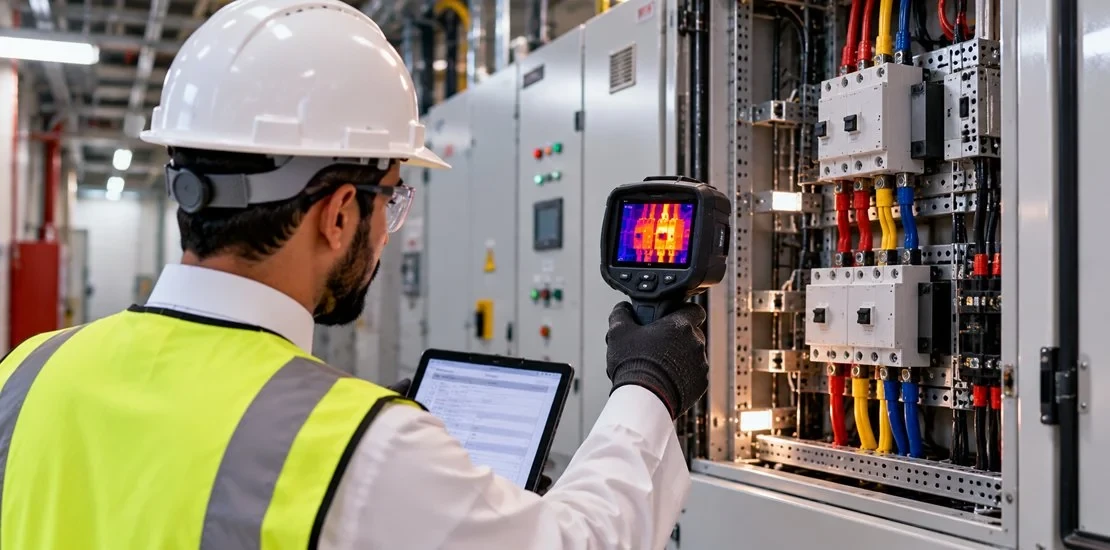
Local conditions influence fire risk in ways that a generic template may miss. High summer temperatures increase the load on air conditioning and electrical systems, raising the risk of overheating in cables, panels, and equipment. Outdoor storage areas and rooftop equipment can reach very high surface temperatures. Standby generators and their fuel need careful storage and separation. Dust can build up inside electrical panels and equipment, adding fuel close to potential ignition sources. A fire risk assessment in the Kingdom should therefore pay close attention to electrical loads, equipment rooms, outdoor storage, and generator areas, especially before the summer peak.
Fire Risk Assessment vs Security Risk Assessment
Many facilities confuse the two. A security risk assessment focuses on threats such as theft, intrusion, and vandalism, and on measures like CCTV, access control, and guarding. A fire risk assessment focuses on fire hazards, the people at risk, and fire protection measures. The two often overlap, for example when secured doors must still allow safe escape during a fire, so it is useful to coordinate both assessments, but each one has its own scope and methodology.
Fire Risk Assessment vs Fire System Inspection
An inspection confirms that installed systems are working, using a structured fire system inspection checklist. A fire risk assessment asks a broader question: are these systems the right ones for the risks in the building, and are there hazards that no system will fully control? Both are needed, and the results of inspections should feed into the assessment.
Who Should Carry Out a Fire Risk Assessment?
A fire risk assessment should be carried out by a competent person with knowledge of fire behavior, building fire protection, the relevant standards, and the facility’s operations. In small, low-risk premises, a trained in-house person may handle the assessment with suitable guidance. In larger or more complex facilities, such as hospitals, malls, factories, and high-rise buildings, it is better to use specialized risk assessment services that bring independent expertise and experience across many building types.
Common Mistakes to Avoid
- Treating it as paperwork. A fire risk assessment copied from a template without a real site walk will miss the actual hazards.
- Ignoring hidden areas. Plant rooms, roofs, ceiling voids, and storage areas often hold the most serious hazards.
- No action plan. Findings without owners and deadlines rarely get fixed.
- Never reviewing it. Buildings and activities change; an outdated assessment gives false confidence.
- Forgetting vulnerable people. Evacuation plans must consider everyone who may need assistance.
Conclusion
A fire risk assessment turns fire safety from guesswork into a clear, prioritized plan. By identifying hazards, understanding who is at risk, evaluating existing protection, and acting on the findings, facilities in Saudi Arabia can prevent most fires from starting and make sure that, if one does occur, people are warned early and can escape safely. Reviewing the fire risk assessment regularly keeps it aligned with how the building is really used.
Need a professional fire risk assessment for your facility? The CCCO team can carry out a detailed fire risk assessment, review your existing fire protection systems, and provide a clear action plan aligned with Civil Defense requirements. Contact us to request a site assessment.
Frequently Asked Questions
What is a fire risk assessment?
It is a structured review of a building and its activities to identify fire hazards, evaluate the risk to people, and decide on the measures needed to reduce that risk.
How often should a fire risk assessment be reviewed?
It should be reviewed regularly and whenever there are significant changes, such as new layouts, processes, occupancy, building works, or after a fire or near miss.
What are the five steps of a fire risk assessment?
Identify fire hazards, identify people at risk, evaluate the risk and decide on controls, record findings and train staff, and review the assessment regularly.
Who can carry out a fire risk assessment?
A competent person with knowledge of fire safety and the facility’s operations. Complex or high-risk buildings usually need a specialist.
Is a fire risk assessment the same as a fire inspection?
No. An inspection checks that installed systems work, while a fire risk assessment evaluates whether the overall fire safety arrangements match the actual risks.
Does a fire risk assessment help with Civil Defense requirements?
Yes. It documents how fire hazards are identified and controlled, which supports compliance with Civil Defense expectations for fire safety management.
What happens after a fire risk assessment?
The findings are turned into an action plan with responsibilities and deadlines, and the actions are tracked until they are completed.