 Get a Quote

Addressable vs Conventional Fire Alarm Systems: Which Is Better for Your Facility?
Addressable vs Conventional Fire Alarm Systems: Which Is Better for Your Facility?

When a fire alarm goes off in a large building, the first question security staff ask is simple: where exactly is the fire? The answer depends heavily on the type of system installed. A conventional panel tells you the zone, which might be an entire floor. An addressable fire alarm system tells you the exact detector, down to the room. That difference in seconds can decide how much damage a fire does. This guide compares the two systems in practical, technical terms: how each one works, where each makes sense, how costs compare over the life of the building, and what to ask before you decide.
How a Conventional Fire Alarm System Works
In a conventional system, the building is divided into zones, usually by floor or by area. All detectors and manual call points in one zone are wired together on a single circuit that runs back to the control panel.
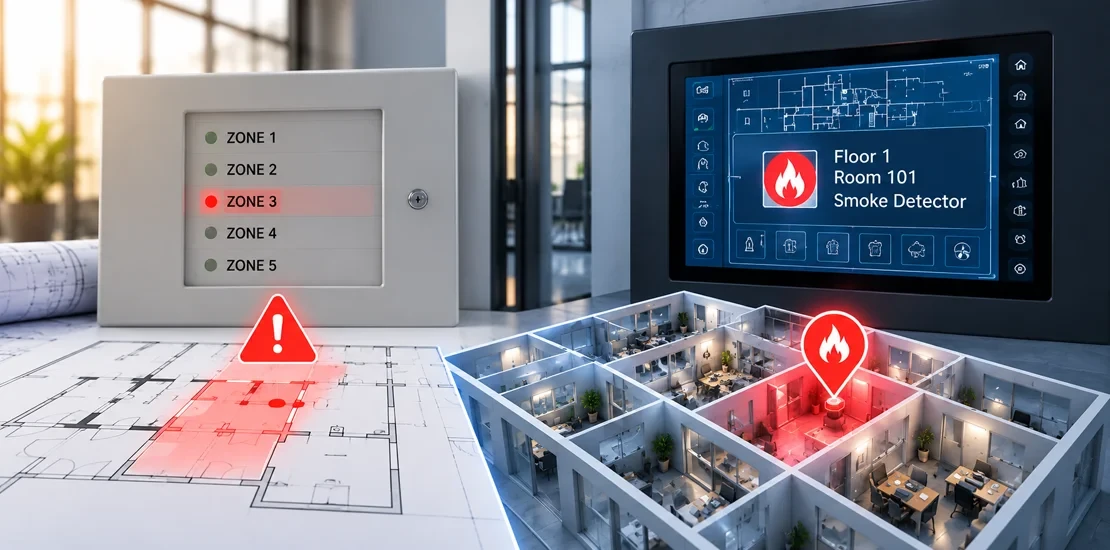
When any device in the zone activates, the panel shows an alarm for that zone as a whole. It cannot tell which detector triggered it. On a small floor this is not a problem, but in a zone covering a full warehouse aisle or twenty office rooms, staff must search physically to find the source.
Conventional systems are simple, well understood by technicians, and cheaper per device. That is why they remain common in small shops, villas, small offices, and compact warehouses.
How an Addressable Fire Alarm System Works
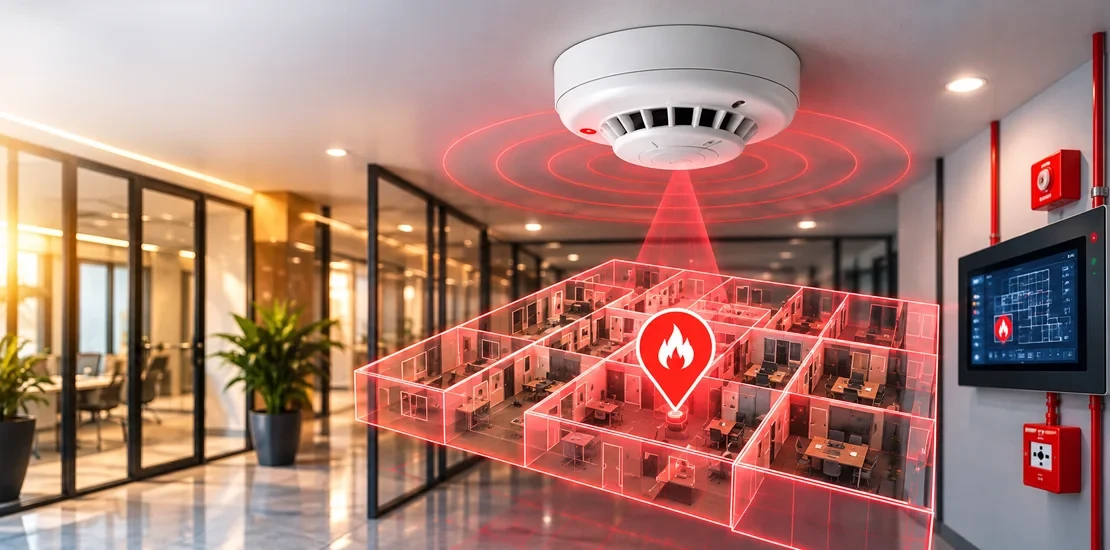
In an addressable fire alarm system, every detector, call point, and module has its own unique address. Devices are connected on a loop (known as a signaling line circuit) that starts and ends at the control panel. The panel communicates with each device individually and continuously.
When a detector senses smoke or heat, the panel shows its exact location, for example “Smoke detector, Floor 3, Server Room B.” Depending on the manufacturer, a single loop can typically carry more than a hundred devices, and large panels support multiple loops, which is what makes these systems suitable for towers, hospitals, and industrial sites.
Because the loop returns to the panel, a single cable break does not necessarily take devices offline when the loop is wired to the appropriate class and fitted with short-circuit isolators.
Devices Used in Each System
Both systems use the same families of field devices, but the technology inside them is different. The main devices are smoke detectors (usually optical), heat detectors (fixed temperature or rate-of-rise), multi-sensor detectors that combine smoke and heat readings, manual call points, and sounders or visual beacons that alert occupants.
In a conventional system, a detector works like a simple switch: it stays quiet until it crosses its alarm threshold, then it draws more current on the zone circuit and the panel reads that change as an alarm. The detector itself makes the decision, and the panel only knows that something in the zone has operated.
In an addressable fire alarm system, each device contains electronics that communicate with the panel. In analog addressable systems, detectors continuously report their actual readings, such as smoke density or temperature, and the panel decides when a reading becomes a pre-alarm or a full alarm. The system also uses input and output modules to monitor or control other equipment, such as sprinkler flow switches, fire dampers, door holders, and suppression release panels, all with their own addresses.
Loop Wiring, Isolators, and System Reliability
Wiring design is one of the biggest technical differences between the two systems. A conventional zone circuit ends with an end-of-line device, usually a resistor, which lets the panel monitor the circuit and report a fault if the cable is cut. However, a break in the cable can still leave the devices beyond that point unable to signal an alarm until the fault is repaired.
An addressable loop can be wired so that it returns to the panel, allowing the panel to communicate with devices from both ends. If the cable is broken at one point, devices on both sides of the break can remain in communication. Short-circuit isolators placed along the loop limit the effect of a short circuit to a small section between two isolators instead of the entire loop.
In both systems, cable type matters. Fire-resistant cables, proper segregation from power cables, and correct earthing all affect reliability. These details should be clearly shown in the approved design drawings and checked during commissioning.
Key Differences at a Glance
| Criteria | Conventional System | Addressable System |
| Location accuracy | Zone level | Exact device |
| Wiring | One circuit per zone | Shared loop for many devices |
| Upfront device cost | Lower | Higher |
| Cabling in large buildings | More cable runs | Fewer cable runs |
| Fault diagnosis | Manual search within zone | Panel identifies faulty device |
| False alarm management | Limited | Sensitivity adjustment, pre-alarm, drift compensation |
| Integration with other systems | Basic | Advanced (HVAC, elevators, access control, suppression) |
| Best fit | Small, simple facilities | Medium to large or complex facilities |
Where the Addressable System Clearly Wins
Faster response. Knowing the exact room lets responders go straight to the source instead of searching an entire zone. In hospitals, malls, and hotels, those saved minutes matter for evacuation and damage control.
Fewer false alarms. Addressable panels can adjust detector sensitivity, switch between day and night modes, and compensate for gradual dust build-up in detectors. Many also issue a pre-alarm warning before a full alarm, which lets staff verify the situation first. Frequent false alarms are costly and lead occupants to ignore real ones.
Smarter maintenance. The panel reports which detector is dirty, faulty, or disconnected. Technicians go directly to the problem device instead of testing every unit on a floor.
Integration with building systems. An addressable fire alarm system can trigger actions automatically based on the exact location of the alarm: shutting down air handling units, recalling elevators, releasing access-controlled doors on escape routes, or activating a clean-agent system such as an FM200 fire suppression system in a server room.
Where a Conventional System Still Makes Sense
Addressable is not always the right answer. A conventional system remains a sensible, compliant choice when:
- The facility is small, with only a few zones, such as a single shop, a small office, or a villa.
- Each zone is small enough that finding the triggered device takes seconds.
- There is no need to integrate with other building systems.
- The budget is tight and the building is unlikely to expand.
The key point is that a well-designed conventional system is far better than a poorly designed addressable one. Proper design and installation matter more than the label.
Hybrid Systems and Phased Upgrades
The choice is not always all or nothing. Most addressable panels support conventional zone interface modules, which allow a group of conventional detectors to be connected to an addressable loop as a single addressed zone. This is useful when a facility has a sound conventional system in one area and wants addressable coverage in new or higher-risk areas.
This approach also allows phased upgrades. A building can move from conventional to addressable floor by floor, keeping protection active during the works instead of shutting down the whole system at once. The trade-off is that areas still on conventional detectors will only report at zone level until they are fully upgraded.
Cost Comparison: Upfront vs Lifetime
On a device-by-device basis, addressable detectors and panels cost more than conventional ones. For a small site with a handful of zones, conventional will almost always be cheaper overall.
In larger buildings, the balance shifts. A conventional system needs a separate cable run for every zone, while an addressable loop can serve a large number of devices on one cable path, which reduces cabling and labor costs. Over the building’s life, addressable systems also tend to lower maintenance time and false-alarm costs because faults are pinpointed immediately.
The practical approach is to request a quotation for both options based on your actual floor plans rather than comparing panel prices alone.
Which System Suits Which Facility
The technical differences translate into clear patterns across facility types:
- Hospitals and healthcare facilities: Addressable is the practical standard, because staff often cannot evacuate patients quickly and need the exact alarm location to apply phased evacuation.
- Malls, hotels, and office towers: Addressable, due to the number of devices, multiple floors, and the need to integrate with HVAC, elevators, and access control.
- Large warehouses and factories: Addressable for large or divided sites, especially where high ceilings, dust, or process heat increase the risk of false alarms that need sensitivity control.
- Schools and universities: Usually addressable for multi-building campuses; small single-building schools may use conventional systems when zones are kept small.
- Small shops, clinics, villas, and small offices: Conventional is often sufficient and more economical, provided the zones are designed correctly.
Compliance Requirements in Saudi Arabia
Whatever system you choose, it must meet Saudi Civil Defense requirements and the Saudi Building Code fire provisions (SBC 801), which draw on international standards such as NFPA 72. For many building types, such as hospitals, high-rise towers, and large assembly buildings, the practical need for fast location identification and system integration makes an addressable system the realistic choice.
Always confirm the design is reviewed and approved before installation begins. A system that works technically but fails inspection means delays and rework.
Technical Questions to Clarify Before You Decide
Before choosing between the two types, discuss these points with your contractor:
- How many zones or devices does the facility need now, and what about future expansion?
- How quickly must staff identify the exact alarm location?
- Does the fire alarm need to control other systems (HVAC, elevators, doors, suppression)?
- What is the expected false alarm risk based on the activities in the building?
- Is the proposed panel brand supported locally with spare parts and trained technicians?
For a broader view of the selection process beyond this technical comparison, see our guide on choosing the right fire alarm system for your facility.
Common Mistakes to Avoid
- Choosing by panel price only. The cheapest panel may lead to higher cabling and maintenance costs.
- Oversized conventional zones. Large zones defeat the purpose of the system and slow down response.
- Mixing brands without verification. Addressable devices from one manufacturer often do not work on another manufacturer’s panel.
- Skipping loop isolators. Without them, a single short circuit can disable a large part of the loop.
- No as-built documentation. Without an accurate device address list and loop drawings, maintenance becomes guesswork.
Conclusion
For small, simple facilities, a conventional fire alarm system is still a practical and compliant option. For medium and large commercial, industrial, and healthcare facilities, an addressable fire alarm system offers faster response, fewer false alarms, easier maintenance, and integration with the rest of the building’s safety systems, advantages that usually outweigh its higher upfront cost.
Not sure which system fits your facility? The CCCO team can review your floor plans, assess your requirements, and design a Civil Defense–compliant fire alarm system that matches your building’s size and risk level. Contact us to request a site assessment.
Frequently Asked Questions
What is the main difference between addressable and conventional fire alarm systems?
A conventional system identifies the zone where the alarm occurred, while an addressable system identifies the exact device and its location.
Is an addressable fire alarm system more expensive?
Its devices cost more individually, but in large buildings it often reduces cabling and maintenance costs, making the total cost competitive over the system’s life.
Can a conventional system be upgraded to addressable?
Usually this requires replacing the panel and detectors. Some existing cabling may be reused if it meets the manufacturer’s loop specifications, which a site survey can confirm.
Can conventional detectors be connected to an addressable panel?
Yes, through conventional zone interface modules, which is useful for phased upgrades, though those zones will only report at zone level.
Which system is better for warehouses and factories?
Small warehouses can work with conventional systems, but large or multi-area industrial sites benefit from addressable systems for faster location identification and integration with other systems.
Do both systems require Civil Defense approval?
Yes. Any fire alarm system in Saudi Arabia must be designed and installed according to Civil Defense requirements and receive the necessary approvals.
Does an addressable system make maintenance visits faster?
Yes. Because the panel reports faulty, dirty, or disconnected devices by address, technicians go straight to the affected device instead of testing every unit in a zone.
Does an addressable system use more power than a conventional one?
Not necessarily. Power requirements depend on the number of devices, sounders, and standby battery duration required by the design, which the engineer calculates for each project regardless of system type.
Can one addressable panel serve several buildings?
Yes. Large panels can be networked with other panels across multiple buildings, allowing a central control room to monitor the whole site while each building keeps its own local panel.