 Get a Quote

Fire Pumps in Saudi Arabia: Types, Selection and Maintenance Guide
Fire Pumps in Saudi Arabia: Types, Selection and Maintenance Guide
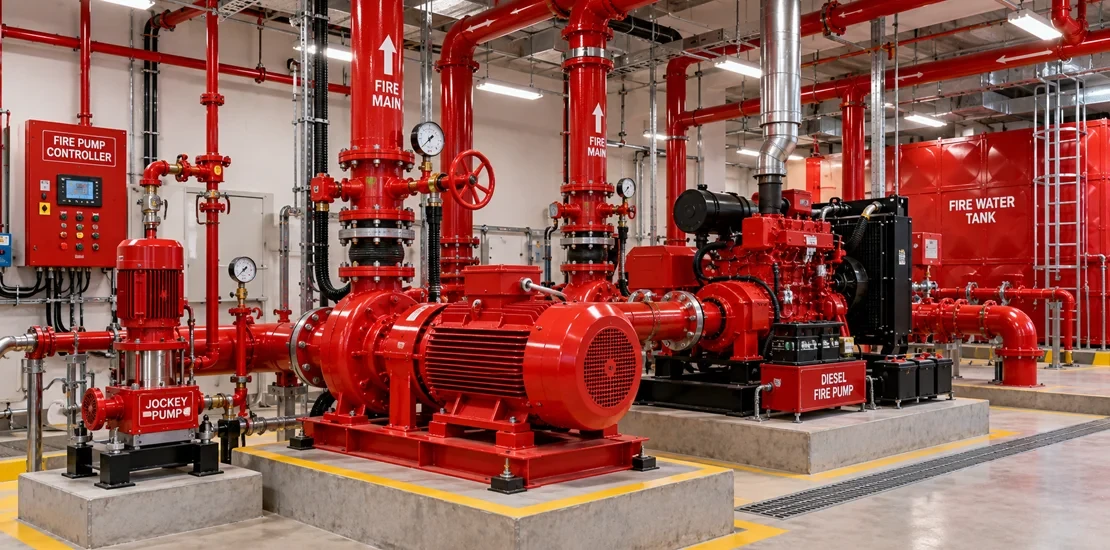
A sprinkler network or hydrant system is only as strong as the water pressure behind it. In most commercial buildings, the city water supply or a gravity tank cannot deliver the flow and pressure needed to fight a fire on the upper floors or at the far end of a large warehouse. This is where fire pumps come in: they are the heart of every water-based firefighting system, and if they fail to start, the entire system fails with them.
Fire pumps in Saudi Arabia must also cope with demanding conditions, including high temperatures, dust, and large buildings with long pipe runs. This guide explains what fire pumps do, the main pump types and drivers, how a typical pump set is arranged, how to select the right fire pumps for a facility, the requirements for the pump room, and how to maintain and test fire pumps so they are ready when they are needed.
What Are Fire Pumps and Why Are They Needed?
Fire pumps are dedicated pumps that increase the pressure and flow of water supplied to fire protection systems. They draw water from a fire water tank or another approved source and deliver it to sprinklers, hydrants, hose reels, and standpipes at the pressure required by the system design.
Without fire pumps, a fire sprinkler system in a high-rise tower or a large warehouse would not receive enough pressure to operate the most remote heads correctly. Fire pumps are therefore a core part of firefighting systems in malls, hospitals, hotels, office towers, factories, and logistics facilities, and they are designed to start automatically the moment system pressure drops.
How Fire Pumps Work
They operate automatically based on pressure in the system. The typical sequence is:
- Normal standby. The system is kept full and pressurized. A small jockey pump maintains this pressure and compensates for minor leaks.
- Pressure drop. When a sprinkler head opens or a hydrant is used, water flows out and the system pressure falls.
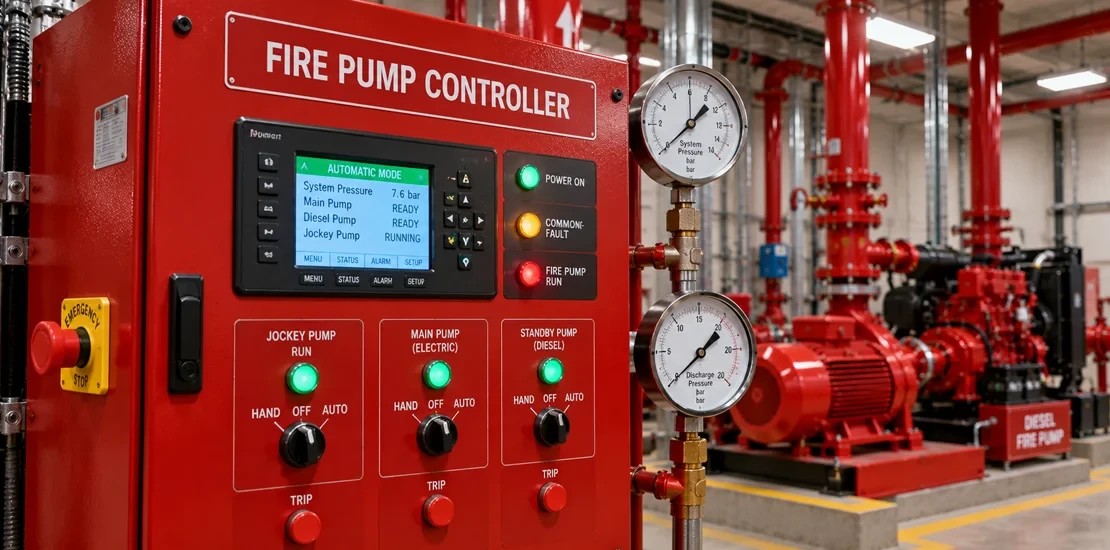
- Main pump start. Pressure sensors in the fire pump controller detect the drop and start the main electric fire pump automatically.
- Standby start. If the main pump fails to start or cannot maintain pressure, the controller starts the standby pump, usually diesel driven.
- Continuous operation. The pumps keep running to supply water until they are stopped manually by authorized personnel after the fire is controlled.
An important safety principle is that the pumps are not designed to stop automatically once a fire is detected and water is flowing. Manual stopping prevents the pumps from shutting down while firefighting is still in progress.
Main Types of Fire Pumps
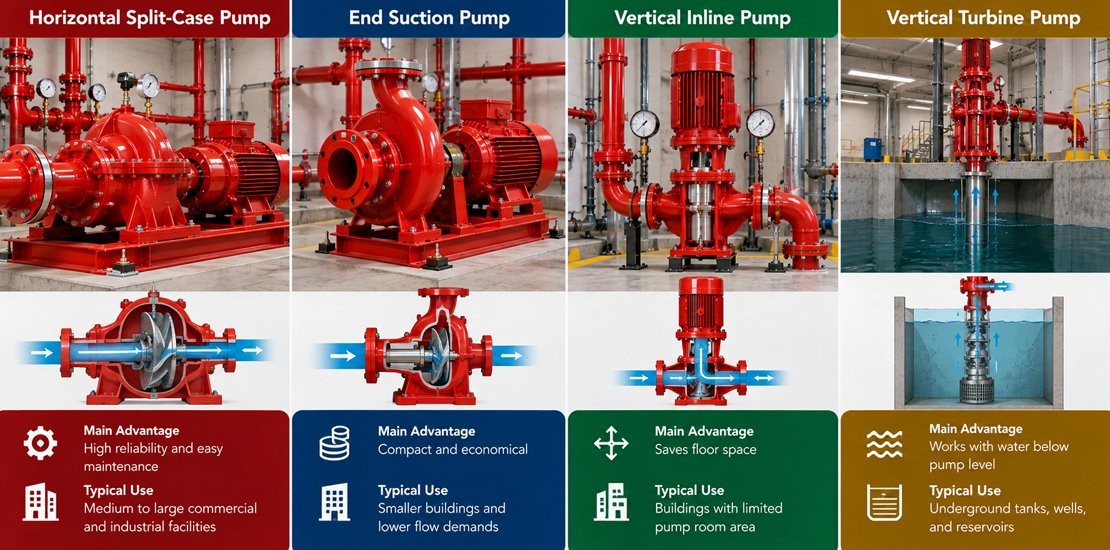
Pumps are classified by their construction and how water passes through them. The most common types are:
- Horizontal split-case pumps. The pump casing splits horizontally, allowing inspection and maintenance without disconnecting the pipes. They are reliable, efficient, and widely used for medium and large flows in commercial and industrial buildings.
- End suction pumps. Compact and economical, with water entering at one end of the pump. They are suitable for smaller flows and buildings with limited space.
- Vertical inline pumps. The suction and discharge are in line with each other, saving floor space. They are often used in buildings where the pump room is small.
- Vertical turbine pumps. Used where the water source is below the pump level, such as underground tanks, wells, or reservoirs, because they do not rely on positive suction pressure.
| Pump Type | Main Advantage | Typical Use |
| Horizontal split-case | High reliability and easy maintenance | Medium to large commercial and industrial facilities |
| End suction | Compact and economical | Smaller buildings and lower flow demands |
| Vertical inline | Saves floor space | Buildings with limited pump room area |
| Vertical turbine | Works with water below pump level | Underground tanks, wells, and reservoirs |
Electric vs Diesel Fire Pumps
They are also classified by the driver that powers them:
- Electric fire pumps are simple, quiet, and require less maintenance. However, they depend on a reliable power supply, so they need a dedicated, protected power feed and, in many cases, a connection to an emergency generator.
- Diesel fire pumps run independently of the electrical grid, which makes them the preferred standby option when power may be lost during a fire. They need a fuel tank, starting batteries, a cooling system, and an exhaust system, and they require more regular maintenance.
In many facilities in Saudi Arabia, the standard approach combines both: an electric main pump, a diesel standby pump, and a jockey pump. This arrangement ensures that water pressure is available even if the main power supply fails.
The Role of the Jockey Pump
The jockey pump is a small pump that maintains pressure in the fire protection system during normal conditions. Minor pressure losses caused by small leaks or temperature changes are handled by the jockey pump, so the main pumps do not start unnecessarily. If the jockey pump starts and stops very frequently, this is a warning sign of a leak or a problem in the system that should be investigated quickly.
Components of a Fire Pump Set
- Main pump and driver. The electric motor or diesel engine connected to the pump.
- Fire pump controller. A listed controller that starts the pump automatically on pressure drop and reports pump status and alarms.
- Jockey pump and controller. Maintains system pressure in normal standby.
- Suction and discharge piping. Includes isolation valves, check valves, and pressure gauges on both sides of the pump.
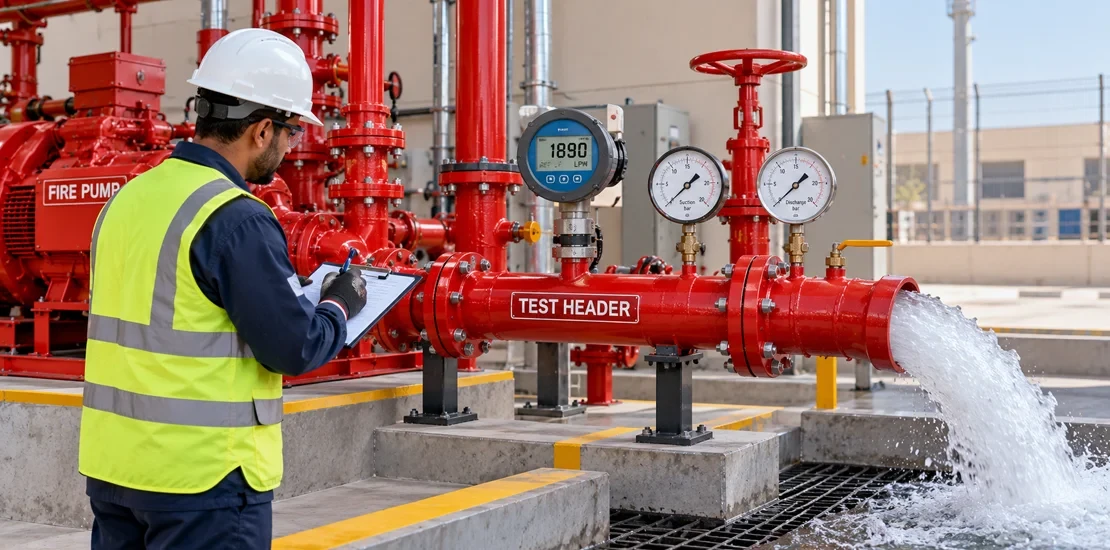
- Test header or flow meter. Used to measure pump performance during flow tests.
- Pressure relief valve. Required in some installations to protect the system from excess pressure.
- Diesel accessories. Fuel tank, starting batteries and chargers, cooling system, and exhaust piping for diesel-driven pumps.
How to Select the Right Fire Pumps
Pump selection is an engineering decision based on the needs of the entire fire protection system, not just on the pump price. The main selection criteria are:
- Required flow and pressure. The rated flow and pressure come from the hydraulic calculations of the sprinkler, hydrant, and standpipe systems, including the most demanding area of the building.
- Performance curve. Under standards such as NFPA 20, a fire pump must deliver at least 150% of its rated flow at no less than 65% of its rated pressure, and its pressure at zero flow (churn) must stay within the permitted limit. The selected pump curve must meet these conditions.
- Water source. The tank capacity, water level, and suction conditions determine whether a horizontal pump or a vertical turbine pump is suitable.
- Driver and power reliability. The availability of a reliable power supply affects the choice between electric and diesel pumps and the need for a standby pump.
- Listing and approvals. Fire pumps, controllers, and drivers should be listed or approved for fire protection service, such as UL listed or FM approved, and accepted by Civil Defense.
- Future expansion. If the building may be extended, the pump selection should account for future demand where practical.
Fire Pump Room Requirements
The pump room protects the pump set and keeps it ready to operate. Key requirements typically include:
- Fire-rated enclosure. The room should be separated from the rest of the building with the required fire resistance and protected by the building’s fire protection system.
- Safe access. Firefighters and maintenance staff need direct and safe access, ideally from outside or from a protected route.
- Temperature control and ventilation. The room must stay within the temperature range required by the pump and driver manufacturers. Diesel engines need enough air for combustion and cooling.
- Floor drains are needed for water discharged during testing and maintenance.
- Lighting and emergency lighting. Adequate lighting is required for inspection and emergency operation.
- No storage. The pump room must not be used to store materials or equipment unrelated to the fire pumps.
Fire Pumps and Saudi Arabia’s Climate
High summer temperatures and dust create specific challenges for fire pumps in Saudi Arabia. Pump rooms on rooftops or in poorly ventilated basements can overheat, affecting electric motors, controllers, and diesel engines. Dust can clog air filters on diesel engines and accumulate inside controller panels. Diesel fuel stored for long periods can degrade, and starting batteries lose capacity faster in hot conditions.
To keep the pump set reliable, pump rooms should have effective ventilation or cooling, diesel air filters should be inspected and replaced as needed, fuel quality should be checked periodically, and batteries should be tested and replaced before they reach the end of their service life.
Monitoring Fire Pumps Through the Fire Alarm System
Fire pump controllers should be connected to the building’s fire alarm system so that key conditions are reported immediately, including pump running, power failure, phase reversal, controller not in automatic mode, and diesel engine faults. With an addressable fire alarm system, each signal appears with its exact description and location, allowing the security or facility team to respond quickly before a fault affects the readiness of the fire pumps.
Maintenance and Testing of Fire Pumps
These pumps spend most of their life on standby, which is exactly why regular testing is critical. Standards such as NFPA 25 require periodic no-flow (churn) test runs, annual flow tests to confirm that the pump still meets its rated performance, and regular inspection of controllers, valves, gauges, and drivers. Diesel fire pumps also need checks of fuel level, batteries, cooling systems, and oil.
Using a structured fire system inspection checklist helps the facility team record the condition of the pump room, controller status, valve positions, and any leaks or abnormal noise. Functional testing, performance testing, and repairs should be handled by a specialized maintenance and support provider with the right equipment and experience.
Acceptance Testing of New Fire Pumps
Before a new pump set is placed in service, they should pass a field acceptance test witnessed by the relevant parties. This test usually confirms the pump’s performance at churn, at rated flow, and at 150% of rated flow, checks automatic starting by pressure drop, verifies the controller functions and alarms, and confirms the operation of the standby pump. The test results become the baseline for comparing future annual flow tests.
Factors That Affect the Cost of Fire Pumps
The cost of fire pumps varies depending on several factors:
- The required flow and pressure, which determine the pump size and driver power.
- The pump type, such as split-case, end suction, or vertical turbine.
- The driver type and whether a diesel standby pump is required.
- Listing and approval requirements for the pump, controller, and accessories.
- Pump room construction, ventilation, piping, and electrical works.
- Testing, commissioning, and long-term maintenance requirements.
As with other fire protection systems, comparing offers based on equipment price alone can be misleading. For a broader view of how installation cost factors are evaluated, see our related guide, and always request a detailed technical offer that includes the pump curve, listings, and scope of work.
Common Mistakes to Avoid
- Undersizing the pump. A pump selected without accurate hydraulic calculations may not supply enough water to the most remote areas.
- Leaving the controller in manual mode. After maintenance, the controller must be returned to automatic, or the pump will not start in a fire.
- Ignoring jockey pump cycling. Frequent starts are a sign of leaks that should be fixed, not ignored.
- Neglecting diesel batteries and fuel. A diesel pump that cannot start because of a dead battery or degraded fuel provides no protection.
- Using the pump room for storage. Stored materials block access, add fire load, and hide leaks or faults.
Conclusion
Fire pumps are the driving force behind sprinklers, hydrants, and standpipes in commercial and industrial buildings. By choosing the right pump type and driver, sizing the pump set correctly, building a suitable pump room, connecting the controllers to the fire alarm, and testing and maintaining the system regularly, facility owners can make sure their fire pumps in Saudi Arabia will deliver water at the right pressure the moment it is needed.
Need reliable fire pumps for your facility? The CCCO team can review your hydraulic requirements, supply and install listed fire pumps, connect them to your fire protection and alarm systems, and provide regular testing and maintenance to keep them ready at all times. Contact us to request a site assessment.
Frequently Asked Questions
What do fire pumps do?
Fire pumps increase the pressure and flow of water supplied to sprinklers, hydrants, and standpipes so that these systems can operate effectively during a fire.
What is the difference between electric and diesel fire pumps?
Electric fire pumps depend on a reliable power supply, while diesel fire pumps operate independently of the grid and are often used as standby pumps.
Why do fire pumps need a jockey pump?
The jockey pump maintains system pressure during normal conditions and prevents the main pumps from starting because of small pressure losses.
Do fire pumps stop automatically after starting?
In most fire protection installations, fire pumps are stopped manually after the fire is controlled to avoid shutting down water supply during firefighting.
How often should fire pumps be tested?
Fire pumps need regular no-flow test runs and an annual flow test, with intervals set according to the applicable standards and the facility’s maintenance schedule.
Do fire pumps need Civil Defense approval?
Yes. Fire pumps are part of the building’s fire protection system and must be designed, installed, and tested according to Civil Defense requirements.
How long do fire pumps last?
With proper installation, testing, and maintenance, fire pumps can remain in reliable service for many years, though components such as seals, bearings, and batteries need periodic replacement.