 Get a Quote

Fire System Inspection Checklist: Preventive Items to Check in Commercial Facilities
Fire System Inspection Checklist: Preventive Items to Check in Commercial Facilities

A fire protection system that looks fine on the wall can still fail on the day it is needed. A closed sprinkler valve, a dead battery in the fire alarm panel, a blocked extinguisher, or an exit sign that no longer lights up are small faults that are easy to miss and costly to discover during a real fire. A clear fire system inspection checklist is the simplest way to catch these problems early.
This guide gives facility managers in Saudi Arabia a practical fire system inspection checklist organized by system: fire alarm, sprinklers, fire pumps, clean agent and aerosol suppression, extinguishers, hose reels, emergency lighting, and fire doors. For each system, it explains what to check and what a failed item usually looks like, so your team knows exactly what to look for during every inspection round.
What Is a Fire System Inspection Checklist and Why Do You Need One?
A fire system inspection checklist is a structured list of items that inspectors review to confirm that every fire protection system in a building is in working condition. It turns inspection from a quick walk-through into a repeatable process with clear pass or fail results, recorded findings, and follow-up actions.
Commercial facilities usually rely on several firefighting systems at the same time, each with its own components and failure points. Without a written fire system inspection checklist, inspections depend on memory, and important items are skipped, especially when different staff or contractors carry out the checks. A consistent checklist also provides the documented evidence that Civil Defense inspectors, insurance companies, and building owners expect to see.
How to Use This Fire System Inspection Checklist
This checklist focuses on what to inspect, not on how often. Inspection intervals vary by system and by the applicable standards, and they are covered in our guide on the periodic maintenance schedule. When using the checklist, follow these simple rules:
- Record every item. Mark each item as pass, fail, or not applicable, and never leave an item blank.
- Describe the fault. For every failed item, write the exact location and the problem, for example “Extinguisher 3B, second floor corridor, gauge in red zone.”
- Assign corrective action. Each fault needs an owner and a target date for repair.
- Keep the records. Store completed checklists with the facility’s fire safety file so they are available during inspections and audits.
Visual checks can be done by trained facility staff, while functional testing of panels, pumps, and suppression systems should be carried out by qualified technicians in line with standards such as NFPA 72, NFPA 25, NFPA 10, and Saudi Civil Defense requirements.
Preparing to Use the Fire System Inspection Checklist
Good preparation makes every inspection faster and safer. Before starting, the inspection team should:
- Print or load the latest checklist. Make sure it reflects the systems currently installed, including any recent additions or modifications.
- Collect the right tools. Keys for cabinets and panels, a flashlight, a camera or tablet for photos, and approved test equipment for functional checks.
- Coordinate with occupants and monitoring. Inform building management, security, and any remote monitoring center before tests that may trigger alarms or shut down equipment.
- Plan access. Arrange access to plant rooms, roofs, tenant spaces, and locked storage areas in advance so no area is skipped.
- Review previous findings. Check the last completed report to confirm that earlier faults have actually been repaired.
Fire System Inspection Checklist: Fire Alarm System
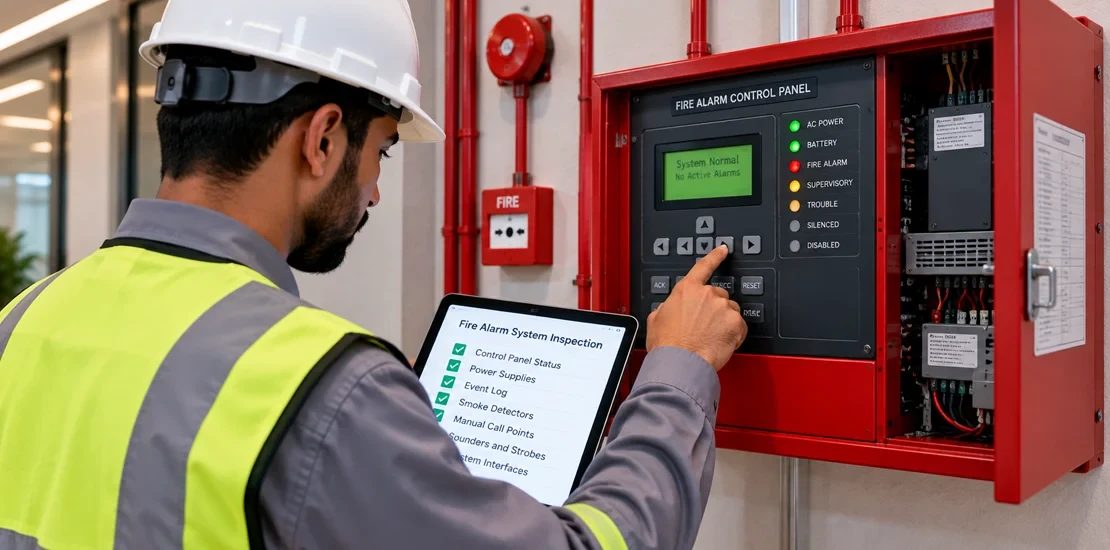
The fire alarm is the first system to respond, so it deserves careful attention in any fire system inspection checklist. Key items include:
- Control panel status. The panel shows normal status with no active fault, disablement, or silenced alarm left unresolved.
- Power supplies. Mains power is healthy, and standby batteries are in good condition, correctly connected, and within their service life.
- Event log. Recent faults and alarms have been reviewed and closed out, with repeated faults investigated.
- Smoke and heat detectors. Detectors are clean, undamaged, not painted over, not covered by dust caps after construction work, and not obstructed by new partitions or shelving.
- Manual call points. Call points are visible, unobstructed, undamaged, and clearly signed.
- Sounders and strobes. Alarm devices are in place and operate when tested, with audible and visual coverage in all occupied areas.
- Links to door releases, elevator recall, HVAC shutdown, and suppression systems are confirmed during functional testing.
In an addressable fire alarm system, the panel can pinpoint dirty or faulty detectors by address, which makes this part of the inspection faster and more accurate.
Fire System Inspection Checklist: Sprinkler System
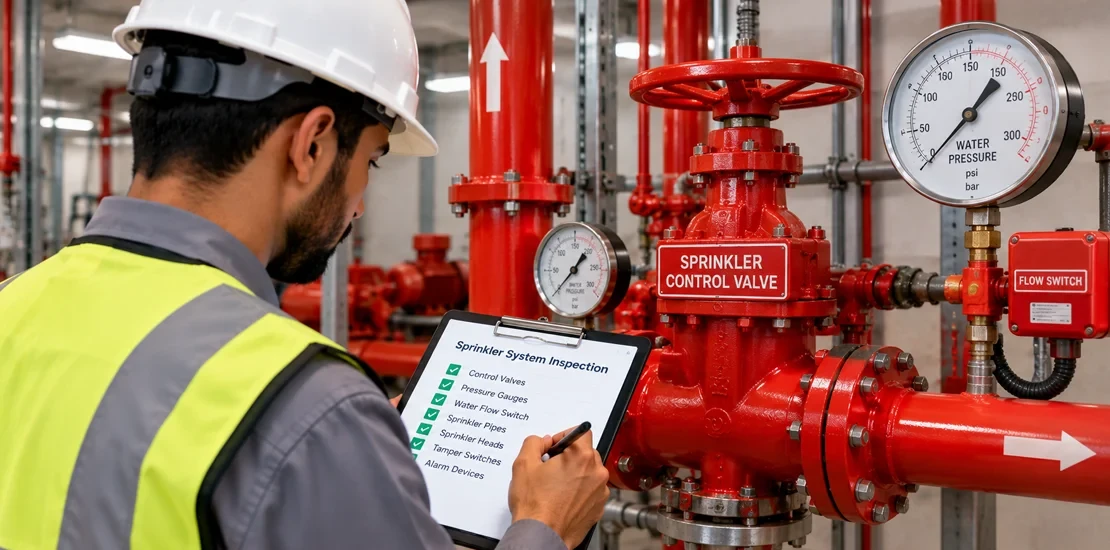
- Control valves. All sprinkler control valves are fully open, sealed or locked in position, and supervised where required.
- Pressure gauges. Gauges on risers and alarm valves show normal readings and are not damaged.
- Sprinkler heads. Heads are free from paint, corrosion, damage, dust build-up, and leaks, with no signs of loading.
- Clearance below heads. Storage and new fittings do not block the spray pattern; goods must be kept clear of sprinkler heads.
- Spare heads and wrench. A cabinet with the correct types of spare sprinkler heads and a suitable wrench is available.
- Pipework and hangers. Pipes are not leaking, corroded, or used to support other items, and hangers are secure.
- Fire department connection. The connection is accessible, capped, undamaged, and clearly signed.
Fire System Inspection Checklist: Fire Pumps
- Pump room condition. The room is clean, accessible, adequately lit and ventilated, and not used for storage.
- Controller status. The pump controller shows normal status and is set to automatic, with no alarms active.
- Suction and discharge valves are open, and test line valves are closed.
- Jockey pump. The pressure maintenance pump is not cycling excessively, which may indicate a leak in the system.
- Diesel pumps. Fuel level, starting batteries, charger, cooling system, and exhaust are checked and in good condition.
- Leaks and noise. No abnormal leaks, vibration, overheating, or noise appear during test runs.
Fire System Inspection Checklist: Clean Agent and Aerosol Suppression
Rooms protected by an FM200 fire suppression system or aerosol fire suppression systems need specific checks because these systems depend on stored agent and a sealed room:
- Agent quantity. Cylinder pressure or weight is within the manufacturer’s acceptable range; aerosol units are within their service life.
- Enclosure integrity. New openings, cable penetrations, or damaged seals have not been added to the protected room, as leaks reduce agent concentration.
- Nozzles and pipework. Discharge nozzles are clean, correctly oriented, and not blocked by new equipment.
- Manual release and abort switches are accessible, labelled, and protected against accidental operation.
- Warning signs and alarms. Door signage, pre-discharge alarms, and strobes are present and working.
Fire System Inspection Checklist: Fire Extinguishers
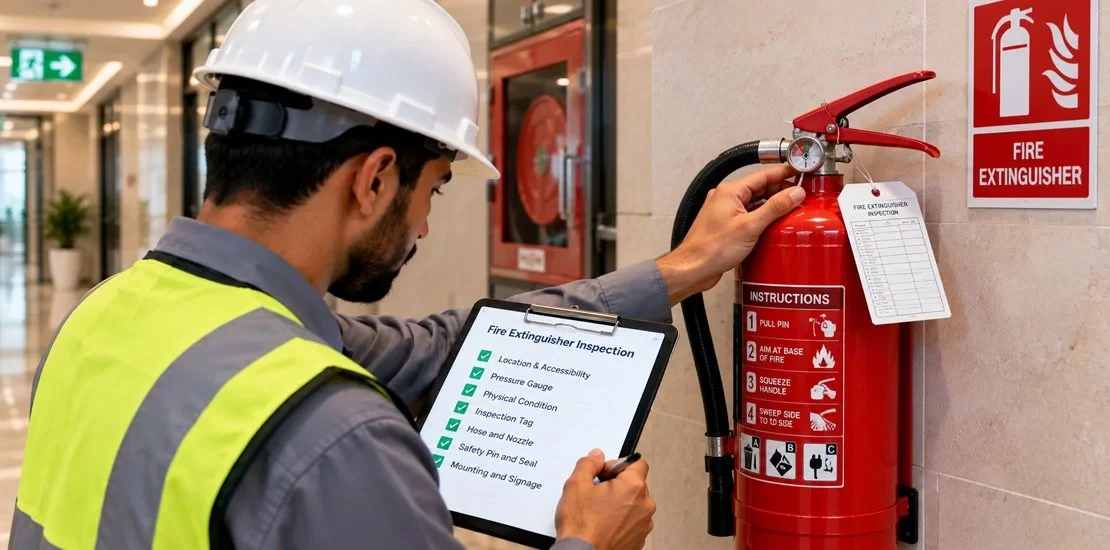
- Location and access. Each extinguisher is in its designated place, visible, mounted correctly, and not blocked by goods or furniture.
- Correct type. The extinguisher type matches the risk, such as CO2 near electrical panels or foam and powder in general areas.
- Pressure gauge. Stored-pressure extinguishers show pressure in the operable range.
- Pin and seal. The safety pin and tamper seal are intact, showing the unit has not been used.
- Physical condition. No corrosion, dents, damaged hoses, or missing labels.
- Service tag. The inspection tag is present and up to date.
Fire System Inspection Checklist: Hose Reels and Fire Cabinets
- Cabinets and hose reels are unobstructed and clearly signed.
- Hose condition. Hoses are not cracked, kinked, or leaking, and nozzles are attached.
- Valves open and close smoothly without leaking.
- Cabinet condition. Doors open freely, and glass or locks do not prevent quick access in an emergency.
Fire System Inspection Checklist: Emergency Lighting and Exit Signs
- Exit signs are lit, readable, and visible from all directions of travel.
- Battery backup. Emergency lights switch on when normal power is interrupted during testing.
- Physical condition. Fittings are not damaged, missing, or covered by decorations or signage.
- New partitions or layout changes have not left escape routes without adequate emergency lighting.
Fire System Inspection Checklist: Fire Doors and Escape Routes
- Fire doors. Doors close fully by themselves, latch properly, and are never wedged or propped open.
- Seals and hardware. Intumescent seals, hinges, and closers are intact and working.
- Escape routes. Corridors, stairs, and final exits are clear of storage and obstructions.
- Door release. Doors controlled by an access control system release automatically when the fire alarm is activated.
- Assembly points. Assembly point signs are in place and the route to them is clear.
Quick Summary Table
| System | Key Items to Check | Common Failures Found |
| Fire alarm | Panel status, batteries, detectors, call points, sounders | Unresolved faults, covered detectors, old batteries |
| Sprinklers | Valves, gauges, heads, clearance, spares | Closed valves, painted heads, storage too close |
| Fire pumps | Controller, valves, jockey pump, diesel fuel and batteries | Controller in manual, frequent jockey cycling |
| Clean agent / aerosol | Agent level, room sealing, nozzles, controls | New unsealed openings, low cylinder pressure |
| Extinguishers | Location, type, pressure, pin and seal, tag | Blocked access, low pressure, missing tags |
| Hose reels | Access, hose, valves, cabinet | Blocked cabinets, leaking valves |
| Emergency lighting | Exit signs, battery backup, coverage | Failed batteries, dark exit signs |
| Fire doors and exits | Self-closing, seals, clear routes, door release | Wedged doors, blocked corridors |
Climate Factors to Consider in Saudi Arabia
The local climate adds specific risks that every fire system inspection checklist in the Kingdom should take into account. High temperatures shorten the life of standby batteries in fire alarm panels and emergency lighting, so their condition deserves extra attention. Dust and sandstorms can contaminate smoke detectors and cause false alarms or reduced sensitivity, especially near entrances, loading docks, and ventilation openings. Extinguishers and hose reels installed outdoors or in unshaded areas may suffer from faded labels, damaged hoses, and pressure changes caused by heat. Including these items in routine inspections helps prevent failures that are more common in hot, dusty environments.
Documenting and Acting on Inspection Results
A completed fire system inspection checklist is only valuable if its findings lead to action. Each failed item should be logged with a clear description, photo where possible, responsible person, and deadline. Critical faults, such as a closed sprinkler valve, a pump in manual mode, or a fire alarm panel in fault, must be escalated immediately, with temporary measures such as a fire watch until the fault is fixed.
Over time, the collected records reveal recurring problems. If the same detectors keep reporting faults, or extinguishers keep going missing from one area, the root cause should be investigated rather than repairing the same issue again and again.
In-House Checks vs Professional Inspection
Facility staff can handle routine visual items on the fire system inspection checklist, such as confirming extinguishers are in place, exits are clear, and panels show normal status. However, functional testing, pump performance checks, detector testing, and suppression system servicing require trained technicians with the right tools and knowledge of the applicable standards.
Working with a specialized maintenance and support provider ensures that every item is inspected correctly, faults are repaired quickly, and documentation meets Civil Defense and insurance requirements.
Common Inspection Mistakes to Avoid
- Ticking boxes without looking. A fire system inspection checklist completed from the office provides false confidence.
- Ignoring layout changes. New walls, shelving, or ceilings often block detectors, sprinklers, and exit signs.
- Leaving faults open. Recording a problem without assigning a repair owner means it will still be there at the next inspection.
- Missing hidden areas. Plant rooms, roofs, basements, and storage areas are often skipped.
- Using one generic checklist for every building. The checklist should reflect the systems actually installed in each facility.
Conclusion
A practical fire system inspection checklist turns fire safety from an assumption into a verified fact. By inspecting each system item by item, recording results, and acting on every fault, commercial facilities in Saudi Arabia can make sure their fire alarms, sprinklers, pumps, suppression systems, extinguishers, and escape routes will work when they are needed most.
Need help inspecting and maintaining your fire systems? The CCCO team can carry out a complete inspection using a detailed fire system inspection checklist, repair any faults found, and provide the documentation your facility needs for Civil Defense and insurance. Contact us to schedule an inspection.
Frequently Asked Questions
What should a fire system inspection checklist include?
It should cover every installed fire protection system, including the fire alarm, sprinklers, fire pumps, suppression systems, extinguishers, hose reels, emergency lighting, and fire doors, with clear pass or fail items for each.
Who can complete a fire system inspection checklist?
Trained facility staff can complete routine visual checks, while functional tests and servicing should be performed by qualified fire protection technicians.
How often should the fire system inspection checklist be used?
Intervals depend on the system and the applicable standards. Some items are checked frequently, while others are tested less often. A periodic maintenance schedulehttps://ccco.com.sa/addressable-fire-alarm-system-vs-conventional/ sets the right frequency for each system.
What happens if an inspection finds a critical fault?
Critical faults should be reported immediately, repaired as a priority, and covered by temporary measures such as a fire watch until the system is restored.
Is a fire system inspection checklist required by Civil Defense?
Civil Defense expects fire protection systems to be maintained in working condition, and documented inspection records are an important part of demonstrating compliance.
Can one checklist be used for all buildings?
A standard template is a good starting point, but each fire system inspection checklist should be adapted to the systems and risks in the specific facility.
Do inspection records help with insurance?
Yes. Organized inspection and maintenance records support insurance renewals and claims by showing that fire protection systems were properly maintained.