 Get a Quote

Gas Detection Systems: Why Industrial Facilities Need Early Leak Detection
Gas Detection Systems: Why Industrial Facilities Need Early Leak Detection
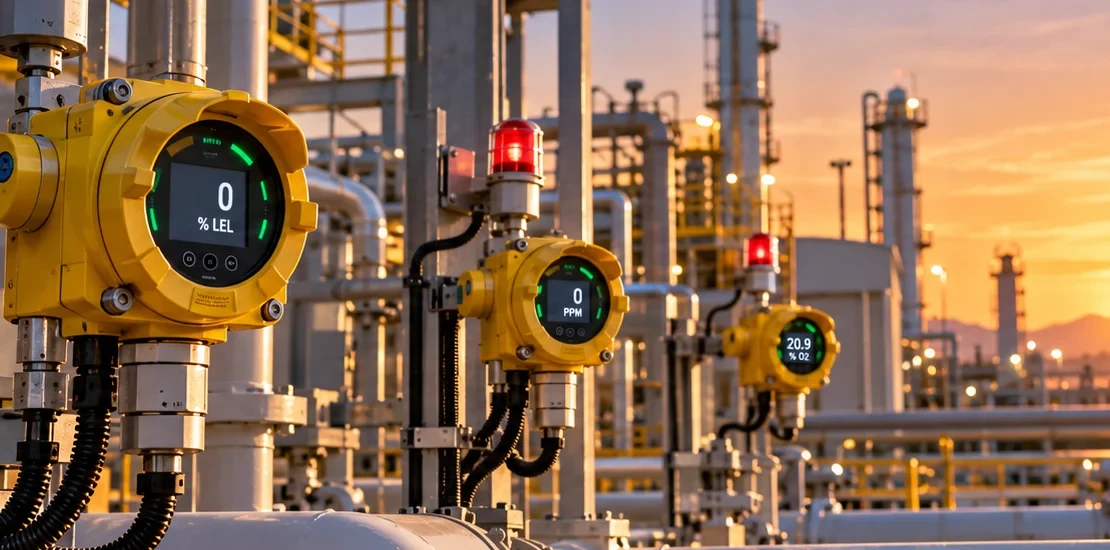
A gas leak rarely announces itself. Many dangerous gases are invisible, some have no smell, and others, like hydrogen sulfide, quickly dull the sense of smell at high concentrations. By the time people notice a problem, a flammable cloud may already be building up near an ignition source, or workers may already be exposed to toxic levels. Gas detection systems exist to close that gap by monitoring the air continuously and raising the alarm at the earliest stage of a leak.
For industrial facilities in Saudi Arabia, including oil and gas sites, petrochemical plants, water treatment stations, factories, cold stores, and large commercial kitchens, gas detection systems are a critical layer of protection. This guide explains the main gas hazards, how gas detection systems work, the sensor technologies available, how to place detectors correctly, and how to keep the system reliable.
What Are Gas Detection Systems?
Gas detection systems are networks of fixed detectors, controllers, and alarm devices that continuously measure the concentration of specific gases in the air. When a gas reaches a predefined level, the system warns people in the area and can trigger automatic actions such as starting ventilation fans, closing gas supply valves, or shutting down equipment.
Gas detection systems complement fire detection and firefighting systems rather than replacing them. Fire detection responds after combustion has started, while gas detection aims to identify the hazard before ignition or harmful exposure occurs, which is why both are often required in the same facility.
The Three Main Types of Gas Hazards
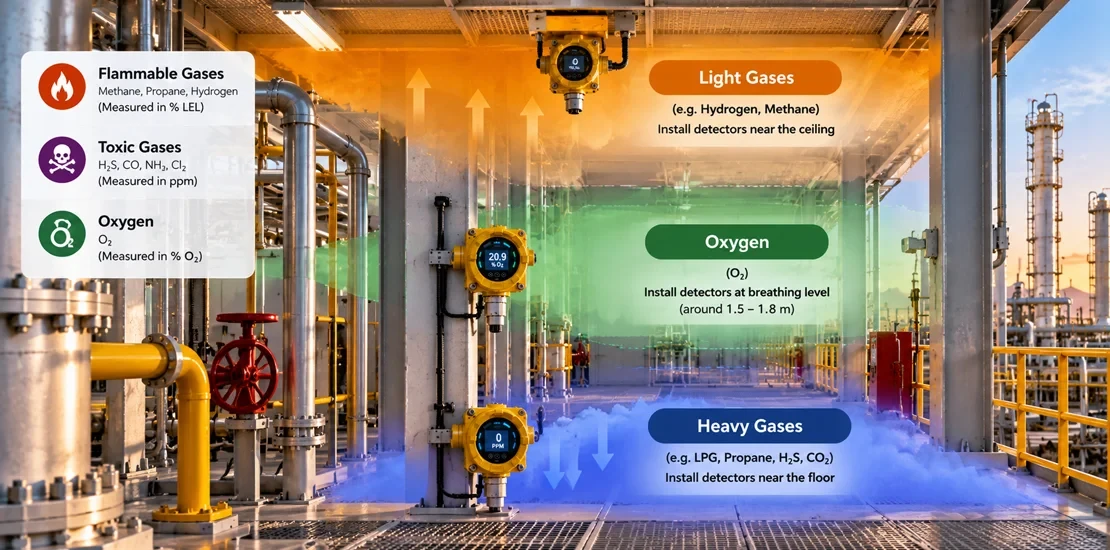
- Flammable gases. Methane, propane, butane, LPG, hydrogen, and vapors from flammable liquids can form explosive mixtures with air. Their concentration is usually measured as a percentage of the Lower Explosive Limit (% LEL).
- Toxic gases. Hydrogen sulfide (H2S), carbon monoxide (CO), ammonia (NH3), chlorine (Cl2), and others can cause serious health effects even at low concentrations. They are measured in parts per million (ppm).
- Oxygen hazards. Leaks of nitrogen, carbon dioxide, or inert gases can reduce oxygen levels in enclosed spaces, while oxygen enrichment increases fire risk. Normal air contains about 20.9% oxygen, and deviations from this level must be monitored in confined or high-risk areas.
How Gas Detection Systems Work
- Sampling the air. Each detector continuously measures the gas concentration around its sensor, either by diffusion or by drawing air through a sampling line.
- Signal transmission. The detector sends its reading to a gas detection controller or a safety PLC, usually as a 4–20 mA signal or a digital protocol.
- Comparison with alarm levels. The controller compares the reading with configured alarm thresholds, typically a low alarm, a high alarm, and sometimes an exposure limit alarm for toxic gases.
- Warning and action. When a threshold is exceeded, sounders and beacons warn people in the area, and the system triggers the programmed responses.
- Reporting and logging. Alarms and faults are reported to the control room and recorded for investigation and compliance.
Sensor Technologies Used in Gas Detection Systems
| Sensor Technology | Typical Gases | Key Points |
| Catalytic bead (pellistor) | Methane, propane, hydrogen, many flammable gases | Proven and low cost; needs oxygen and can be poisoned by silicones or sulfur compounds |
| Infrared (NDIR) | Hydrocarbons, CO2 | Fail-safe and resistant to poisoning; cannot detect hydrogen |
| Electrochemical | H2S, CO, NH3, Cl2, O2 | Accurate for toxic gases at ppm levels; sensors have a limited service life |
| Semiconductor (MOS) | Various gases | Low cost and long life; less selective and more affected by humidity |
| Photoionization (PID) | VOCs and solvent vapors | Very sensitive to low levels of organic vapors |
| Open-path infrared | Hydrocarbon gas clouds | Monitors a line of sight up to long distances across process areas |
| Ultrasonic leak detection | High-pressure gas leaks | Detects the sound of a leak regardless of gas type or wind direction |
Choosing the right sensor depends on the target gas, the expected concentration, environmental conditions, and the risk of sensor poisoning or interference. Many industrial sites combine several technologies to cover different hazards.
Fixed vs Portable Gas Detection
Fixed gas detection systems provide continuous, 24-hour monitoring of specific areas such as process units, compressor houses, kitchens, and plant rooms. Portable detectors are worn by workers and protect individuals moving through the site, especially during maintenance, confined space entry, and hot work. Most industrial facilities need both: fixed systems to protect areas and trigger automatic actions, and portable detectors to protect people wherever they work.
Where Gas Detection Systems Are Needed
- Oil, gas, and petrochemical facilities. Flammable hydrocarbons and H2S are major hazards in wells, processing units, tank farms, and pipelines.
- Water and wastewater treatment. H2S and methane from sewage, and chlorine used in disinfection, require continuous monitoring.
- Cold stores and food plants. Ammonia refrigeration systems need detection to protect workers and trigger ventilation.
- Commercial kitchens and restaurants. LPG and natural gas leaks can be detected early and the gas supply shut off automatically.
- Underground car parks. CO detection controls ventilation fans and protects users from exhaust fumes.
- Battery and UPS rooms. Hydrogen released during charging must be detected and vented.
- Laboratories, hospitals, and plant rooms. Medical gases, inert gases, and boiler or generator rooms may need oxygen, CO, or flammable gas monitoring.
Detector Placement: The Most Common Weak Point
Even the best detector cannot sense gas that never reaches it. Placement must consider the properties of the gas and how it moves:
- Gas density. Lighter-than-air gases such as methane, hydrogen, and ammonia rise, so detectors are installed near the ceiling. Heavier gases such as LPG, propane, butane, and H2S sink, so detectors are installed near the floor or in pits and trenches.
- Leak sources. Detectors should be placed close to likely leak points such as valves, flanges, compressors, pumps, and cylinder storage.
- Air movement. Ventilation, wind, and HVAC airflow affect where gas travels; detectors should not be placed where fresh air dilutes the gas before it is measured.
- Breathing zone. For toxic gases that are close to air density, such as CO, detectors are often installed at breathing height to protect people.
- Access for maintenance. Detectors must be reachable for bump testing and calibration, or fitted with remote calibration options.
A professional placement study, often supported by gas dispersion analysis in high-risk process areas, ensures that gas detection systems cover the real leak scenarios rather than just following a fixed spacing rule.
Alarm Levels and Automatic Actions
Gas detection systems usually use at least two alarm levels. For flammable gases, a first alarm is often set at a low percentage of the LEL to warn people and start ventilation, with a second, higher alarm that triggers shutdowns and evacuation. For toxic gases, alarms are set according to occupational exposure limits and the facility’s risk assessment. The exact setpoints should follow the applicable standards, the manufacturer’s guidance, and the site’s safety philosophy.
Typical automatic actions include starting extract fans, closing gas supply or process isolation valves, isolating non-essential electrical equipment, stopping hot work, and alerting the control room and emergency team.
Standards and Certification
Detectors installed in areas where explosive atmospheres may occur must be certified for hazardous areas, such as under IECEx or ATEX schemes, and the performance of flammable gas detectors is covered by standards such as IEC 60079-29. Facilities in Saudi Arabia must also meet Civil Defense requirements, and many industrial projects must comply with client and sector standards, such as Saudi Aramco engineering standards or the requirements of the High Commission for Industrial Security. Gas detection systems should therefore be designed and supplied by specialists who understand both the technical standards and local approval requirements.
Gas Detection Systems in Saudi Arabia’s Climate
Local conditions have a direct impact on sensor performance. High temperatures can shorten the life of electrochemical sensors and affect electronics in outdoor detectors, so sunshades and suitable temperature ratings are important. Dust and sand can block sensor filters and weather protection covers, reducing response speed. Coastal sites in cities such as Jeddah, Dammam, and Jubail face high humidity and salty air that accelerate corrosion. Selecting detectors rated for these conditions, adding sunshades and dust covers, and increasing inspection frequency in harsh seasons help keep gas detection systems accurate and reliable.
Integrating Gas Detection Systems with Other Safety Systems
Gas detection should not work in isolation. Linking the gas controller to an addressable fire alarm system allows gas alarms to appear with their exact location and to trigger the building’s evacuation alarms where required. Connections to the building management system can start ventilation or shut down equipment automatically.
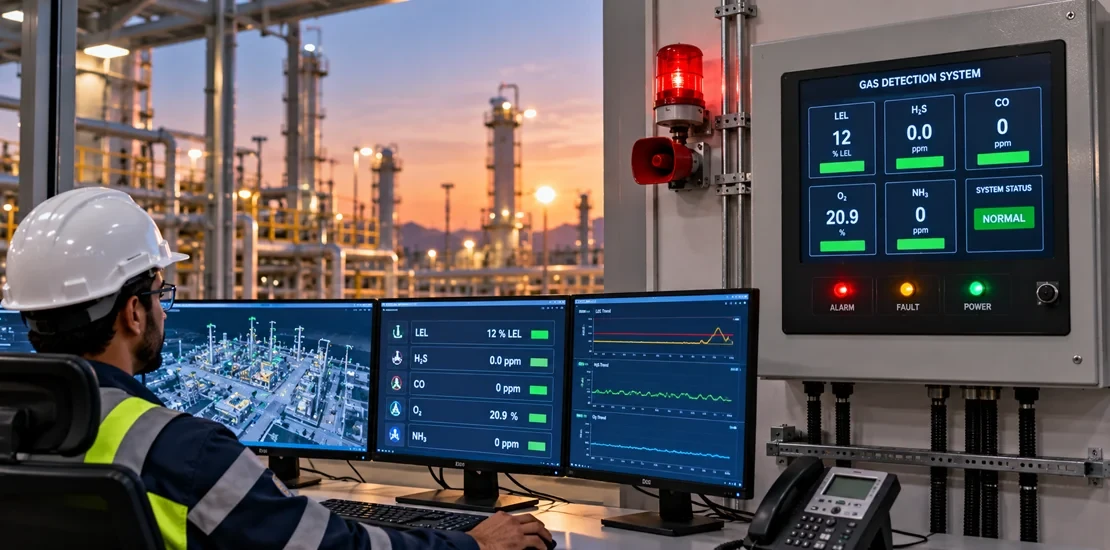
In larger sites, gas alarms are often brought into a central control room as part of integrated security systems, where operators can view the affected area through smart CCTV systems for industrial facilities, coordinate the response, and record every event.
Calibration, Bump Testing, and Maintenance
A gas detector that drifts out of calibration or has a dead sensor provides a dangerous false sense of security. Regular maintenance of gas detection systems should include:
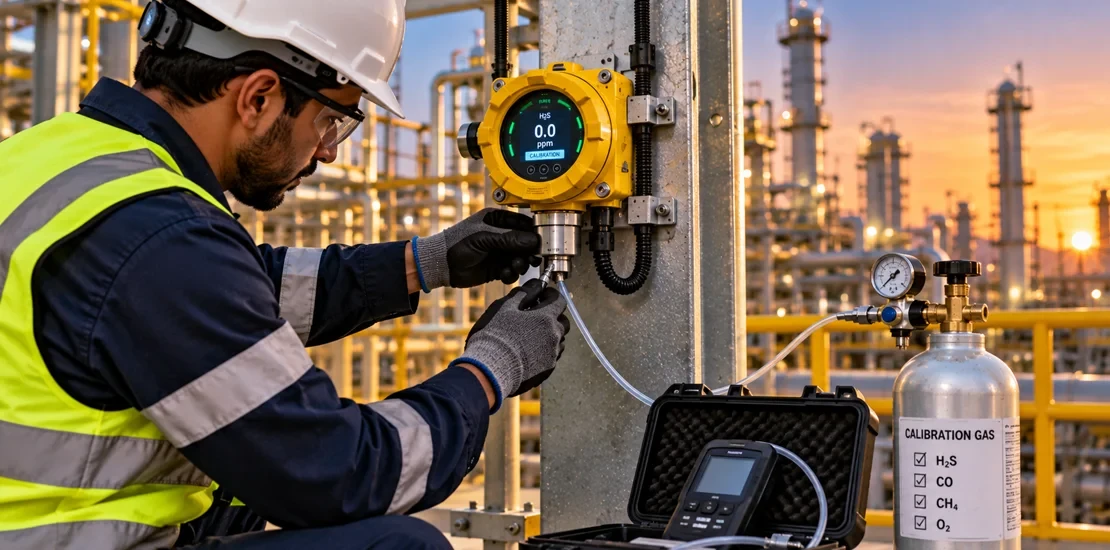
- Bump testing. Exposing each detector to a known gas to confirm that it responds and that alarms activate.
- Adjusting each detector against certified calibration gas at the intervals recommended by the manufacturer and the site’s maintenance plan.
- Sensor replacement. Replacing sensors, especially electrochemical sensors, before the end of their service life.
- Physical checks. Cleaning filters and covers, checking cable glands and enclosures, and confirming detectors have not been blocked or relocated.
- Functional testing. Verifying that alarms, beacons, valves, fans, and control room signals all operate as designed.
Working with a specialized maintenance and support provider ensures calibration gases, tools, and records meet the required standards.
How to Plan Gas Detection Systems Step by Step
- Identify the hazards. A fire risk assessment and process hazard review identify which gases may be present and where leaks could occur.
- Select the technologies. Choose sensor types suited to each gas, concentration range, and environment.
- Design the layout. Place detectors based on gas behavior, leak sources, ventilation, and access for maintenance.
- Define alarms and actions. Set alarm levels and the automatic responses linked to each alarm.
- Integrate and commission. Connect detectors to the controller, fire alarm, ventilation, and control room, then test every function.
- Train and maintain. Train staff on alarm responses and set a calibration and maintenance schedule.
Independent security consultation and risk assessment at the planning stage helps ensure the design matches the real hazards of the facility.
Common Mistakes to Avoid
- Installing detectors at the wrong height. A heavy gas detector near the ceiling will never see an LPG leak.
- Using one sensor type for every gas. Each technology has limits, such as infrared sensors that cannot detect hydrogen.
- Skipping calibration. Sensors drift over time, and uncalibrated detectors may not alarm at the right level.
- No automatic actions. An alarm that only sounds locally may not stop the leak or protect people in time.
- Ignoring the environment. Heat, dust, and humidity can reduce sensor life and response if not considered.
Conclusion
Gas detection systems give industrial facilities the early warning they need to stop leaks before they cause fires, explosions, or harmful exposure. By understanding the gas hazards on site, choosing the right sensor technologies, placing detectors correctly, linking alarms to automatic actions and other safety systems, and maintaining the equipment regularly, facilities in Saudi Arabia can rely on their gas detection systems to protect people, assets, and operations.
Need gas detection systems for your facility? The CCCO team can assess your gas hazards, design and install certified gas detection systems, integrate them with your fire alarm and control room, and provide calibration and maintenance to keep them reliable. Contact us to request a site assessment.
Frequently Asked Questions
What are gas detection systems?
They are networks of fixed detectors, controllers, and alarms that continuously monitor the air for flammable gases, toxic gases, or oxygen hazards and trigger warnings and automatic actions.
Where should gas detectors be installed?
Near likely leak sources and at the right height for the gas: near the ceiling for lighter gases, near the floor for heavier gases, and in the breathing zone for many toxic gases.
What is the difference between LEL and ppm?
LEL is used for flammable gases and shows how close the concentration is to the lowest level that can ignite, while ppm measures small concentrations of toxic gases.
How often should gas detection systems be calibrated?
Calibration intervals depend on the manufacturer’s guidance, the sensor type, and site conditions, with regular bump tests between calibrations.
Can gas detection systems shut off the gas supply automatically?
Yes. They can be linked to solenoid valves, ventilation fans, and equipment controls to act automatically when an alarm level is reached.
Are gas detection systems required in commercial kitchens?
Kitchens using LPG or natural gas commonly need gas leak detection with automatic shut-off, depending on Civil Defense and local requirements.
Do gas detection systems need to connect to the fire alarm?
In many facilities, yes. Linking gas alarms to the fire alarm and control room ensures fast notification, evacuation where required, and full event records.