 Get a Quote

CCTV for Retail Stores: How to Protect Shops from Theft and Losses
CCTV for Retail Stores: How to Protect Shops from Theft and Losses
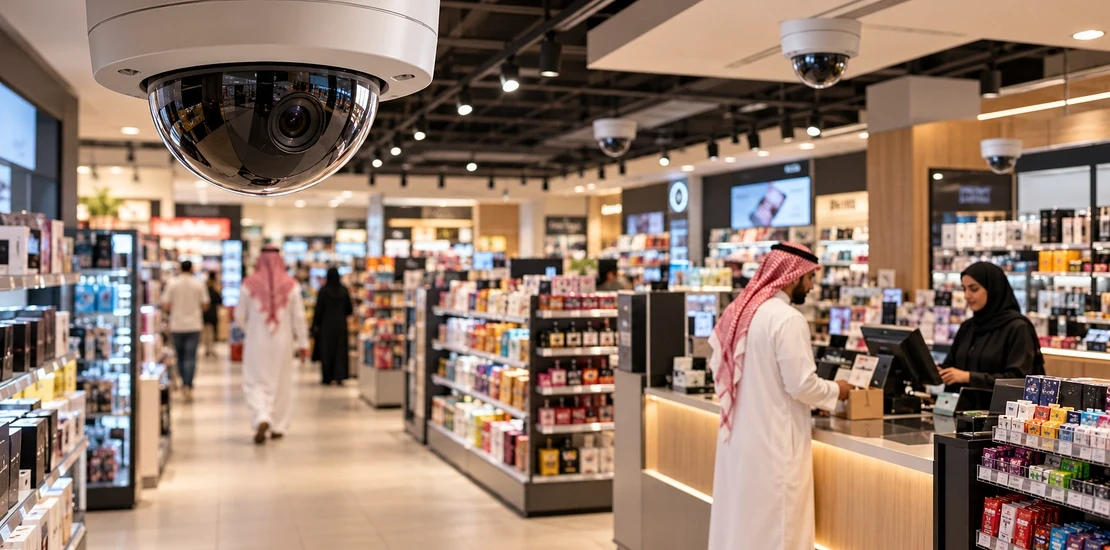
Every shop owner knows the feeling: the stock count does not match the sales, a high-value item disappears from the shelf, or the cash drawer is short at the end of the day, and there is no way to know what happened. Retail losses rarely come from one big event. They come from small, repeated incidents that quietly eat into the margin month after month. Well-designed CCTV for retail stores turns those unknowns into clear evidence and, more importantly, stops many incidents before they happen.
This guide explains what CCTV for retail stores should achieve, where to install cameras, which camera types to choose, how to link video with your cash registers, how analytics can improve sales as well as security, and what to consider in Saudi Arabia before you invest.
Where Retail Losses Really Come From
Before choosing cameras, it helps to understand the main sources of loss, often called shrinkage, in retail:
- Customers concealing items, switching price tags, or walking out without paying.
- Internal theft. Staff taking stock, giving unauthorized discounts, or processing fake refunds.
- Cash handling errors and fraud. Missing cash, voided transactions, and incorrect change.
- Supplier and delivery issues. Short deliveries or goods leaving through the back door.
- After-hours break-ins. Theft and vandalism when the shop is closed.
A good CCTV for retail stores plan addresses each of these risks with the right camera in the right place, instead of simply putting a few cameras on the ceiling.
What a Good CCTV System Does for a Shop
- Deters theft. Visible cameras and monitors discourage both shoplifters and dishonest employees.
- Provides evidence. Clear, recorded video supports investigations, insurance claims, and police reports.
- Protects staff and customers. Cameras help resolve disputes and discourage aggressive behavior.
- Improves operations. Owners can check opening times, staffing, cleanliness, and customer service remotely.
- Supports business decisions. Analytics reveal customer flow, peak hours, and how displays perform.
Professional CCTV systems design ensures these benefits are delivered without blind spots, poor image quality, or unnecessary costs.
Where to Install CCTV for Retail Stores
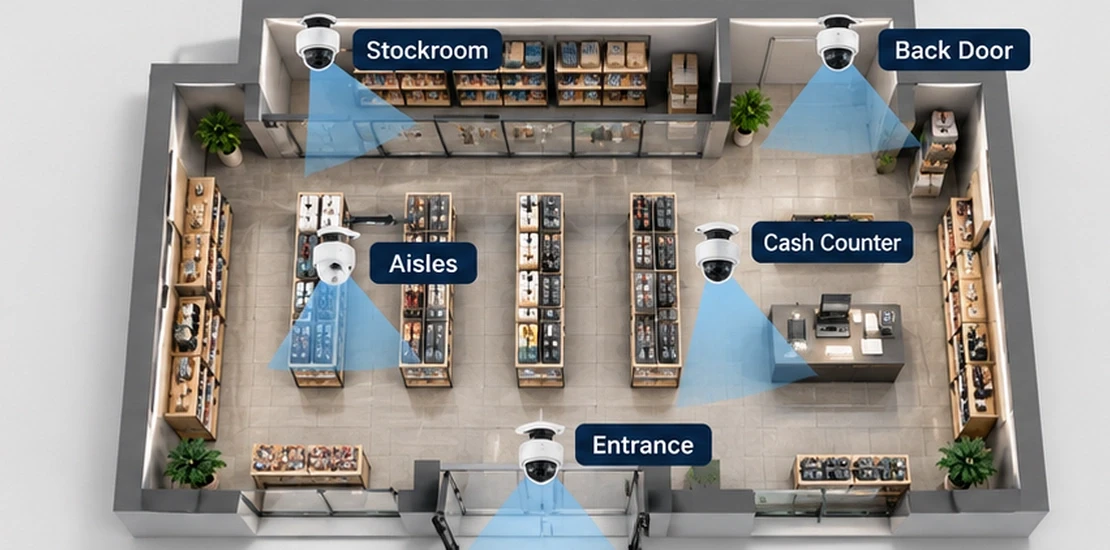
Placement is where most shop systems succeed or fail. The key locations for CCTV for retail stores are:
- Entrance and exit. A camera at face height captures clear images of everyone entering and leaving, which is often the most valuable footage in any investigation.
- Cash counter and POS. An overhead camera shows the cash drawer, the screen, and the counter, while a second view captures the customer.
- Sales floor and aisles. Cameras covering every aisle and corner reduce blind spots where items can be concealed.
- High-value displays. Electronics, perfumes, watches, jewelry, and cosmetics need dedicated close-up coverage.
- Stockroom and receiving area. Cameras record deliveries, stock movement, and access to stored goods.
- Back doors and emergency exits. These are common routes for internal theft and must be monitored.
- Outside the shop. For stand-alone shops, exterior cameras cover the shopfront, parking, and loading area.
The principles are similar to those used for larger facilities, as explained in our guide on CCTV camera placement for warehouses and factories, but shops need more attention to faces, hands, and transactions at close range.
Understanding Image Quality: Detect, Recognize, Identify
Not every camera needs the same detail. Security designers use a simple idea: some cameras only need to detect movement, some need to recognize a familiar person, and some must identify an unknown person clearly enough to be used as evidence. Entrance and cash counter cameras need identification-level detail, while general floor cameras may only need observation-level coverage. Choosing the right resolution and lens for each purpose keeps CCTV for retail stores effective without overspending.
Choosing Camera Types for CCTV for Retail Stores
| Camera Type | Strengths | Best Use in a Shop |
| Dome cameras | Discreet, vandal-resistant, wide coverage | Sales floor, aisles, cash counter |
| Bullet cameras | Long range, visible deterrent | Entrances, parking, exterior walls |
| Fisheye (360°) cameras | One camera covers a whole room | Small shops and open-plan stores |
| Varifocal cameras | Adjustable zoom for precise framing | Entrances and high-value displays |
| PTZ cameras | Pan, tilt, and zoom on demand | Large stores and malls with a monitoring team |
| Low-light and IR cameras | Clear images at night | Stockrooms, back doors, after-hours coverage |
Most retail stores benefit from IP cameras with at least 4 megapixel resolution, wide dynamic range for entrances facing bright sunlight, and good low-light performance for evening hours.
Linking CCTV with Cash Registers (POS Integration)
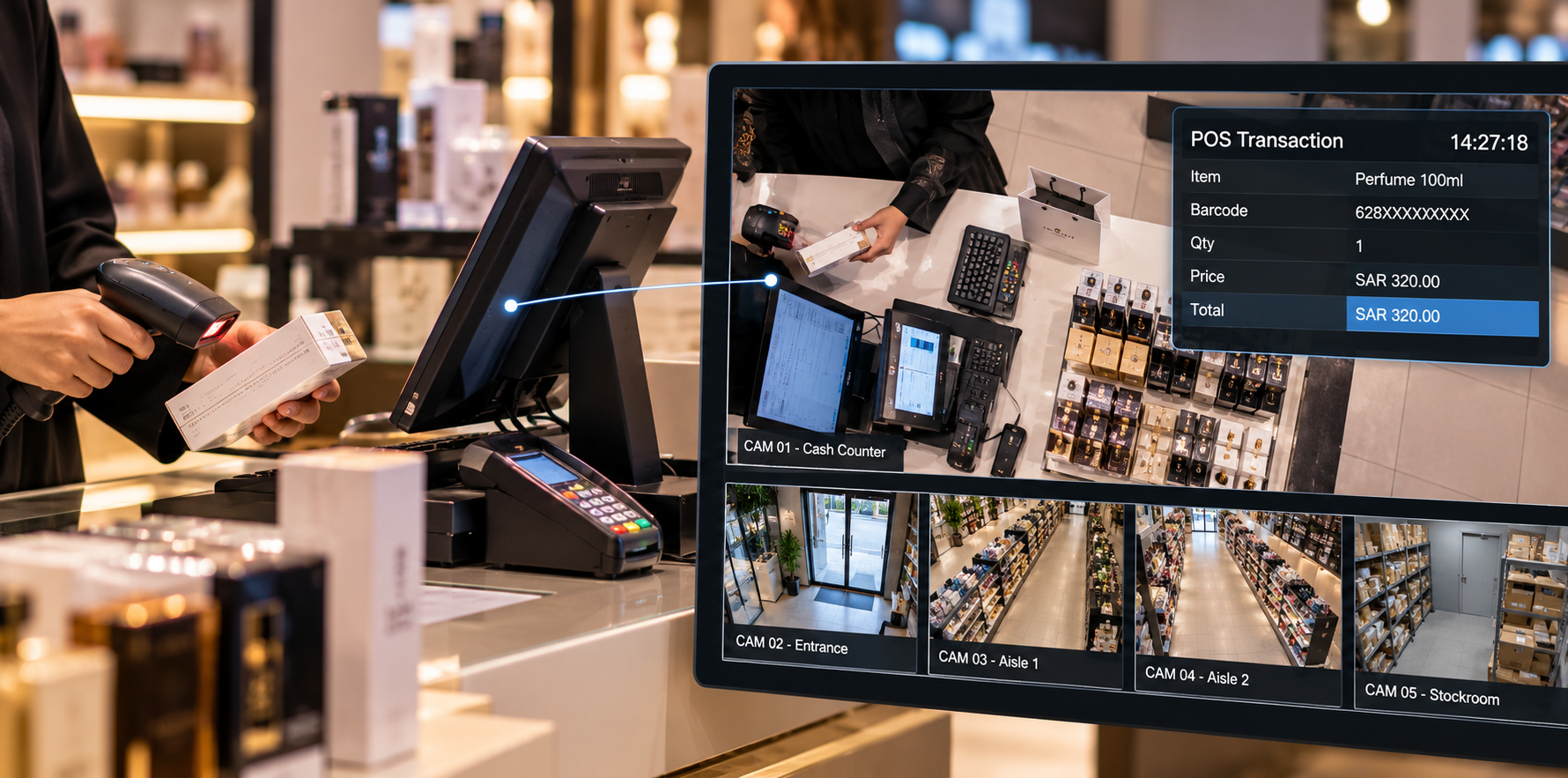
One of the most powerful features of modern CCTV for retail stores is POS integration. Each transaction, such as sales, refunds, voids, and discounts, is recorded as text on top of the matching video. Managers can search for every refund above a certain value or every void at a specific counter and watch exactly what happened. This makes internal fraud much easier to detect and much harder to commit.
Retail Analytics: Security That Also Boosts Sales
Intelligent video analytics turn cameras into business tools. People counting shows how many visitors enter and when, so you can measure conversion rates and plan staff schedules. Heat maps reveal which areas of the store attract the most attention, helping you place promotions and products more effectively. Queue detection alerts staff when lines at the counter grow too long. After hours, line-crossing and intrusion detection send instant alerts if someone enters the shop. These capabilities help CCTV for retail stores pay for itself faster.
Recording, Storage, and Remote Viewing
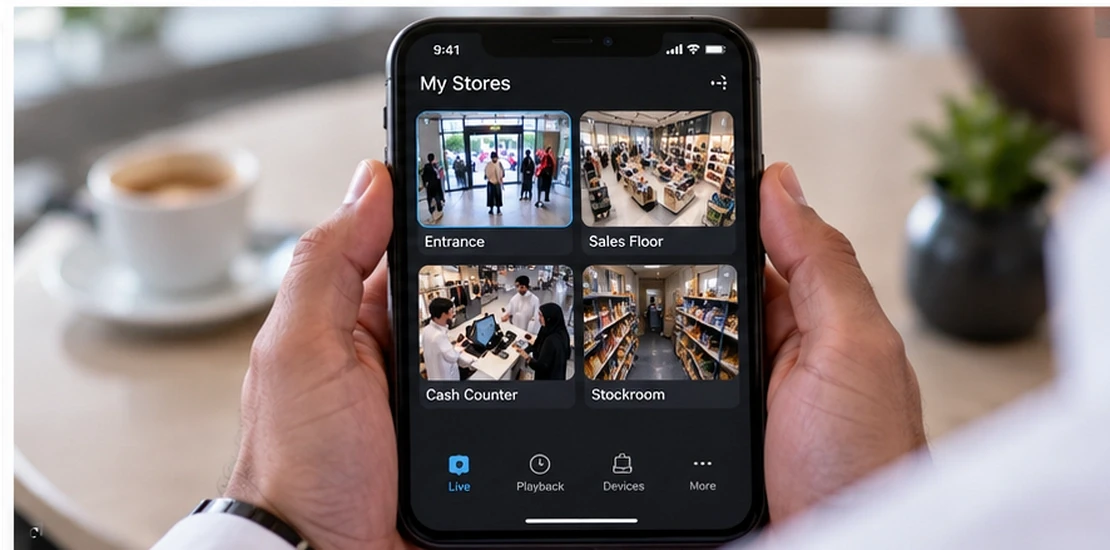
In most CCTV for retail stores projects, video is recorded on a network video recorder (NVR) installed in a secure, ventilated location, ideally locked and protected from theft or tampering. Storage capacity must match the number of cameras, the resolution, the recording mode, and the required retention period. Many owners also add cloud backup for critical cameras. With a mobile app, owners and managers can view live and recorded video from anywhere, receive alerts, and check every branch in minutes.
After-Hours Protection
CCTV for retail stores records what happens, but cameras do not stop a break-in on their own. Combining cameras with an intrusion alarm system ensures that door contacts, glass-break sensors, and motion detectors trigger alarms and alerts when the shop is closed, with video available for immediate verification. For stockrooms and staff areas, an access control system records who entered and when, and links each entry with the matching camera footage.
Managing Multiple Branches
For retail chains and franchise owners, CCTV for retail stores needs a consistent approach across all locations. A central video management platform allows head office to monitor every branch, apply the same standards for camera placement and recording, run reports, and investigate incidents across sites. When cameras, access control, and alarms are managed together, they become integrated security systems that give the business one clear view of its security and operations.
CCTV for Retail Stores by Shop Type
Every retail sector has its own risks, so the design should follow the business:
- Supermarkets and hypermarkets. Wide aisles, many entrances, self-checkouts, and receiving docks need broad coverage, POS integration at every till, and strong analytics for queues and customer flow.
- Jewelry and gold shops. High-value items require identification-quality cameras at every display and counter, secure recording, and integration with intrusion alarms and panic buttons.
- Electronics and mobile phone shops. Small, expensive items are easy to conceal, so close-up coverage of display tables and the stockroom is essential.
- Cameras should cover the dispensing counter, controlled storage, and the cash area while respecting customer privacy at consultation points.
- Fashion and abaya stores. Coverage of the sales floor and the fitting room entrance (never inside) helps reduce concealment, along with tag monitoring at exits.
- Cafés and quick-service restaurants. Cameras at the counter, kitchen pass, and storage areas support cash control, hygiene checks, and customer service.
How to Plan CCTV for Retail Stores Step by Step
- Survey the store. Walk the space, note entrances, counters, displays, storage, and exits, and review past incidents.
- Identify risk points. Decide where theft, fraud, or disputes are most likely to happen.
- Define the purpose of each camera. Detection, recognition, or identification, which determines resolution and lens.
- Design the layout. Place cameras to cover every risk point without blind spots and with the light conditions in mind.
- Install and configure. Set recording modes, retention, motion zones, POS overlay, and remote access securely.
- Train the team. Show managers how to search, export, and review footage, and set a routine for checking the system.
Cybersecurity for Shop Cameras
Internet-connected cameras can be a target if they are not secured. Change default passwords, keep firmware updated, use separate network segments for cameras, limit user permissions, and disable remote access features that are not needed. A secure setup protects both your recordings and your customers’ privacy.
Privacy, Signage, and Legal Requirements
CCTV for retail stores must respect customers’ and employees’ privacy. Cameras must never be installed inside fitting rooms, restrooms, or prayer areas, and clear signage should inform people that the premises are monitored. Access to recordings should be limited to authorized staff, and video should only be used for legitimate purposes. In Saudi Arabia, the regulations governing security surveillance cameras define obligations for many commercial activities, including requirements related to installation, recording, retention, and data handling. Our upcoming guide on the security cameras law in Saudi Arabia explains these requirements in detail. Always confirm the current rules for your activity before installation.
CCTV for Retail Stores in Malls
Shops inside malls usually operate under additional rules from the mall management, such as approved camera types, coordination with the mall’s central security room, and restrictions on where cameras can face. Planning your CCTV for retail stores layout together with the mall’s fit-out requirements avoids rework and delays before opening.
Climate Considerations in Saudi Arabia
Outdoor CCTV for retail stores faces tough conditions. Exterior cameras on shopfronts and parking areas face intense heat, direct sunlight, and dust. Choose cameras rated for high temperatures, use sunshields and weatherproof housings, and position cameras to avoid facing direct sunlight at peak hours. Indoors, recorders and network equipment need ventilation to avoid overheating in small back rooms.
Is CCTV for Retail Stores Worth the Investment?
For most shops, the answer is yes, and the return often comes faster than owners expect. CCTV for retail stores reduces losses from theft and fraud, settles disputes quickly, lowers the time managers spend investigating stock differences, and supports insurance claims. When analytics are added, the same cameras help increase sales by improving staffing, layout, and queue management. Instead of asking how much CCTV for retail stores costs, a better question is how much the shop is already losing without it.
What Affects the Cost of CCTV for Retail Stores?
- The size and layout of the store and the number of cameras needed.
- Camera types, resolution, and special features such as low-light or analytics.
- Recording capacity and retention period.
- POS integration, remote viewing, and cloud backup.
- Integration with alarms and access control.
- Cabling and installation complexity, especially in finished stores.
- Maintenance and support after installation.
The cheapest system often costs the most in the end, because blurry footage or missing angles are discovered only when an incident happens and the evidence is not there.
Keeping CCTV for Retail Stores Reliable
A camera that stops recording, a recorder with a failed hard drive, or a lens covered in dust makes the whole investment useless at the critical moment. Regular checks should confirm that every camera records, images are clear, the time and date are correct, storage is healthy, and remote access works. A professional maintenance and support plan keeps the system running and fixes faults before they leave gaps in your protection.
Common Mistakes with CCTV for Retail Stores
- Too few cameras or wrong angles. Blind spots are exactly where theft happens.
- Cameras facing bright entrances without WDR. Faces appear as dark silhouettes.
- No coverage of the cash counter. Internal fraud often happens at the till.
- Recorder left in an open area. Thieves remove or destroy the recorder along with the evidence.
- Default passwords. Unsecured systems can be accessed by anyone on the internet.
- Never checking recordings. Problems are discovered only when footage is needed.
Conclusion
Retail losses are rarely dramatic, but they add up quickly. Well-planned CCTV for retail stores deters theft, captures clear evidence, protects staff and customers, and gives owners valuable insight into how their stores perform. By placing cameras where losses actually happen, choosing the right camera types, integrating video with the cash register and alarms, respecting privacy rules, and maintaining the system, shop owners in Saudi Arabia can protect their margins and their peace of mind.
Ready to protect your store? The CCCO team can survey your shop, design CCTV for retail stores that covers every critical point, integrate it with your POS and alarms, and keep it running reliably. Contact us today to request a site assessment.
Frequently Asked Questions
How many cameras does a retail store need?
It depends on the store size and layout. As a minimum, cover the entrance, cash counter, every aisle, high-value displays, stockroom, and back door.
Where is the most important place to install a camera in a shop?
The entrance and the cash counter, because they capture faces and transactions, which are the most useful evidence in investigations.
Can CCTV be linked to the cash register?
Yes. POS integration overlays transaction data on video, making it easy to review refunds, voids, and discounts.
Can I watch my shop cameras on my phone?
Yes. Modern systems support secure remote viewing and alerts through mobile apps.
Is it allowed to install cameras in fitting rooms?
No. Cameras must never be installed inside fitting rooms, restrooms, or other private areas.
What resolution is best for CCTV for retail stores?
IP cameras with at least 4 megapixels are recommended, with higher detail at entrances and cash counters.
Do shops in Saudi Arabia have legal obligations for CCTV?
Many commercial activities are subject to security camera regulations covering installation, recording, and retention. Confirm the current requirements for your activity.