 Get a Quote

Fire Alarm False Alarms: Common Causes and How to Prevent Them
Fire Alarm False Alarms: Common Causes and How to Prevent Them
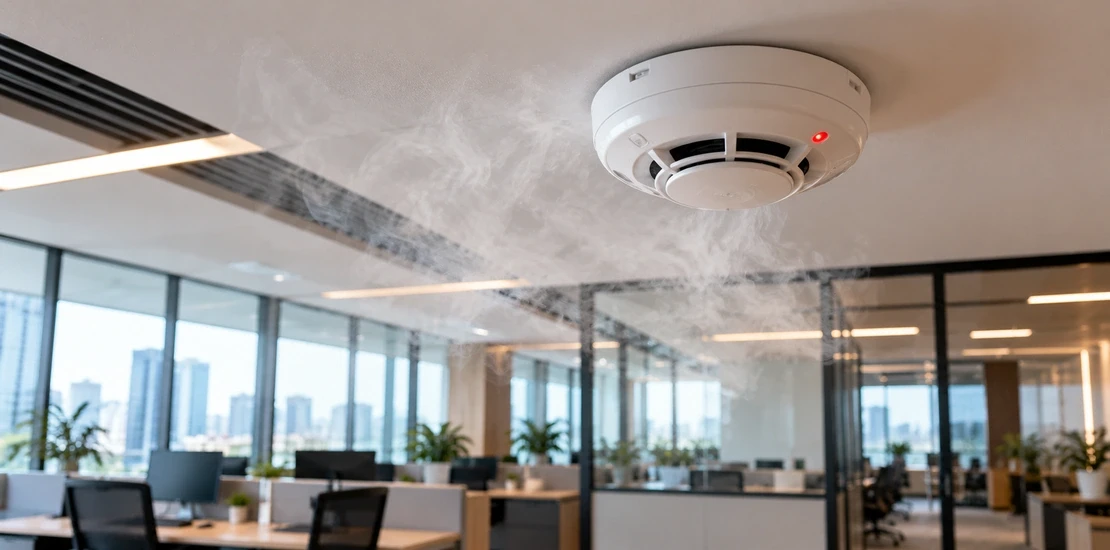
It is the middle of a busy working day. The fire alarm sounds, hundreds of people stop what they are doing and leave the building, customers walk out of the shop, and the operations team spends the next hour finding the cause, only to discover it was steam from a kettle or a dusty detector. When this happens once, it is an inconvenience. When fire alarm false alarms happen every week, they become a serious safety problem.
Fire alarm false alarms waste time and money, but their biggest cost is hidden: people stop trusting the alarm. When a real fire happens, they hesitate, ignore the sound, or assume it is another test. This guide explains why fire alarm false alarms happen, what they really cost, and the practical steps that reduce them without compromising safety.
What Counts as Fire Alarm False Alarms?
A false alarm is any activation of the fire alarm system when there is no actual fire. Fire alarm false alarms are usually grouped into three types:
- Unwanted alarms. The system reacts correctly to something that looks like fire, such as cooking smoke, steam, dust, or incense smoke, but there is no fire.
- Equipment faults. A detector, cable, module, or panel malfunctions and triggers an alarm on its own.
- Malicious or accidental activation. Someone presses a manual call point deliberately or by accident, for example while moving furniture.
Each type has different causes and solutions, which is why a careful investigation of every alarm is the first step to reducing them.
The Real Cost of Fire Alarm False Alarms
- Lost productivity and sales. Every evacuation stops work, empties shops and restaurants, and delays operations.
- Alarm fatigue. Frequent fire alarm false alarms teach people to ignore the alarm, which is dangerous when a real fire occurs.
- Disabled devices. Frustrated staff or tenants sometimes cover or remove detectors, leaving areas without any protection.
- Accidental suppression discharge. In rooms protected by gas or aerosol systems, a false alarm that triggers release can cost a significant amount to recharge and interrupt critical operations.
- Relationships with authorities and landlords. Repeated call-outs and complaints can create problems with Civil Defense, mall operators, and building owners.
Common Causes of Fire Alarm False Alarms
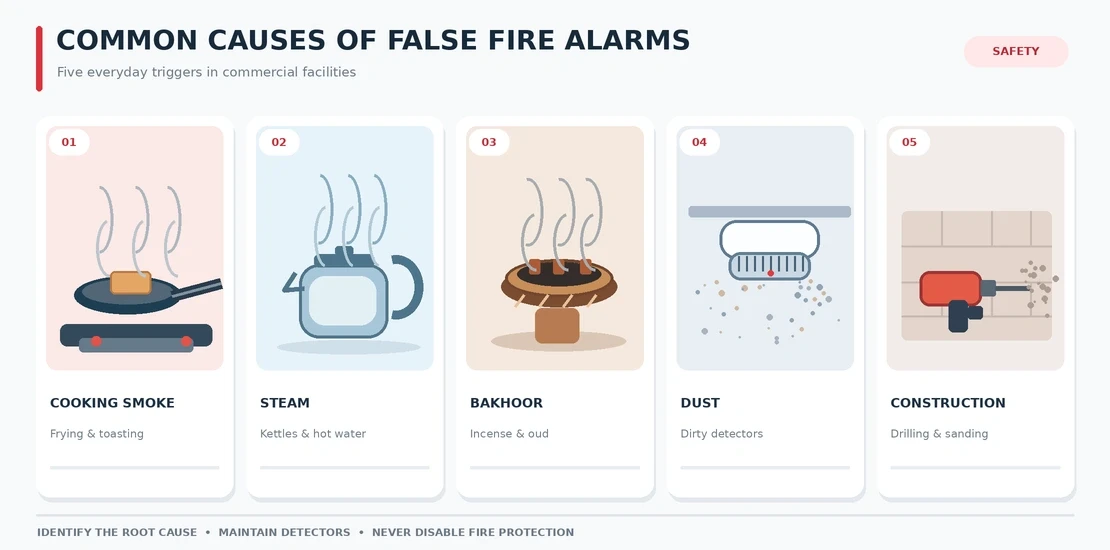
Most fire alarm false alarms can be traced to a small number of root causes. Understanding them is the key to solving the problem rather than just resetting the panel.
Cooking Fumes and Steam
Kitchens, pantries, and staff rooms are a leading source of fire alarm false alarms and are among the most common sources of unwanted alarms. Smoke from toasting or frying and steam from kettles and dishwashers can easily trigger smoke detectors placed too close. In commercial kitchens, heat detectors are usually the better choice, and the cooking line itself should be protected by a dedicated kitchen fire suppression system rather than relying on smoke detection.
Incense, Bakhoor, and Smoking
In Saudi Arabia, burning bakhoor and oud is part of everyday hospitality in offices, majlis rooms, hotels, and homes. The fine smoke particles can activate sensitive smoke detectors, especially in small rooms with low ceilings. Smoking and vaping in restricted areas cause similar problems. The solution is not to remove detection, but to designate suitable areas, choose detector types that are less sensitive to this kind of smoke where permitted, and educate occupants.
Dust, Sand, and Construction Work
In Saudi Arabia, dust is one of the biggest drivers of fire alarm false alarms. Dust storms, sand carried on clothing and air conditioning systems, and dust from renovation work can build up inside smoke detectors. Construction activities such as cutting, grinding, sanding, and drilling are a major cause of fire alarm false alarms, especially when detectors in the work area are not protected or isolated through a controlled permit process. Accumulated dust also makes detectors drift toward higher sensitivity over time.
Air Conditioning, Humidity, and Insects
Air conditioning is an often overlooked source of fire alarm false alarms. Detectors installed near diffusers can be affected by strong airflow, condensation, and sudden temperature changes. High humidity in coastal cities such as Jeddah and Dammam can cause condensation inside detectors, and small insects that enter the detection chamber can trigger alarms. Correct placement, sealed detector models, and regular cleaning reduce these issues.
Wrong Detector Type or Location
Many fire alarm false alarms are design problems rather than device faults. A smoke detector in a kitchen, a car park, a dusty warehouse, or a bathroom corridor will alarm repeatedly. Detectors placed directly under supply vents or near doors that open to dusty areas face similar issues. When a building is renovated and rooms change their use, the detector types are often not updated to match the new function.
Aging Equipment and Poor Maintenance
Old equipment is a slow but steady cause of fire alarm false alarms. Detectors have a limited service life. As they age and collect dust, their sensitivity changes and they become more likely to alarm. Faulty wiring, damaged cables, earth faults, and weak power supplies can also produce false signals. Without regular cleaning, testing, and replacement, a system that worked well when installed gradually becomes unreliable.
Testing and Maintenance Without Coordination
Some fire alarm false alarms are caused by the people who look after the system. Testing a detector without isolating its outputs, or working on the system without informing the monitoring center and occupants, can trigger full evacuations or even release suppression systems. Every test and maintenance visit should follow a clear procedure.
Accidental and Malicious Activation of Call Points
Manual call points located in busy corridors, loading areas, or near trolleys and furniture can be pressed accidentally. In public buildings, malls, and schools, malicious activation is also possible. Protective covers, careful placement, and nearby CCTV coverage help deter misuse while keeping call points accessible in a real emergency.
How to Prevent Fire Alarm False Alarms
Reducing fire alarm false alarms requires a combination of good design, smart system features, regular maintenance, and good building management. The following measures deliver the biggest improvements.
Choose the Right Detector for Each Space
Matching detector technology to the environment is the most effective step against fire alarm false alarms. Heat detectors suit kitchens, car parks, and dusty areas. Multi-sensor detectors that combine smoke and heat analysis are less likely to react to steam or incense while still detecting real fires quickly. Beam detectors suit large open spaces, and aspirating systems provide very early detection in data centers and clean areas. Our guide on choosing the right fire alarm system explains how detection is planned for different facilities, and professional fire detection systems design ensures every room has the right device.
| Area | Common Problem | Better Detection Choice |
| Commercial kitchens and pantries | Cooking smoke, steam | Heat detectors; suppression system over cooking lines |
| Majlis and hospitality areas | Bakhoor and incense smoke | Multi-sensor detectors where permitted |
| Car parks and loading docks | Exhaust fumes, dust | Heat detectors or suitable multi-sensor devices |
| Warehouses with high ceilings | Dust, difficult access | Beam detectors or aspirating systems |
| Bathrooms and shower areas | Steam | Heat detectors outside steam zones |
| Server rooms and data centers | Need for very early warning | Aspirating detection with suitable thresholds |
Place Detectors Correctly
- Keep detectors away from air conditioning diffusers, kitchen doors, and shower areas.
- Avoid locations where dust, steam, or fumes collect regularly.
- Review detector locations after every renovation or change of use.
- Protect manual call points in high-traffic areas with suitable covers.
Use the Smart Features of Modern Panels
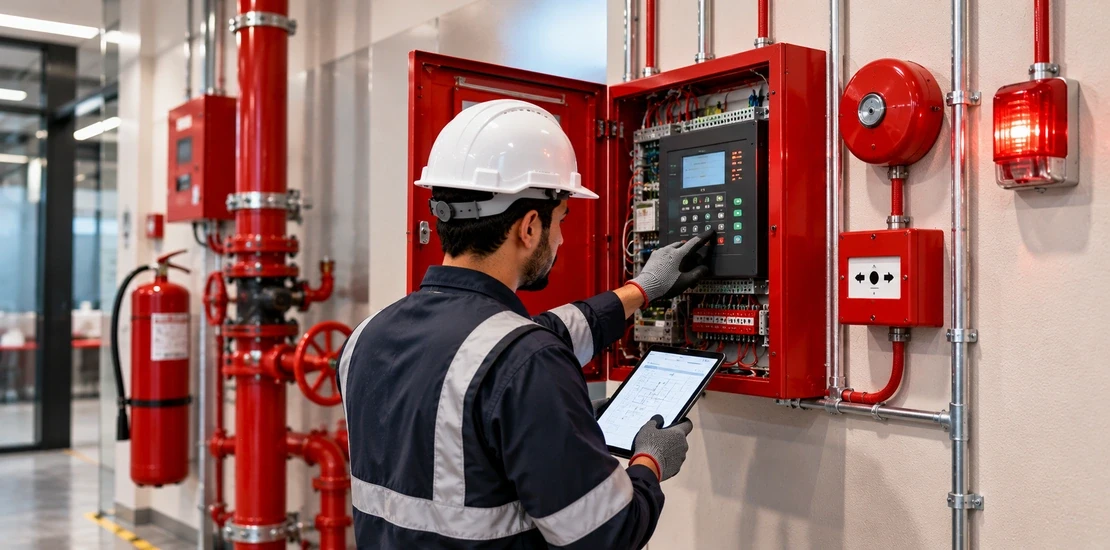
An addressable fire alarm system offers several tools that reduce fire alarm false alarms. Drift compensation adjusts detectors automatically as they collect dust, and the panel reports when a device needs cleaning. Day and night sensitivity modes allow different settings when a building is occupied or empty. Pre-alarm warnings let staff check a situation before a full evacuation, and alarm verification delays can confirm smoke before sounding the general alarm, where the applicable standards allow it.
For rooms protected by gas or aerosol suppression, coincidence detection, where two independent detectors must confirm a fire before release, greatly reduces the risk of accidental discharge.
Control Hot Work and Construction
Every renovation, maintenance job, or hot work activity should follow a permit system that identifies affected detectors, temporarily protects or isolates them under controlled conditions, assigns a fire watch, and restores the system immediately when work ends. Isolations must be recorded and never left in place longer than necessary, because an isolated zone is an unprotected zone.
Maintenance: The Most Reliable Cure
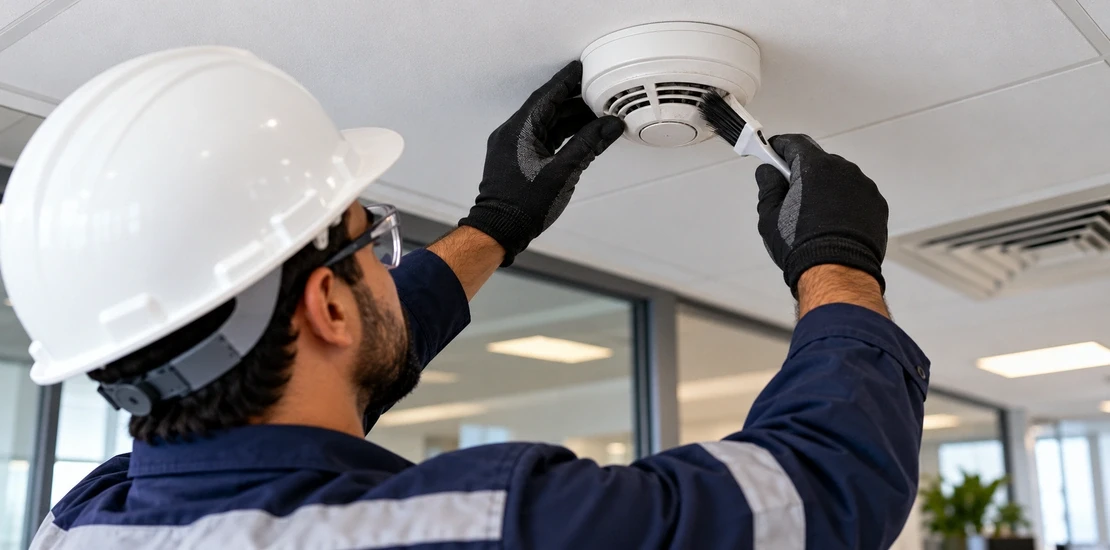
Regular servicing is the single most reliable way to keep fire alarm false alarms under control. A professional maintenance program should include cleaning and functional testing of detectors, checking cables and power supplies, reviewing the panel event log, replacing devices at the end of their service life, and updating the system after layout changes. Our fire system inspection checklist covers the items that should be checked during each visit.
A clear fire safety maintenance contract with a qualified maintenance and support provider ensures that tests are coordinated with occupants and monitoring centers, faults are fixed quickly, and every visit is documented.
Investigate Fire Alarm False Alarms Every Time
Each false alarm is information. Instead of simply resetting the panel, record what happened and use it to prevent the next one:
- Identify the exact device or zone that activated, using the panel log.
- Inspect the area for steam, smoke, dust, insects, or work activity.
- Check the device history: has it alarmed before?
- Decide on the root cause: environment, device, wiring, location, or human action.
- Fix the cause, whether by cleaning, replacing, relocating, or changing the detector type.
- Document the action and monitor the device to confirm the problem is solved.
Over time, this simple process reveals patterns, such as one detector that always alarms during lunch or one floor that suffers during dust storms, and turns repeated fire alarm false alarms into solvable problems.
Educate Occupants to Reduce Fire Alarm False Alarms
Many fire alarm false alarms come from everyday behavior. Simple guidance makes a big difference: use toasters and kettles only in designated areas, burn bakhoor only where it is permitted, keep kitchen doors closed, never cover or tamper with detectors, report any alarm cause to management, and inform the facility team before any work that creates dust or heat.
Fire Alarm False Alarms by Facility Type
Each type of building tends to experience its own pattern of unwanted alarms, so the solutions should be tailored:
- Malls and food courts. Cooking fumes from food outlets, cleaning machines, and tenant fit-out works are the main triggers. Coordinating tenant works through permits and using heat detection near kitchens makes a major difference.
- Hotels and furnished apartments. Steam from showers, bakhoor in rooms, and guests cooking in kitchenettes cause frequent fire alarm false alarms. Careful detector selection in rooms and clear guest guidance are essential.
- Hospitals and clinics. Evacuation is difficult and disruptive, so pre-alarm verification, staged alarm strategies where permitted, and well-maintained devices are critical.
- Warehouses and factories. Dust, forklift exhaust, and high ceilings require suitable technologies such as beam or aspirating detection.
- Pantries, toasters, and dust from minor renovations are the usual causes and are easily controlled with good placement and simple rules.
Track Your False Alarm Rate
What gets measured gets improved. Keep a simple monthly record of all alarms, real and false, with the device, cause, and action taken. Reviewing this record with your maintenance provider shows whether fire alarm false alarms are decreasing, which areas need attention, and whether past corrective actions worked. Many facilities that start tracking discover that a handful of devices are responsible for most of their unwanted alarms, which makes the solution faster and cheaper than expected.
What Not to Do
- Never disable or cover detectors permanently. This removes protection and may breach Civil Defense requirements.
- Do not simply reduce sensitivity everywhere. Lower sensitivity can delay detection of real fires.
- Do not ignore repeated alarms from the same device. They point to a root cause that must be fixed.
- Do not leave zones isolated after work. Always restore the system immediately.
Conclusion
Fire alarm false alarms are not just an annoyance. They cost money, interrupt business, and slowly destroy trust in the system that is meant to save lives. Most of them can be prevented by choosing the right detectors, placing them correctly, using the smart features of modern panels, controlling construction work, maintaining the system regularly, and investigating every activation. The goal is a fire alarm that people trust because it only sounds when it matters.
Struggling with frequent fire alarm false alarms? The CCCO team can audit your fire alarm system, identify the root causes, replace or relocate unsuitable detectors, and keep your system maintained and reliable. Contact us today to request a site assessment.
Frequently Asked Questions
What causes most fire alarm false alarms?
The most common causes are cooking smoke, steam, dust, incense smoke, unsuitable detector types or locations, construction work, and poor maintenance.
Can bakhoor trigger a smoke detector?
Yes. Bakhoor and incense produce fine smoke particles that can activate sensitive smoke detectors, especially in small rooms.
Which detector is best for a kitchen?
Heat detectors are usually preferred in kitchens because they do not react to normal cooking smoke and steam.
Does an addressable system reduce false alarms?
Yes. Features such as drift compensation, pre-alarms, sensitivity settings, and device-level reporting help reduce fire alarm false alarms.
Should we lower detector sensitivity to stop false alarms?
Not as a general solution. Sensitivity changes should be made only by qualified technicians within the limits of the standards, after the root cause is identified.
How often should detectors be cleaned and tested?
According to the maintenance plan, the manufacturer’s guidance, and the applicable standards, with more frequent cleaning in dusty environments.
Is it allowed to cover a detector during renovation?
Only under a controlled permit process with a fire watch, and the detector must be restored immediately after the work ends.